Home · Getting Here
Where each arrival puts you
Every way in
By airHeathrow
The largest airport, 14 miles west of the center, with four passenger terminals. The Elizabeth line, the Heathrow Express and the Piccadilly line all run to central London, and a premium fare applies on the Elizabeth line to and from the airport.
By airGatwick, Stansted, Luton, City and Southend
The other five of London's six international airports. City Airport is the closest to the center, on the Docklands Light Railway; the others connect to central termini by train.
By railEurostar and the main-line termini
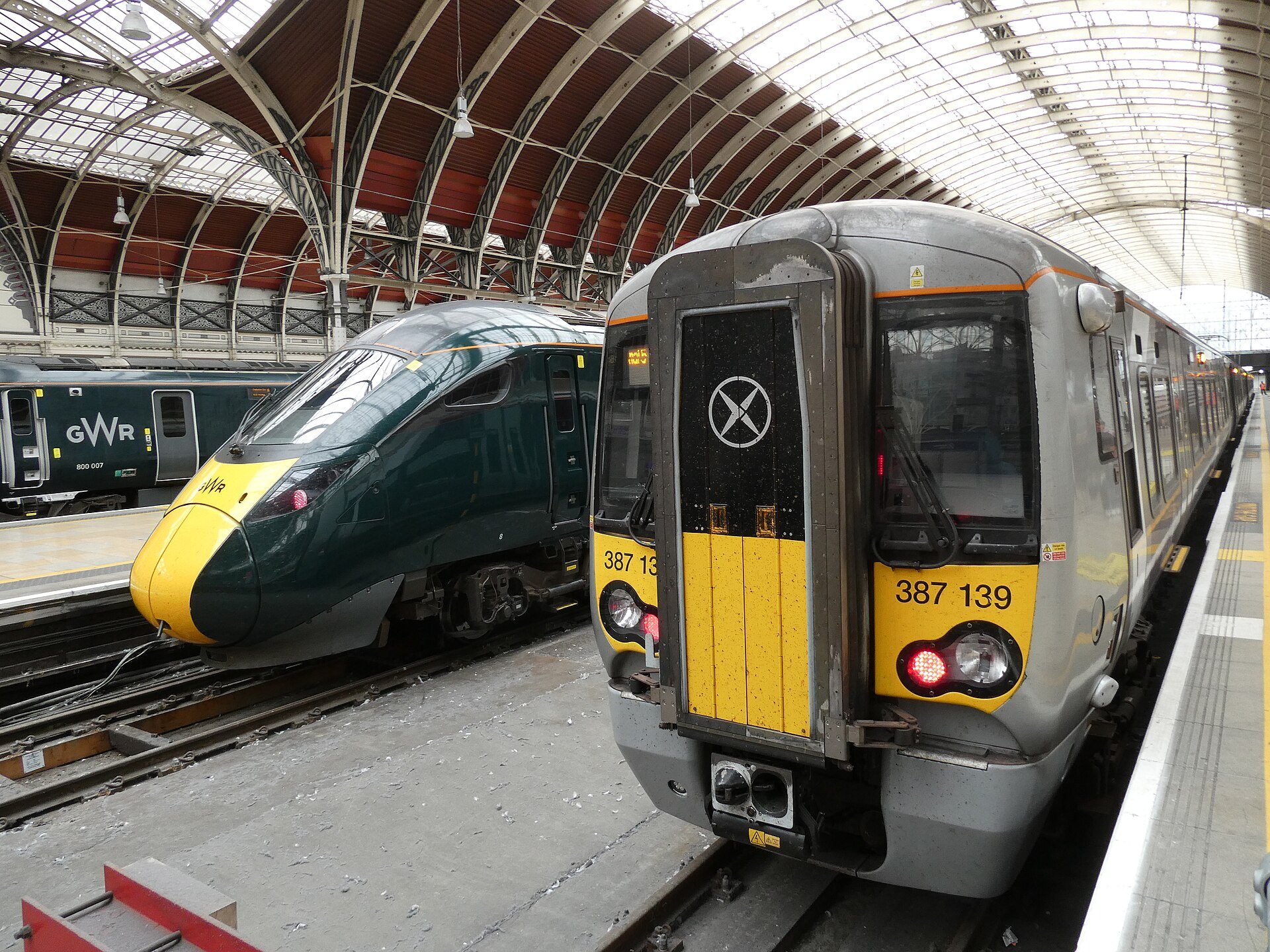
London's railway termini each serve a different part of the country, and Eurostar arrives at St Pancras International. The Elizabeth line, the Underground and the Overground link them to the center.
By roadCoaches and Victoria Coach Station
Long-distance coaches from across Britain and Europe arrive at Victoria Coach Station and other stops. They are slower than the train and often much cheaper.
Getting Here
In full
Heathrow and the other airports
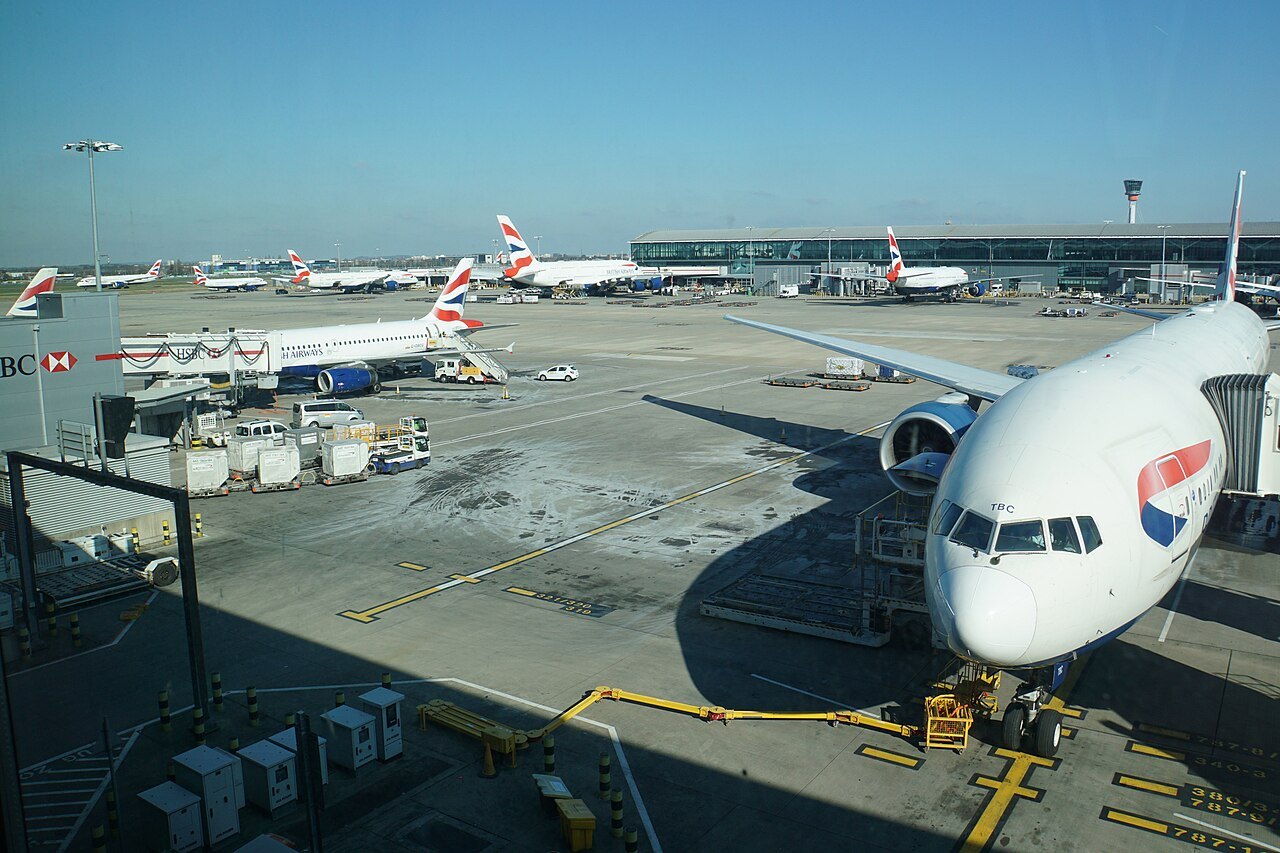
London has six international airports, and Heathrow is the largest, the primary and the busiest in Europe by passenger traffic. It lies 14 miles west of central London and has two parallel runways and four passenger terminals, numbered 2 to 5. It is the main hub for British Airways and Virgin Atlantic, and it has more international connections than any other airport in the world. If you are flying from another continent, you will most likely land here.
The other five are Gatwick, Stansted, Luton, City and Southend. They serve low-cost and regional carriers, and each sits in a different direction from the center. Which one is cheapest or fastest depends on the flight, so check the arrival airport before you book, and compare the cost of getting into town as well as the fare.
From Heathrow to the center
Three rail services reach central London from Heathrow. The Elizabeth line, which opened in 2022, runs through the center to Paddington, Liverpool Street and beyond, with stops at Bond Street and Tottenham Court Road. The Heathrow Express runs non-stop to Paddington and is the fastest. The Piccadilly line of the Underground is the slowest and the cheapest, and it reaches Kensington, Piccadilly Circus and Covent Garden without a change.
A premium fare is charged on the Elizabeth line to and from Heathrow, and an Oyster card is not valid for journeys to stations beyond the London fare zones, such as Reading, so anyone traveling further out needs a ticket for the whole trip. Buses, coaches and taxis also run from the airport, and they suit those with heavy luggage or an awkward hour of arrival.
Gatwick, Stansted, Luton and City
Gatwick is south of London and connects by fast trains to Victoria and by Thameslink services to London Bridge, Blackfriars and St Pancras. Stansted is north-east, and its express train runs to Liverpool Street. Luton is north, with a shuttle to its railway station and Thameslink trains to St Pancras and beyond.
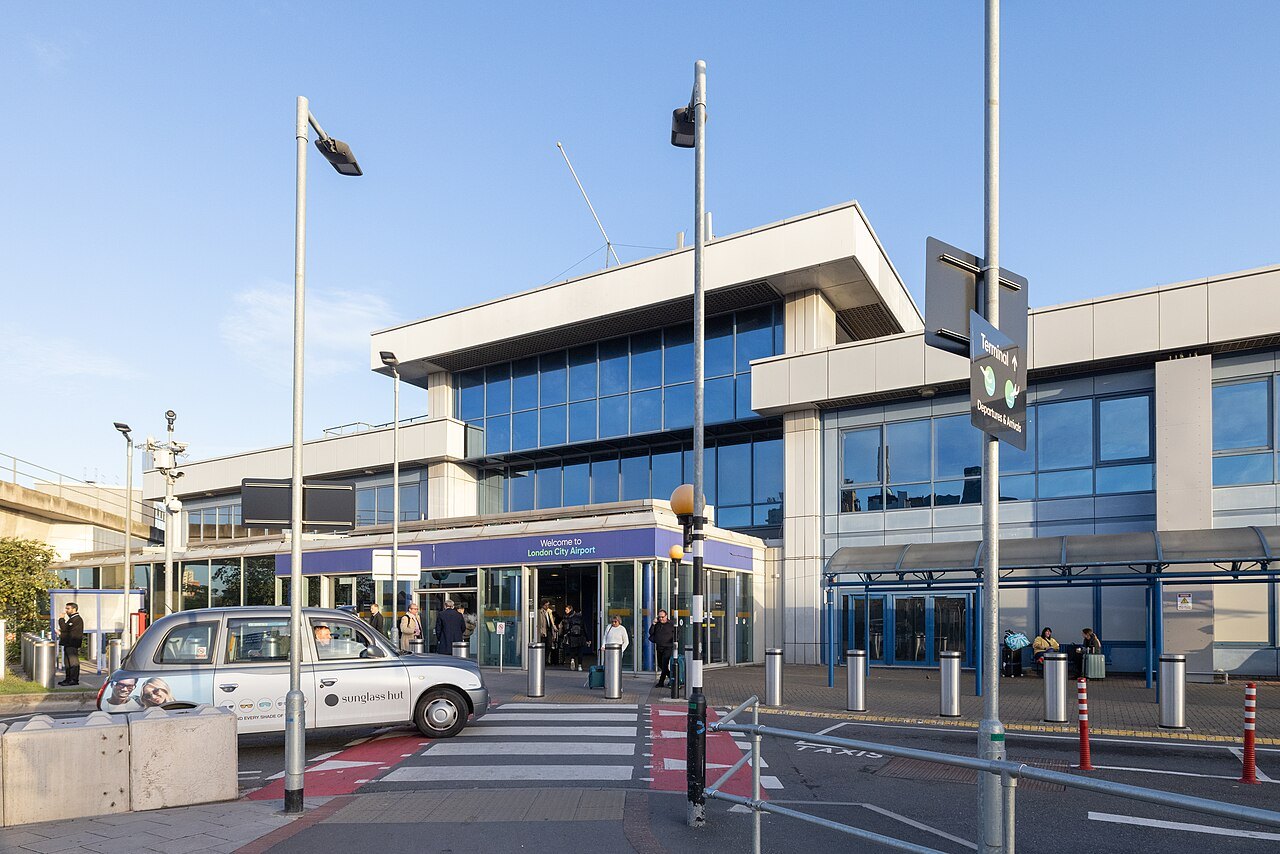
London City Airport is the closest to the center. It stands in the Docklands, on the Docklands Light Railway, and the journey to the Bank area takes only a few stops. Southend, to the east, is reached by train from Liverpool Street.
Arriving by train
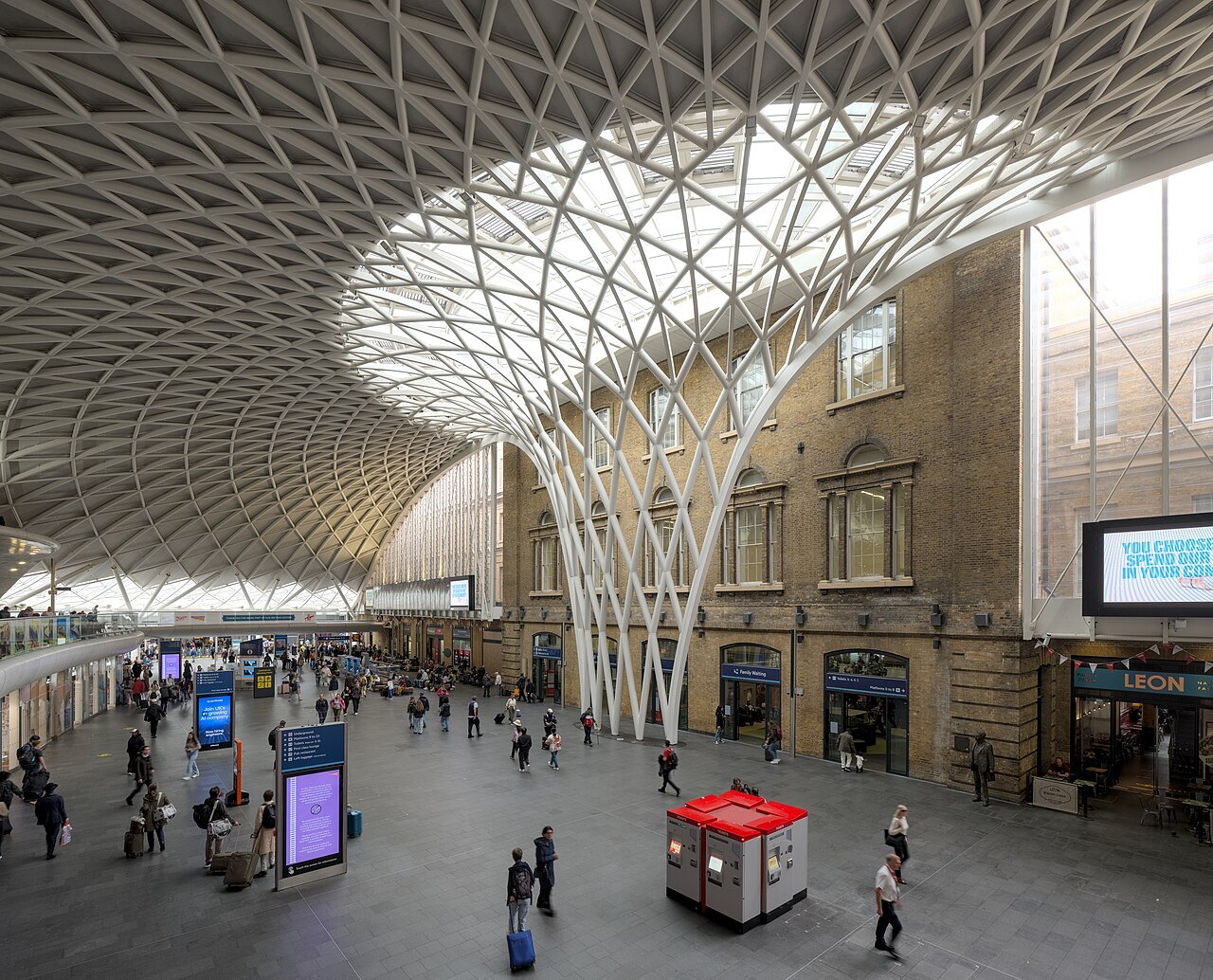
London has no single central station. The main-line termini ring the center, each serving a region: Paddington for the west, King's Cross for the north-east, St Pancras for Eurostar and the Midlands, Euston for the north-west, Waterloo and Victoria for the south, and Liverpool Street for the east. A journey from another city usually ends at one of these.
Eurostar from Paris, Brussels and Amsterdam arrives at St Pancras International, beside King's Cross, where the Underground, the Thameslink line and the Elizabeth line link to the rest of the city. Immigration and customs are handled at the departure station, so arrival is simple.
By coach
Coaches from across Britain and Europe use Victoria Coach Station and other stops around the center. They are slower than rail but cost much less, and for an overnight journey they are often the cheapest route. Victoria Coach Station is a short walk from Victoria railway station and the Underground.
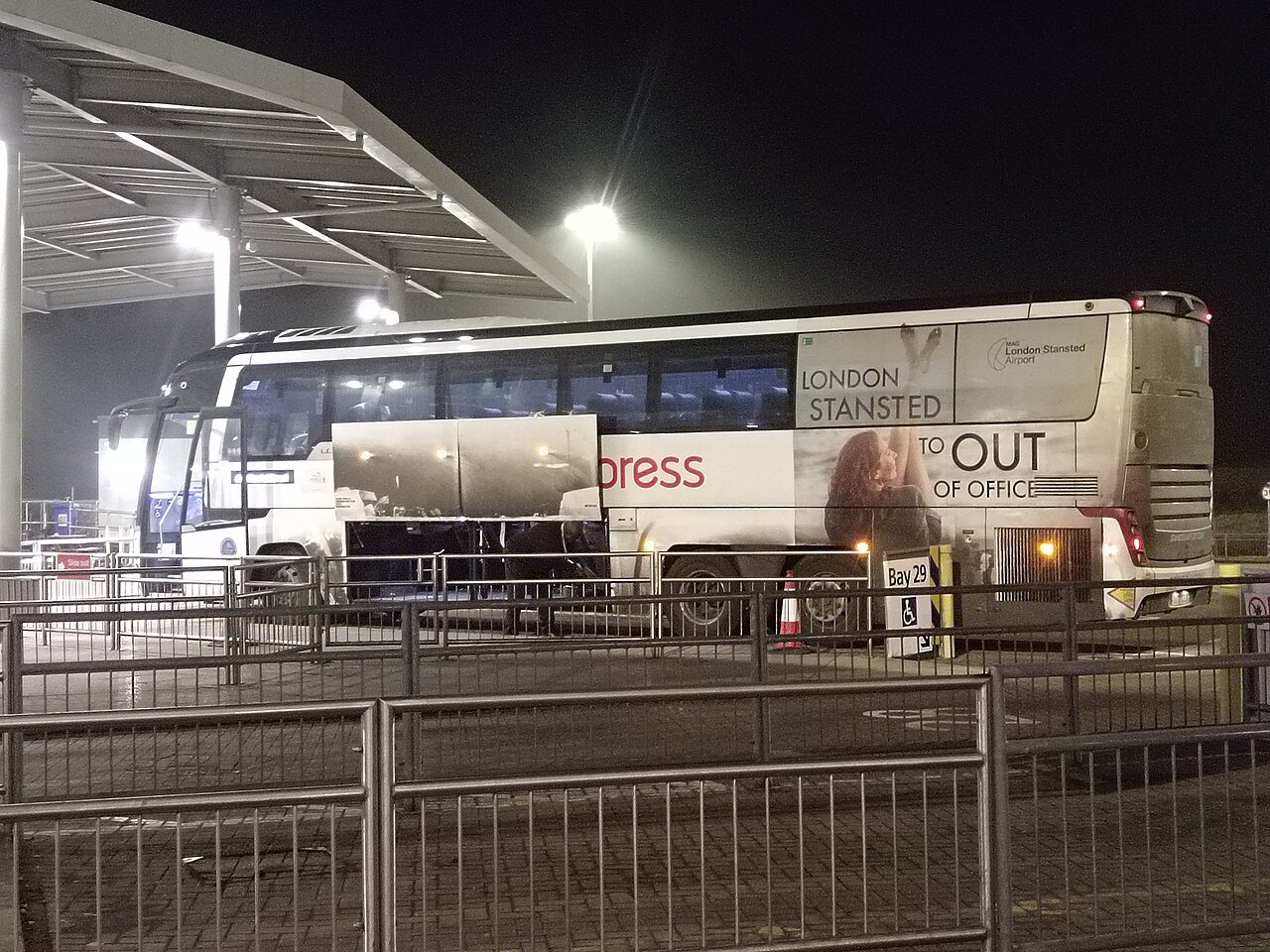
Allow extra time when arriving by coach into London in the morning rush, since road traffic can be heavy, and check which stop your coach uses, as some services call at several.
Immigration, luggage and the first hour
Arriving by air, you pass through passport control before the baggage hall, and the queues vary with the time of day and the number of flights landing together. Many arrivals can use the automated gates; if you cannot, the staffed desks are the alternative. Allow an hour or more between landing and leaving the terminal on a busy morning, and do not book a tight onward connection.
At Heathrow the terminals are linked by walkways and trains, and each has its own rail station or a connection to one. At the other airports the rail stations are a short walk or a shuttle from the terminal. Left-luggage offices are at the main airports and the larger termini, and are the sensible answer to an early arrival before hotel check-in.
Choosing between the railway termini
Visitors often ask which station is best. For sightseeing, the most central are Charing Cross, Waterloo and Victoria, which put you within walking distance or a short ride of Westminster and the south bank. King's Cross and St Pancras sit together on the northern edge of the center, with excellent Underground links, and Paddington is the gateway to Heathrow and the west.
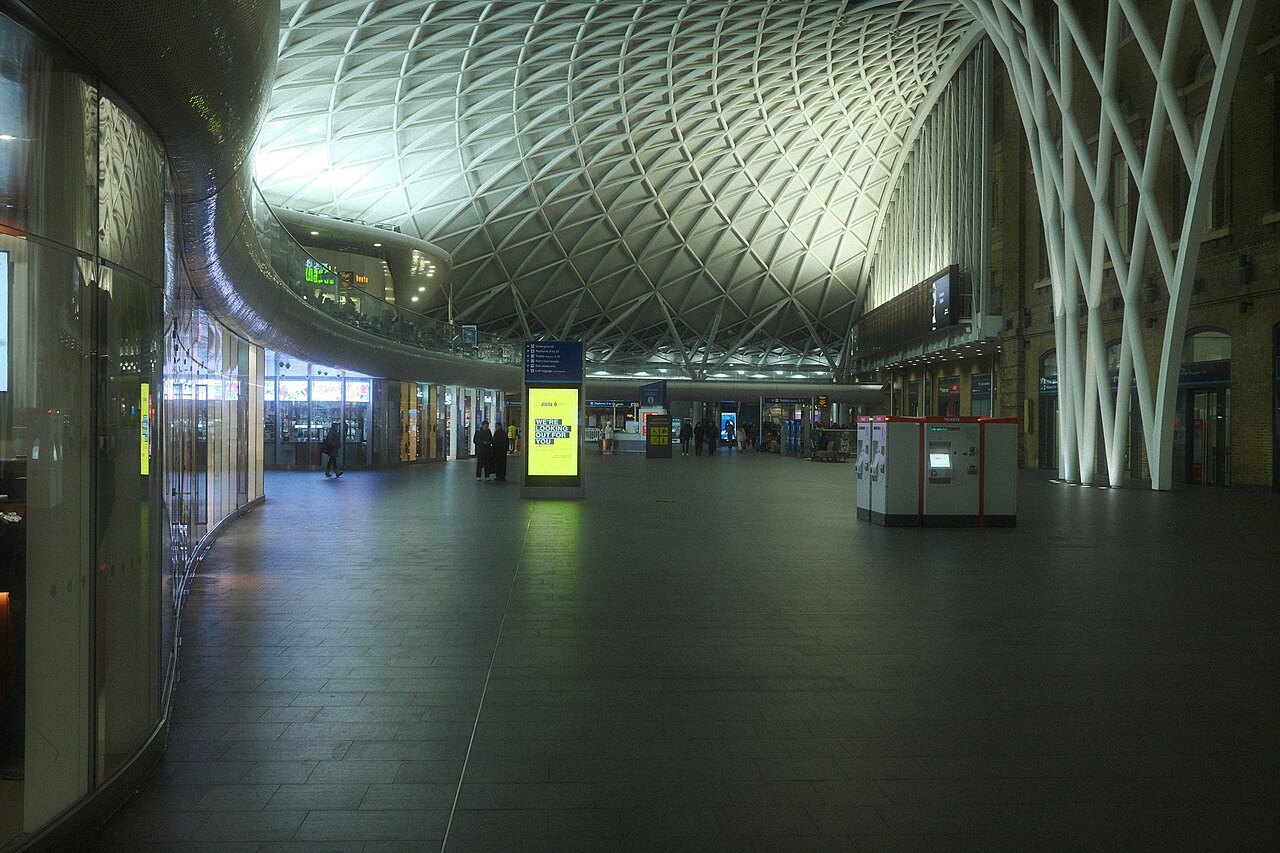
Liverpool Street serves the east and Stansted, and sits on the edge of the City, close to the Tower and the financial district. London Bridge, on the south bank, is the stop for the Shard and Borough Market. None of these is far from a Tube line, so the choice of station matters less than the choice of hotel.
Night arrivals and late trains
Late-night arrivals need some planning. The Underground does not run all night on every line, and the Elizabeth line and the Heathrow rail services stop in the small hours. If your flight lands late, check the last train from your airport and station before you set out, and have a taxi or a night bus as the fallback.
Night buses run across the city and serve the main airports and stations, and official taxis wait at the terminals. Use licensed black cabs or a booked car, not an unsolicited offer in the arrivals hall, which is the standard advice of the airports themselves.
From the station to your bed
Wherever you arrive, the quickest way into the center is almost always the Underground or the Elizabeth line, and the first-time visitor is best served by a contactless bank card or an Oyster card, as explained in Getting Around. Black cabs wait at every terminus and airport and take the shortest route, but the fare in traffic can be high.
If you are arriving with heavy luggage, choose your hotel by the line nearest the station, so that the trip needs at most one change. Where to Stay gives the districts and their connections.
More photographs
Seen on the way
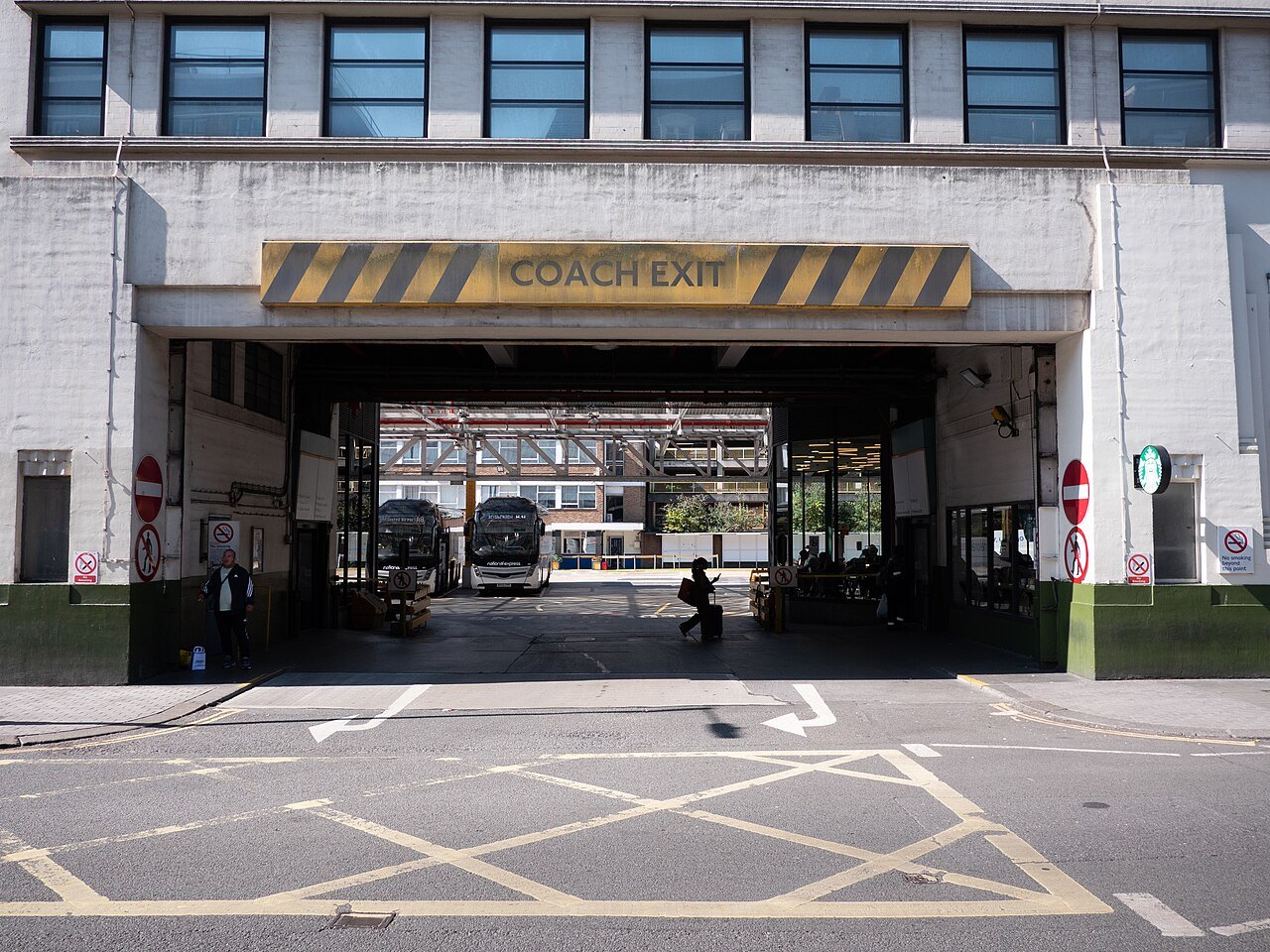
The coach exit of Victoria Coach Station, a wide arch under a concrete building with yellow box markings in frontTom Page, Wikimedia Commons, CC BY-SA 4.0 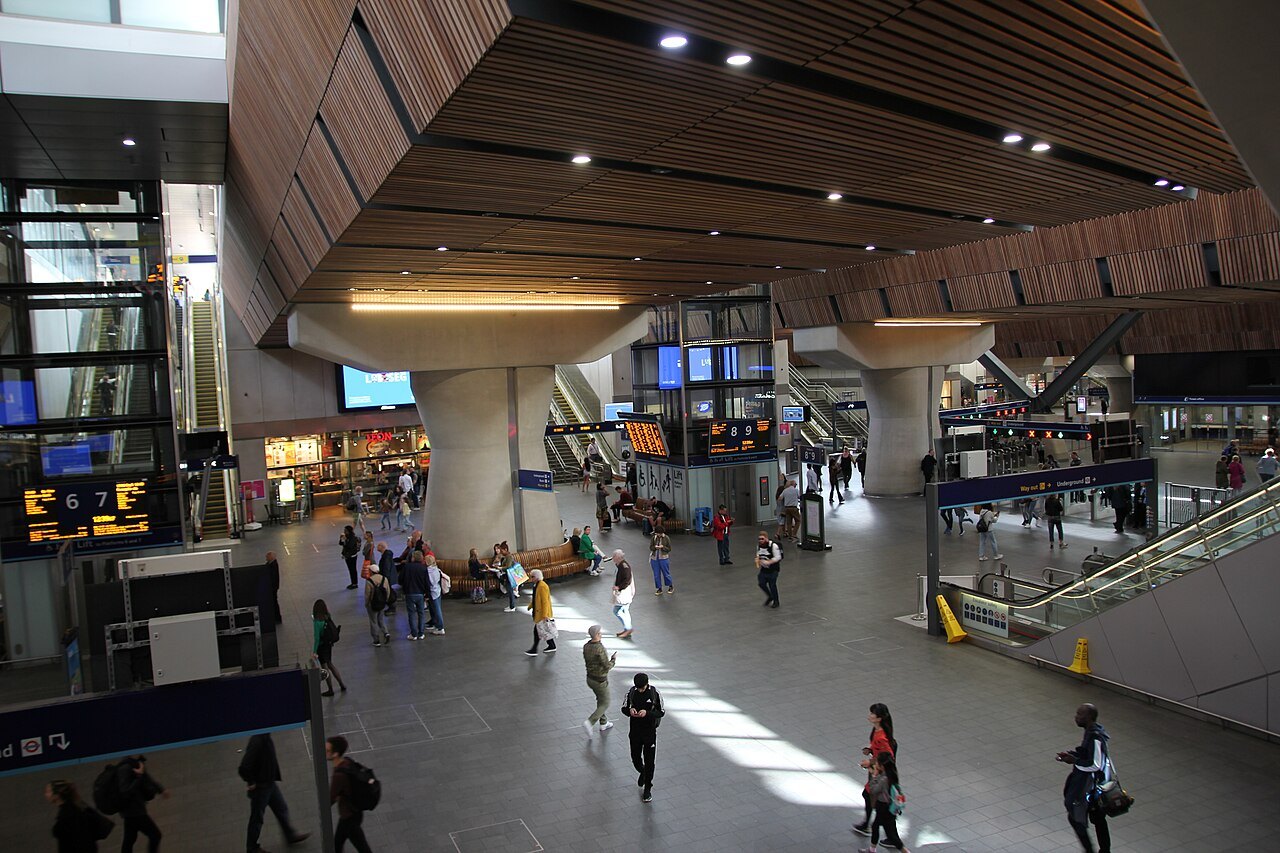
The concourse at London Bridge station, with passengers crossing under a timber-lined ceilingTim Sheerman-Chase, Wikimedia Commons, CC BY 2.0 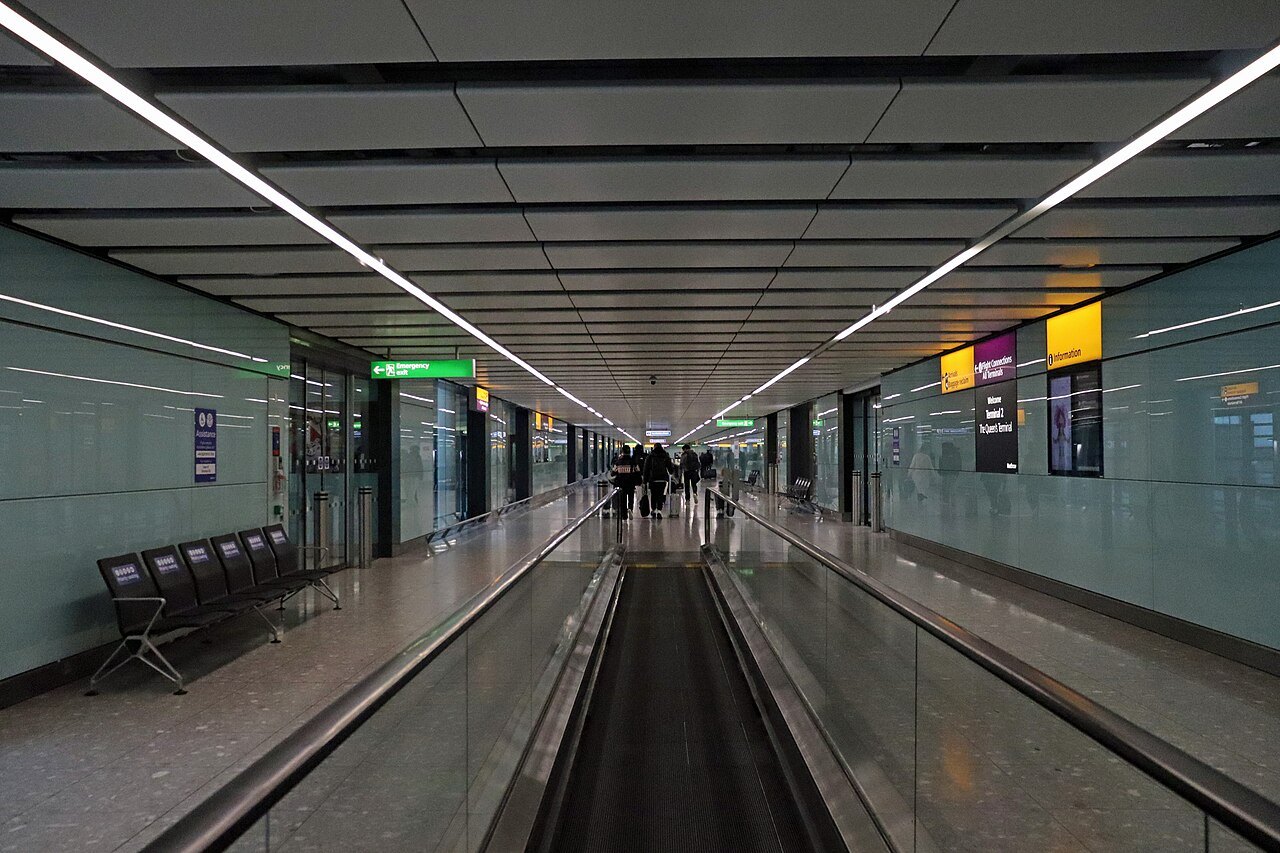
A moving walkway along a glazed corridor at Heathrow Terminal 2, with benches at the sideCoolcaesar, Wikimedia Commons, CC BY 4.0