Home · Sights · Westminster Abbey
Westminster Abbey
What you are looking at
Westminster
- 1The nave and choirThe tallest Gothic nave in England, in the style of thirteenth-century France, begun in 1245 on the orders of Henry III.
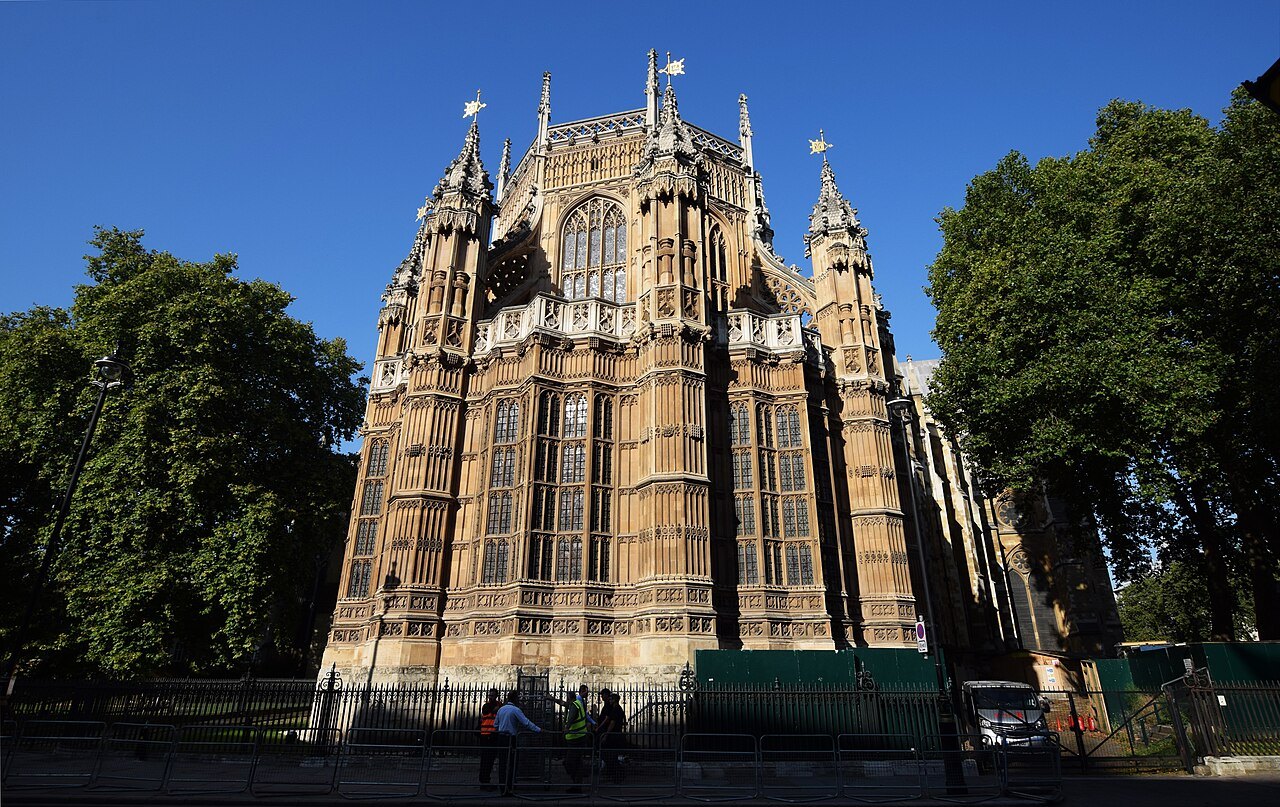
- 2The Henry VII ChapelPerpendicular Gothic at its most extravagant, built from 1503 to 1509 under a fan-vaulted ceiling.
- 3The Coronation ChairAn oak chair ordered by Edward I in 1296 and used at coronations since 1308.
- 4Poets' CornerThe south transept, where Chaucer, Dickens and many writers are buried or remembered.
- 5The Unknown WarriorA grave in the nave holding an unidentified soldier of the First World War.
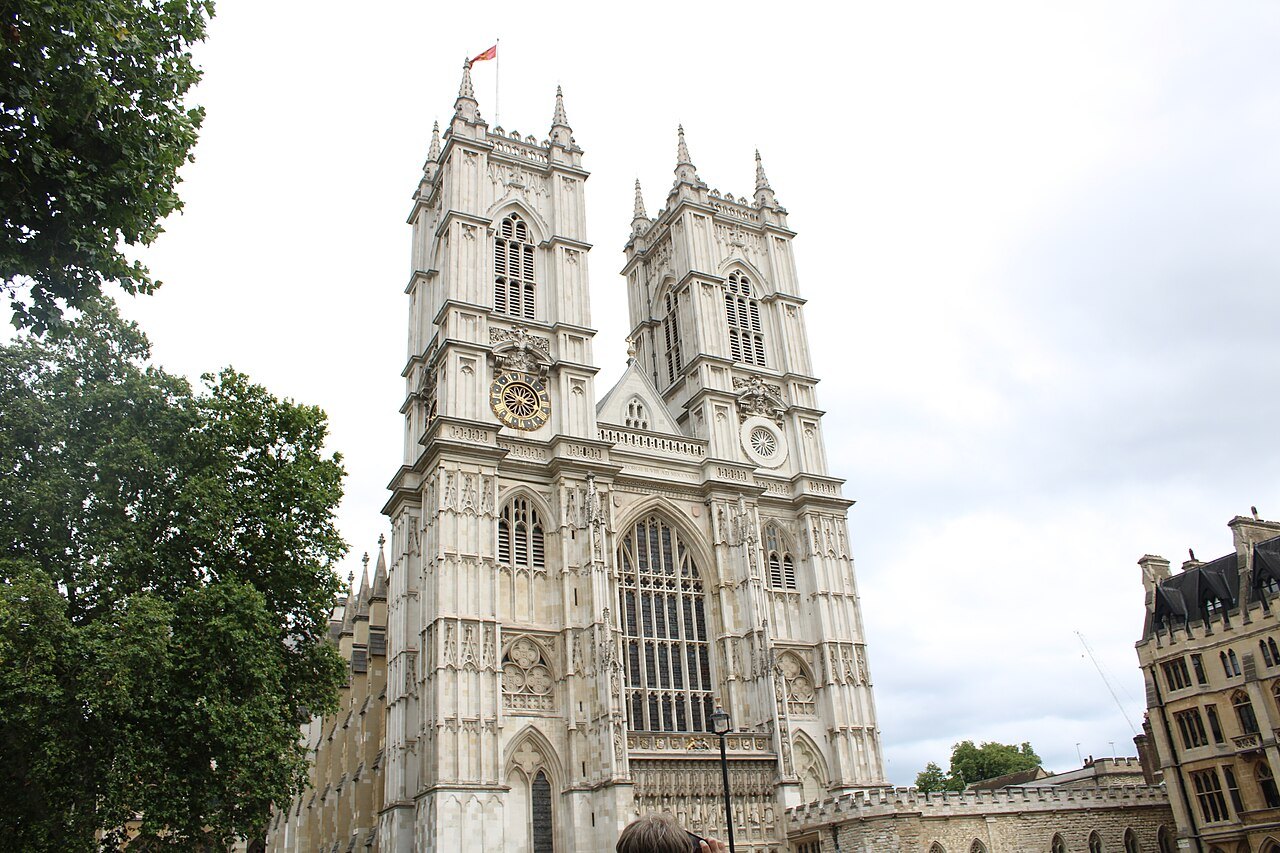
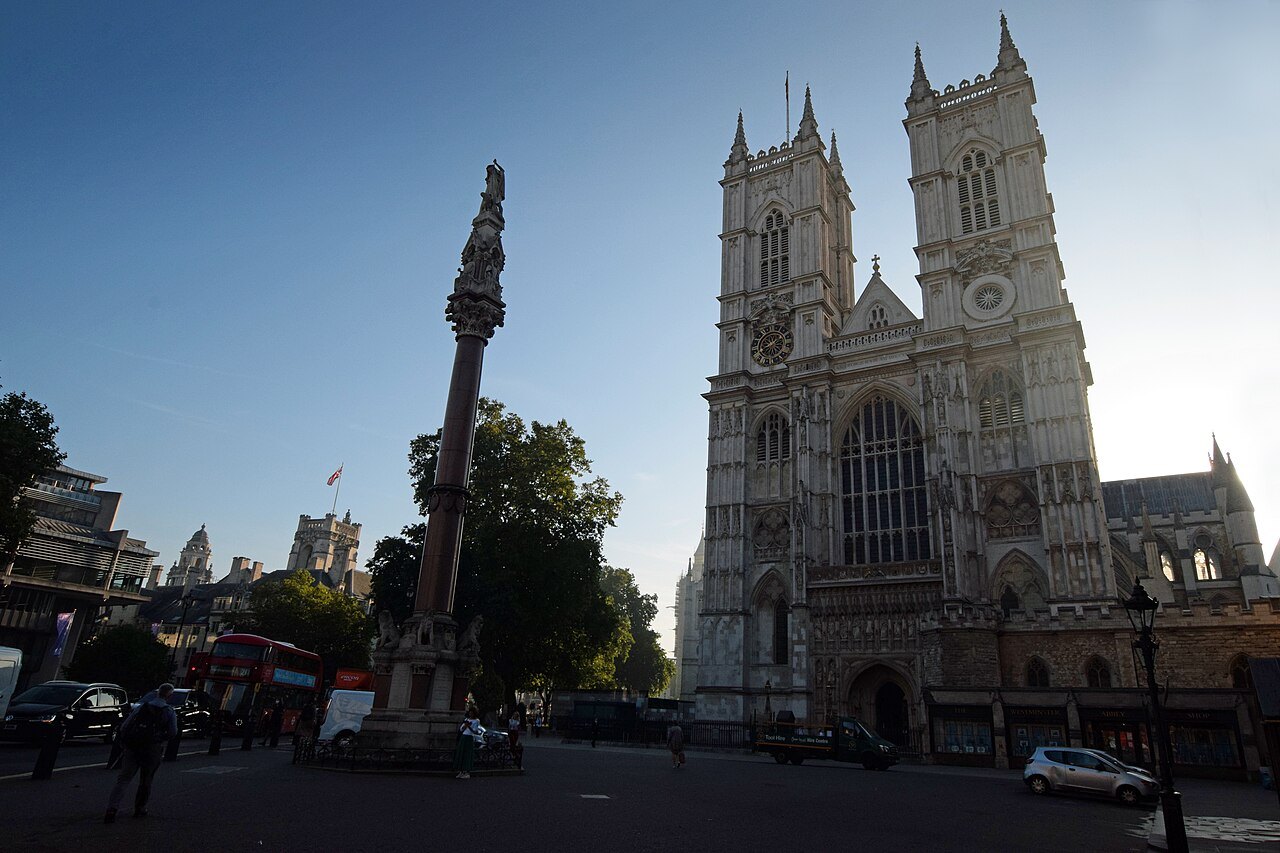
- 6The western towersGothic-Baroque towers added in the 1740s by Nicholas Hawksmoor and John James.
Reading the place
The sight in full
A church, not a cathedral
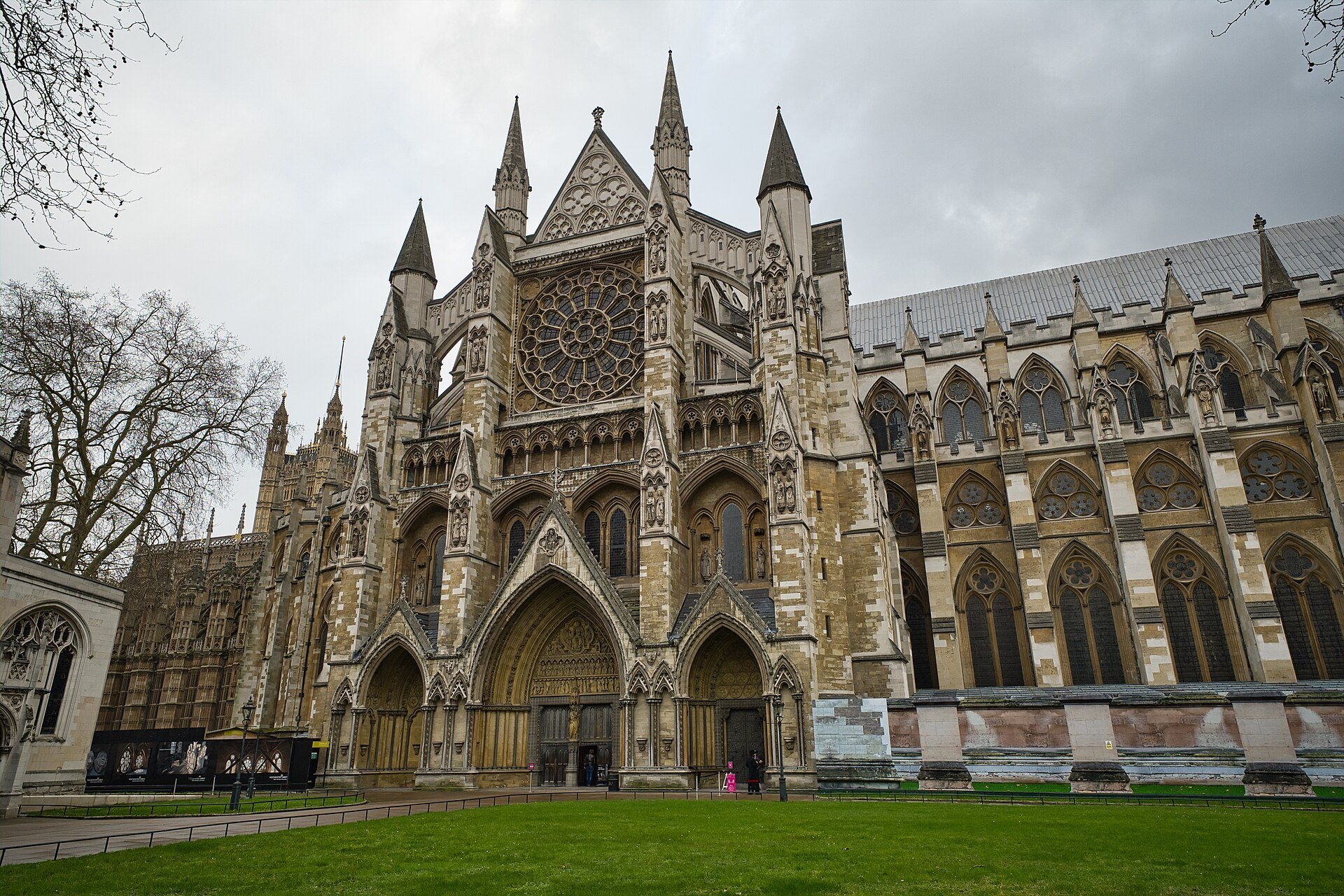
Westminster Abbey is formally the Collegiate Church of Saint Peter at Westminster, and the name matters more than it seems. It is not a cathedral, because it has no bishop and no diocese. Since 1560 it has been a royal peculiar, a Church of England church answerable directly to the sovereign, run by a Dean and Chapter. It is also no longer an abbey: the Benedictine monastery that gave it the name was dissolved under Henry VIII during the Reformation, and the building became a church run by a dean, but the old name stuck.
That separates it from St Paul's Cathedral, which is a working cathedral in the City, and from the Houses of Parliament next door, which is a government building. The three get confused constantly. The abbey is the one with two pale Gothic towers at its west end and a long history of crowning kings.
Edward the Confessor and the first church
A community of Benedictine monks settled here around 959, when the site was an island in the Thames called Thorney Island. Between 1042 and 1052 Edward the Confessor rebuilt the church in the Romanesque style as a burial place for himself, the first church in England laid out on a cruciform plan. It was consecrated on 28 December 1065, about a week before he died, and he was buried here in January 1066.
His successor Harold Godwinson was probably crowned here, and William the Conqueror certainly was, later the same year. Every monarch since has been crowned at the abbey, 40 in all. Edward was made a saint in 1161 and his shrine drew pilgrims for centuries. His church was demolished in the thirteenth century, but the foundations survive under the floor, and the lower parts of the monks' dormitory remain in the undercroft.
Henry III's rebuilding
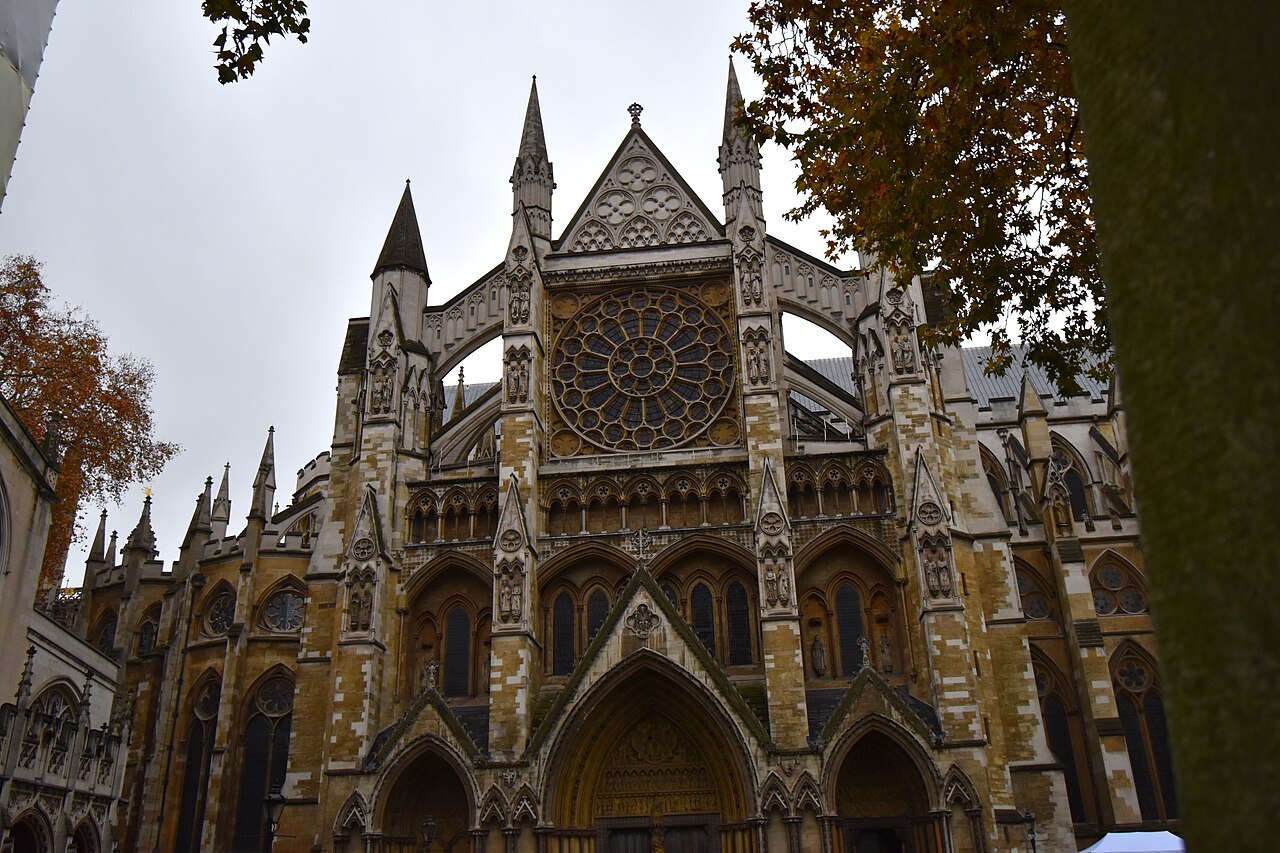
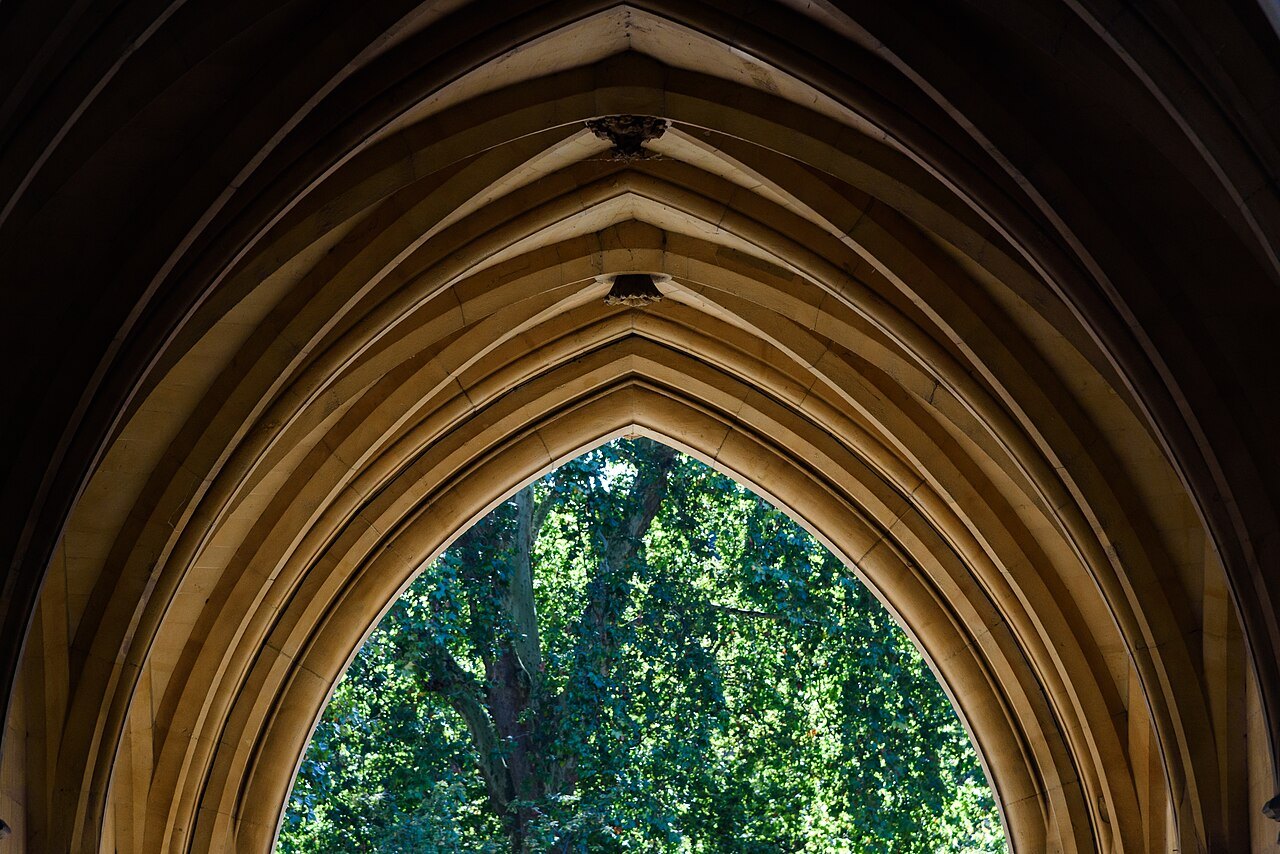
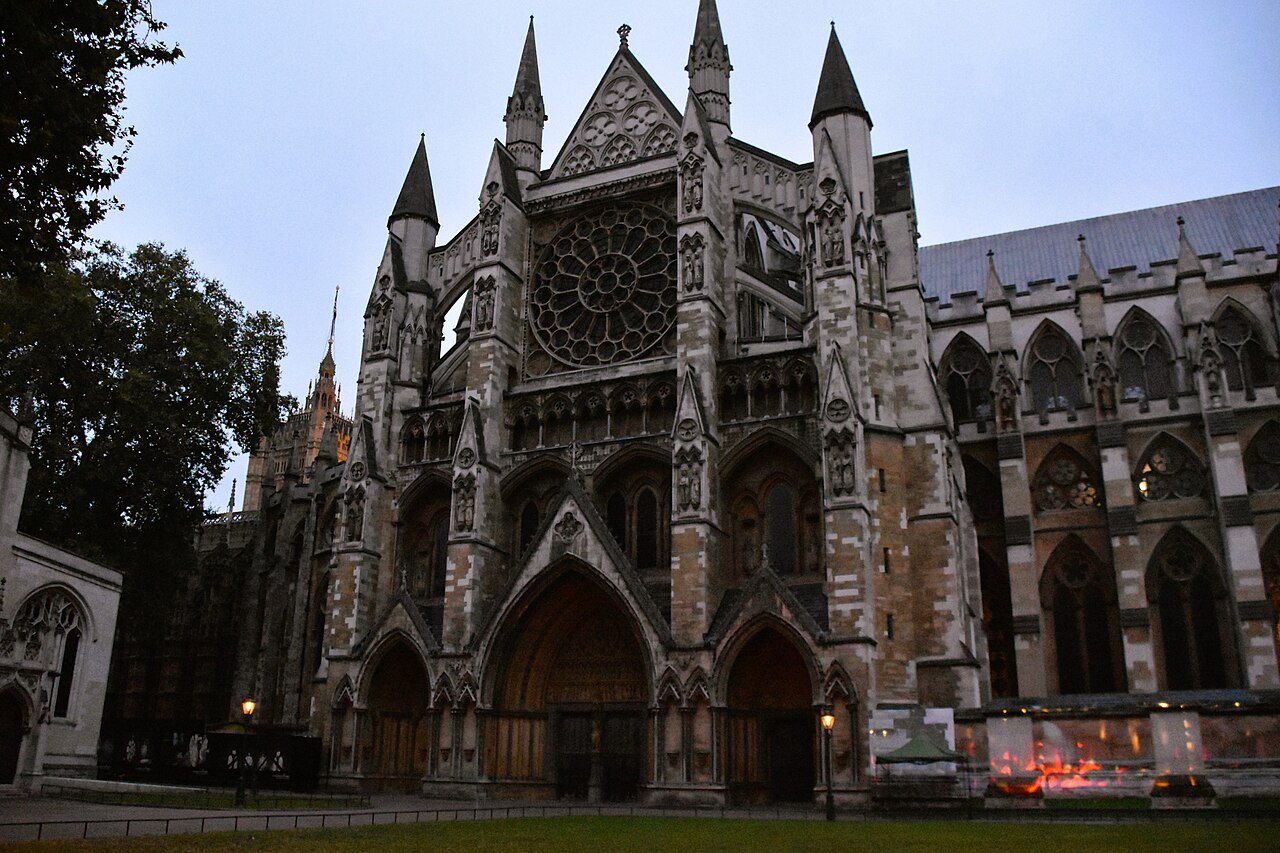
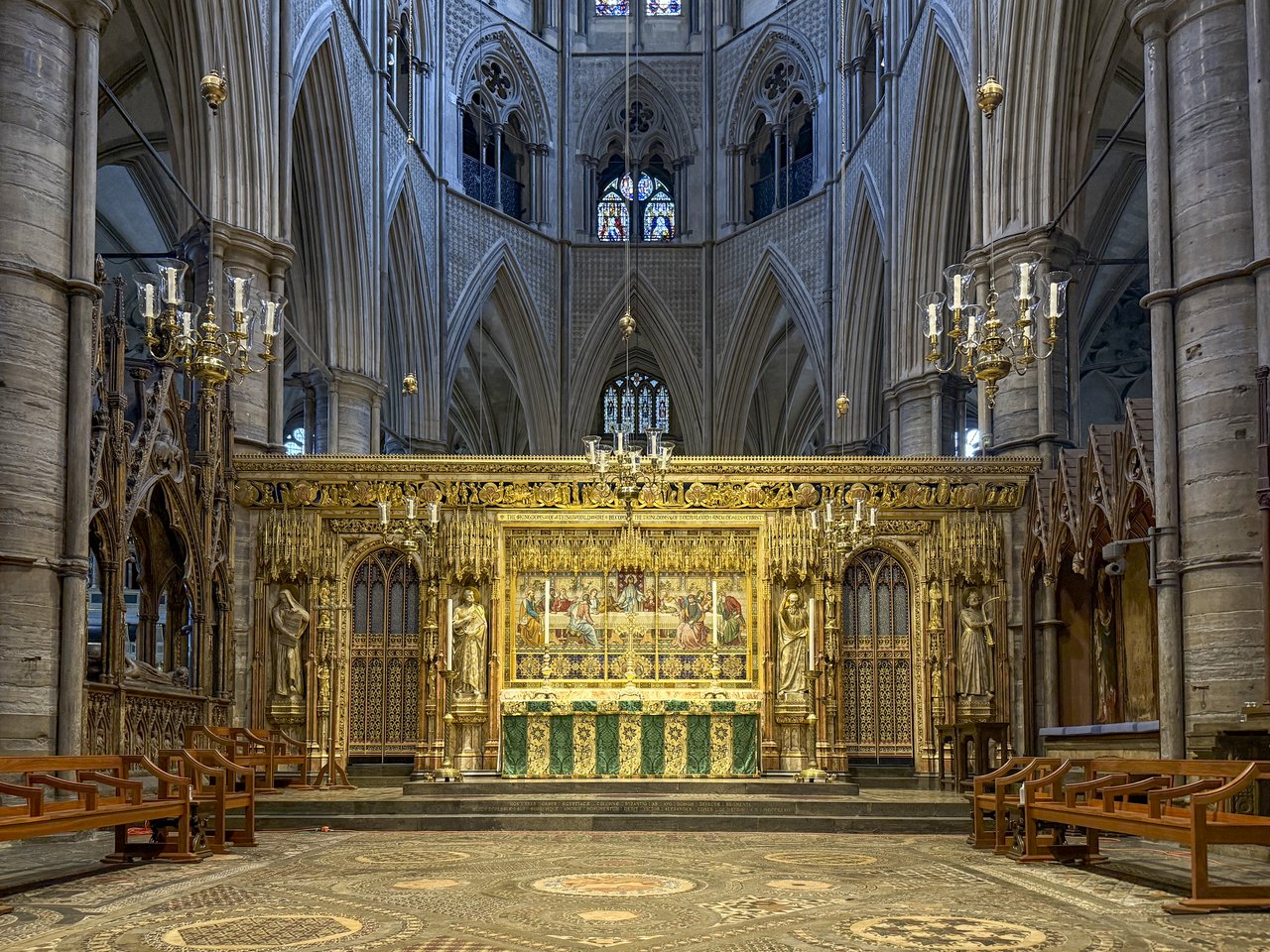
The church you see was begun in 1245, when Henry III decided to rebuild in honour of the Confessor, whom he revered. He drew on the Gothic churches of northern France, and the result has French proportions: a very tall and narrow nave, pointed arches, rows of slender columns of dark Purbeck marble, and flying buttresses outside.
Building went on in fits and starts for the next three centuries. The nave was not finished until 1495 with the west window, and the western towers were added only in the 1740s by Nicholas Hawksmoor and John James, in a Gothic-Baroque style that harmonises with the older work but does not copy it. The last major architects of the Victorian restoration included George Gilbert Scott.
The Henry VII Chapel
At the east end, the chapel built for Henry VII between 1503 and 1509 replaced an older Lady Chapel. Its ceiling is a fan vault with hanging pendants, carved in stone so delicately that the antiquarian John Leland called the chapel the wonder of the world. Henry's first intention was to bury Henry VI here as a second royal saint beside the Confessor; the plan collapsed and Henry VII was buried here himself.
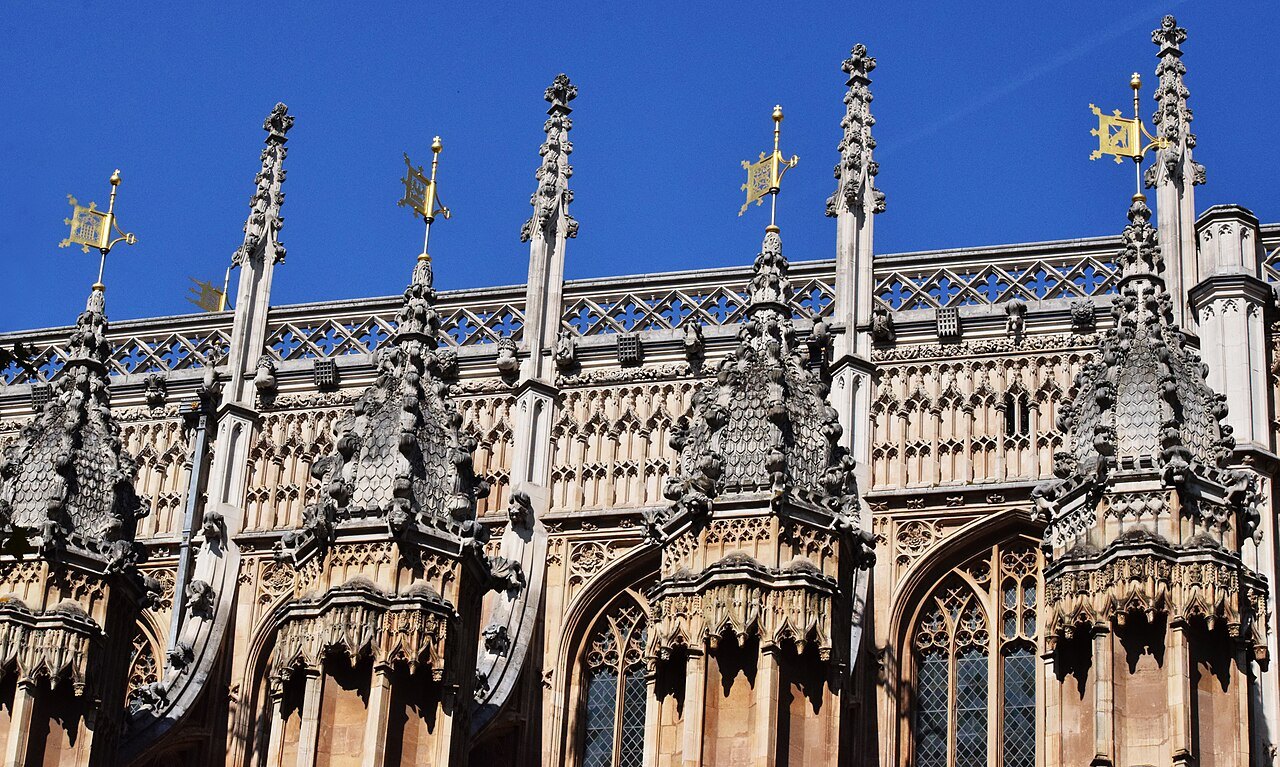
Rows of carved oak stalls fill the chapel, with banners and crests of the knights of an old chivalric order above them. Behind the altar lie the tombs of Elizabeth I and her half-sister Mary I, in a single grave.
The Coronation Chair and the Stone
Edward I took the Stone of Scone, the coronation seat of the Scottish kings, from Scone Abbey in 1296 and had a chair made to hold it. It was carved from oak between 1297 and 1300 by the carpenter Walter of Durham. Since 1308 it has been used at every coronation of an English or British monarch. It has left the abbey only twice: for the installation of Oliver Cromwell as Lord Protector, and for safekeeping in the Second World War.
On Christmas Day 1950 Scottish nationalists broke into the abbey and took the Stone, damaging it, and it was recovered in time for the coronation of 1953.
Poets' Corner and the burials
More than 3,300 people are buried or commemorated in the abbey. The artist William Morris called it a National Valhalla. Poets' Corner, in the south transept, began when Geoffrey Chaucer was buried here in 1400, and it has since gathered writers from Dickens to Hardy. Isaac Newton's monument stands in the nave beside the choir screen.
Near the west door is the grave of the Unknown Warrior, an unidentified British soldier of the First World War brought back from France in 1920 and buried under soil from the battlefields. Visitors are asked not to walk on it. Eighteen monarchs are buried in the abbey.
Visiting
The abbey is a living church with daily services, and parts of it close when one is held or when a state occasion is planned, so look at the abbey's own notice of closures before you set out. The sections on timed tickets and what needs booking are covered in Booking Ahead. You should allow a good half day if you also want the cloisters and the chapter house.
Inside, expect a crowd in the nave and a quieter feeling in the cloisters, the walled square of covered walks where the monks once lived and worked. The chapter house, an eight-sided room with a medieval tiled floor, is where the monks met each morning and where the House of Commons met in the fourteenth century. The Pyx Chamber and the museum in the undercroft hold some of the abbey's oldest objects, including effigies of past monarchs carved in wood. Take a moment in the Little Cloister garden, which has grown herbs since the Middle Ages and offers one of the few quiet spots in Westminster.
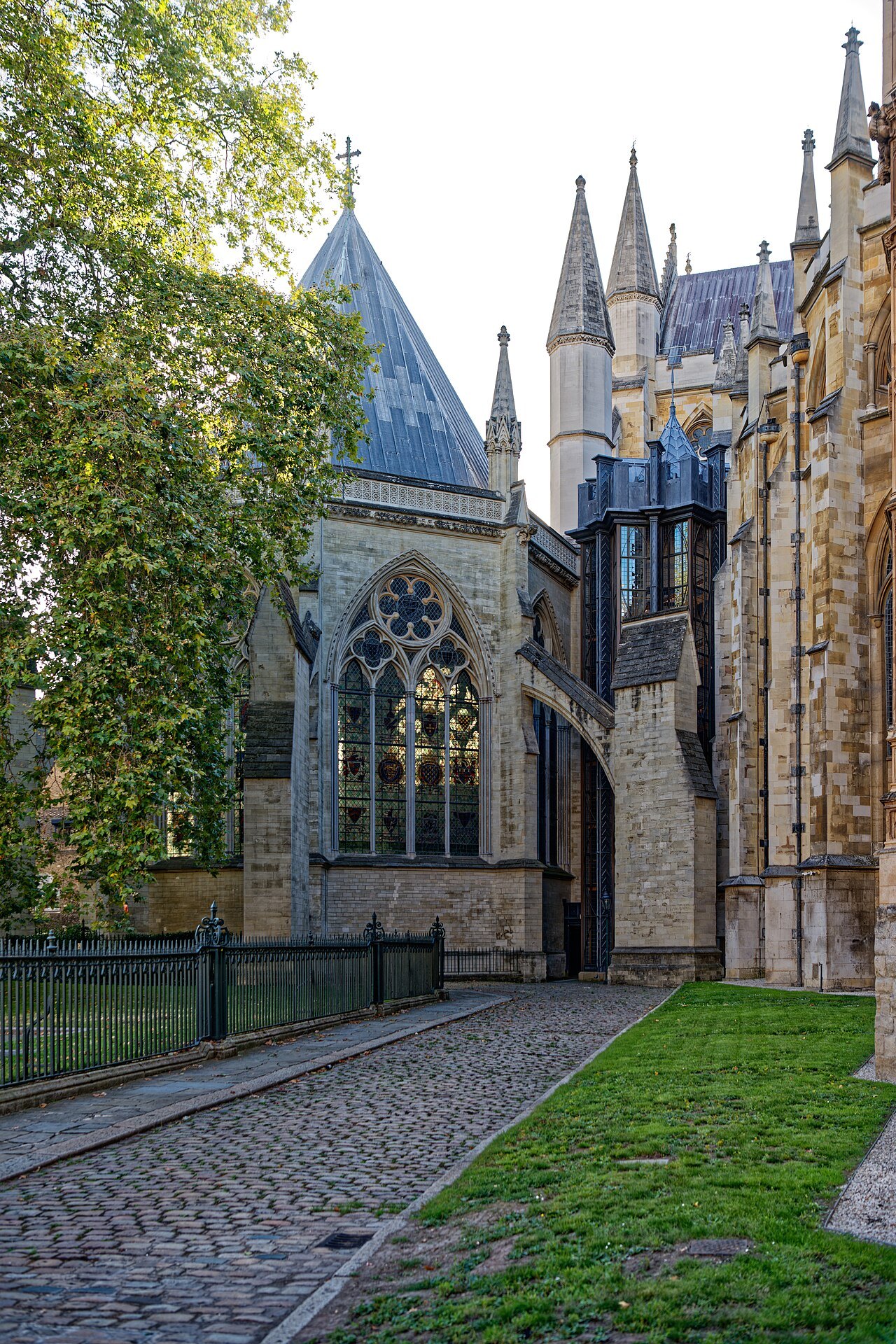
The abbey sits next to the Palace of Westminster, and the walk through St James's Park leads to Buckingham Palace.
Nearby
Where to go next
- Nearby · Westminster · north bankThe Palace of Westminster and Big BenThe Gothic Revival palace where the UK Parliament meets, rebuilt after the fire of 1834, with the Elizabeth Tower at its north end holding the bell nicknamed Big Ben.Read the page →
- Nearby · City of LondonSt Paul's CathedralChristopher Wren's Baroque cathedral, finished in 1710 after the Great Fire, with a dome that was the tallest structure in London for more than two and a half centuries.Read the page →
- Nearby · WestminsterBuckingham PalaceThe King's London residence and administrative headquarters, a Georgian townhouse enlarged into a palace in the 1820s, with a balcony that has framed national celebrations ever since.Read the page →