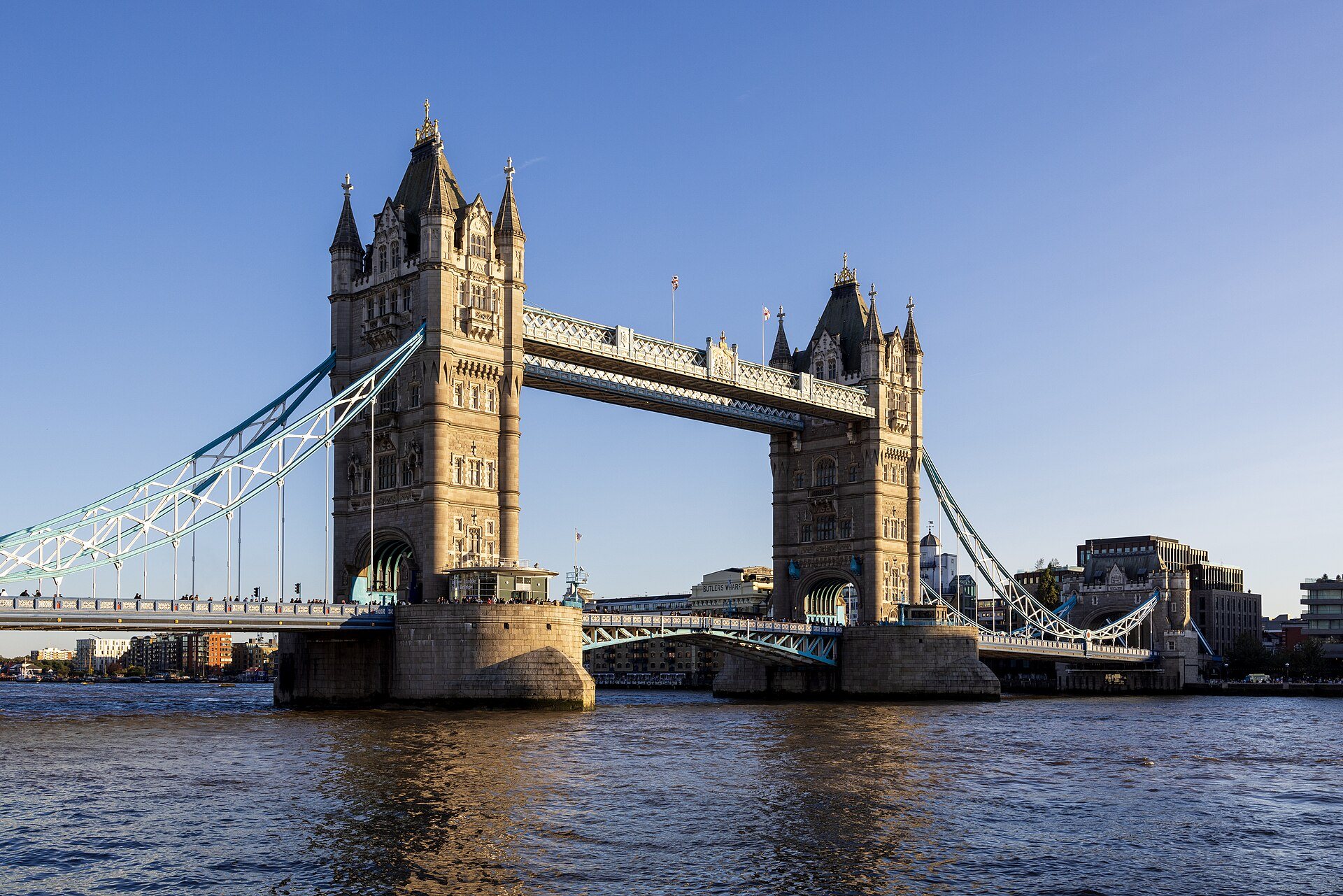
Tower Bridge
What you are looking at
Beside the Tower
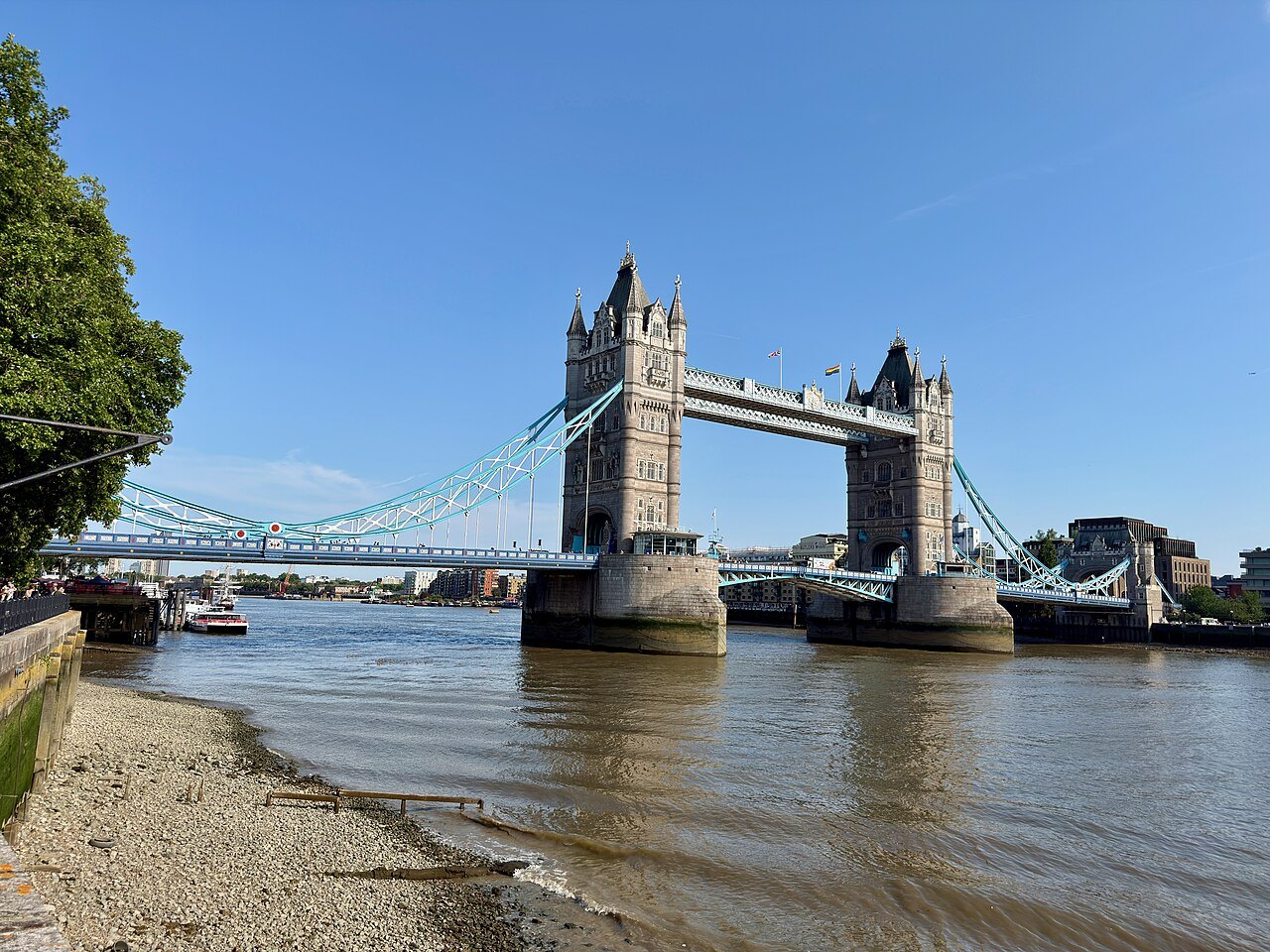
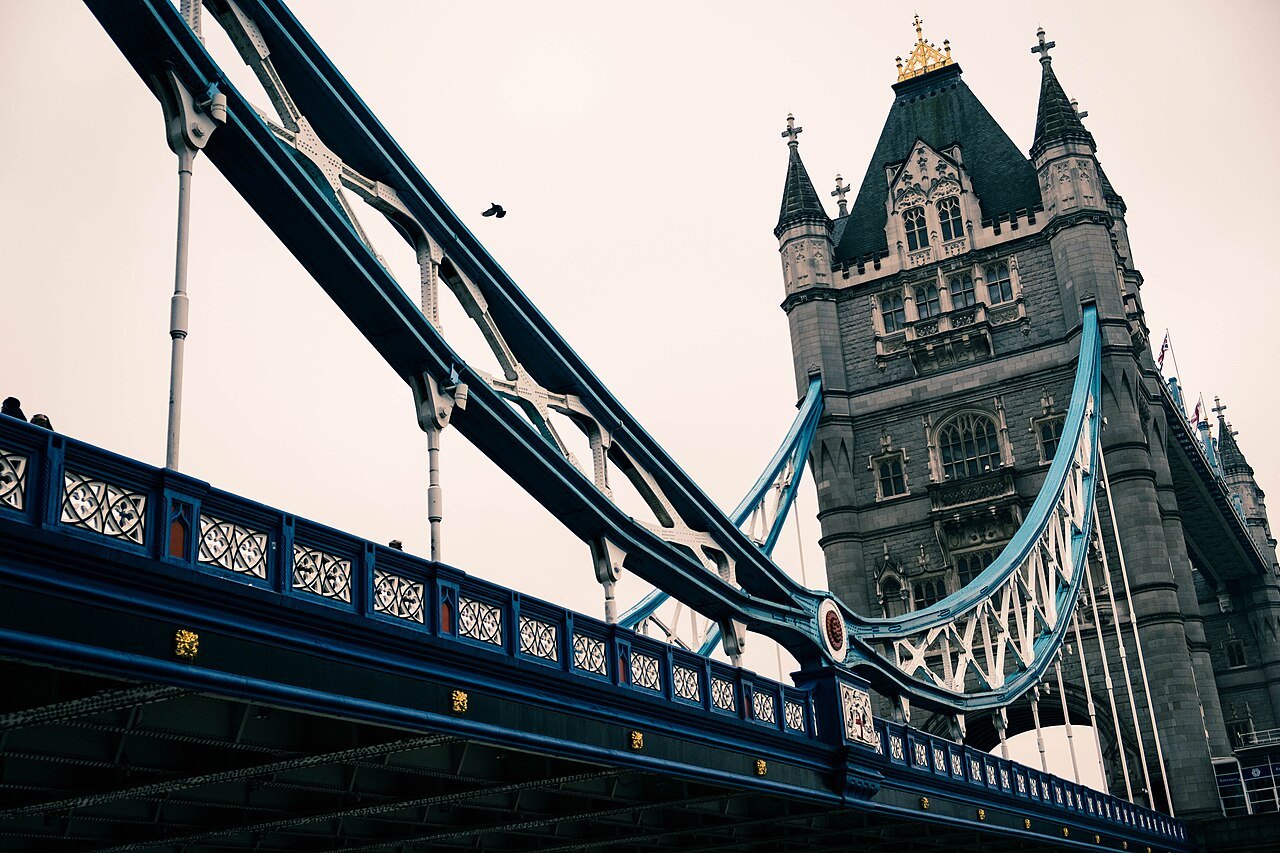
- 1The basculesThe central span splits into two leaves, about 1,070 tons each, that lift to let shipping through the roadway.
- 2The high walkwaysWalkways 143 feet above the river join the towers, now with glass floors and open to the Tower Bridge Exhibition.
- 3The two towersSteel frames clad in Cornish granite and Portland stone, styled in Victorian Gothic to suit the Tower of London beside them.
- 4The engine roomsThe original steam engines that powered the lifting gear survive in the Victorian engine rooms beneath the south end.
- 5The blue and whiteThe bridge was repainted in blue and white after a refurbishment that began in 2008, replacing the 1977 red, white and blue.
Reading the place
The sight in full
Why it matters
Tower Bridge is the picture most people have in mind when they think of the Thames. It is a Grade I listed combined bascule, suspension and, until 1960, cantilever bridge, built between 1886 and 1894 to a design by Horace Jones and the engineer John Wolfe Barry, and it is still a busy crossing, used by more than 40,000 motorists, cyclists and pedestrians every day.
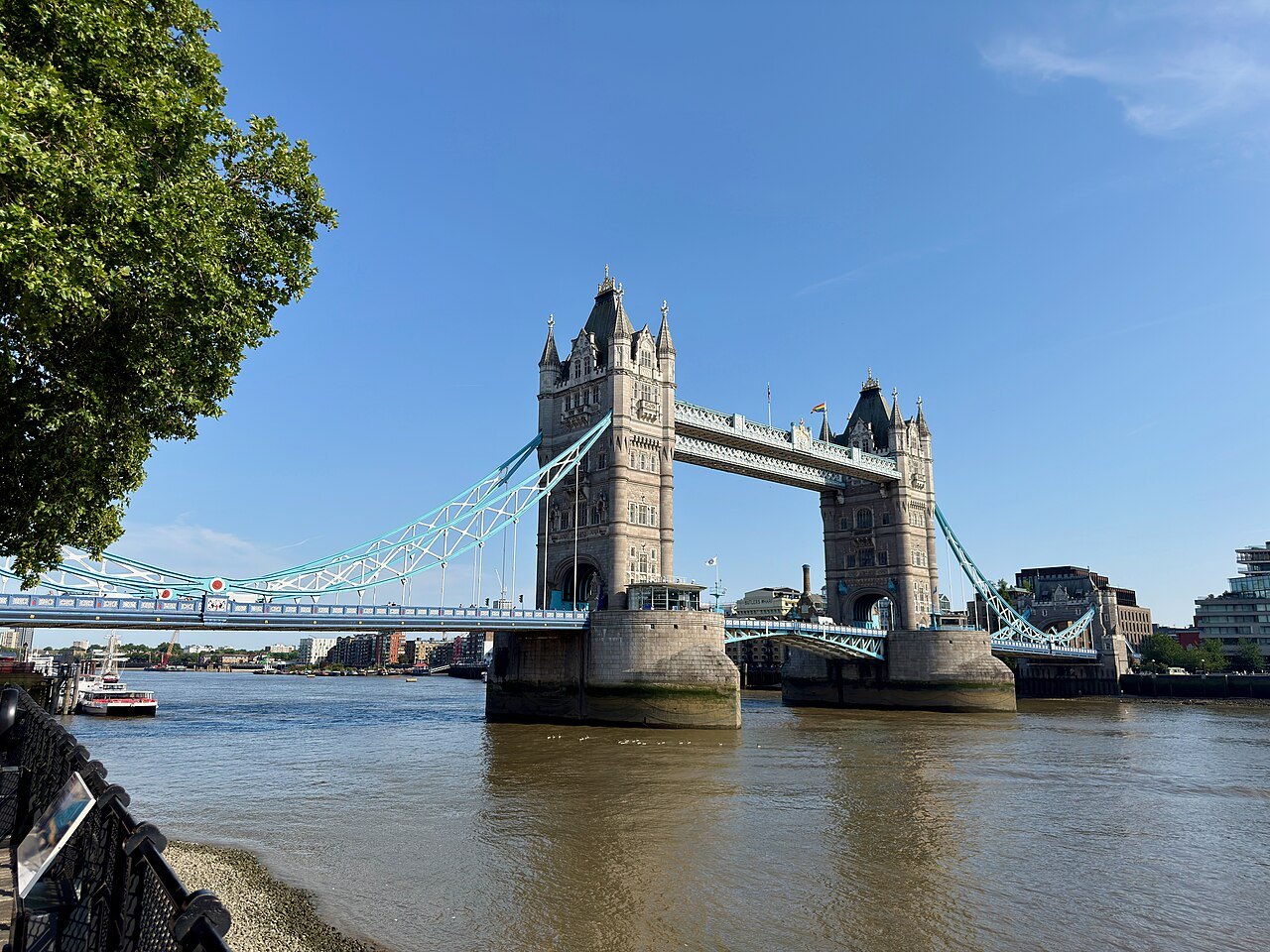
It is also one of the most confused names in the city. This is not London Bridge, which stands about half a mile upstream, and it is not the Tower of London, which stands at its north end. A popular legend says that an American who bought the old London Bridge in 1968 thought he was buying this one; he denied it, and the man who sold it has debunked it.
Why a bridge that opens
By the late nineteenth century the East End of London was growing fast, and people wanted a crossing downstream of London Bridge. A fixed bridge at street level could not be built, because it would cut sailing ships off from the docks of the Pool of London between London Bridge and the Tower. A committee formed in 1875 collected more than fifty designs, among them one from the engineer Joseph Bazalgette that was rejected for lack of headroom, and in 1884 it settled on a low-level bridge with a mechanical opening.
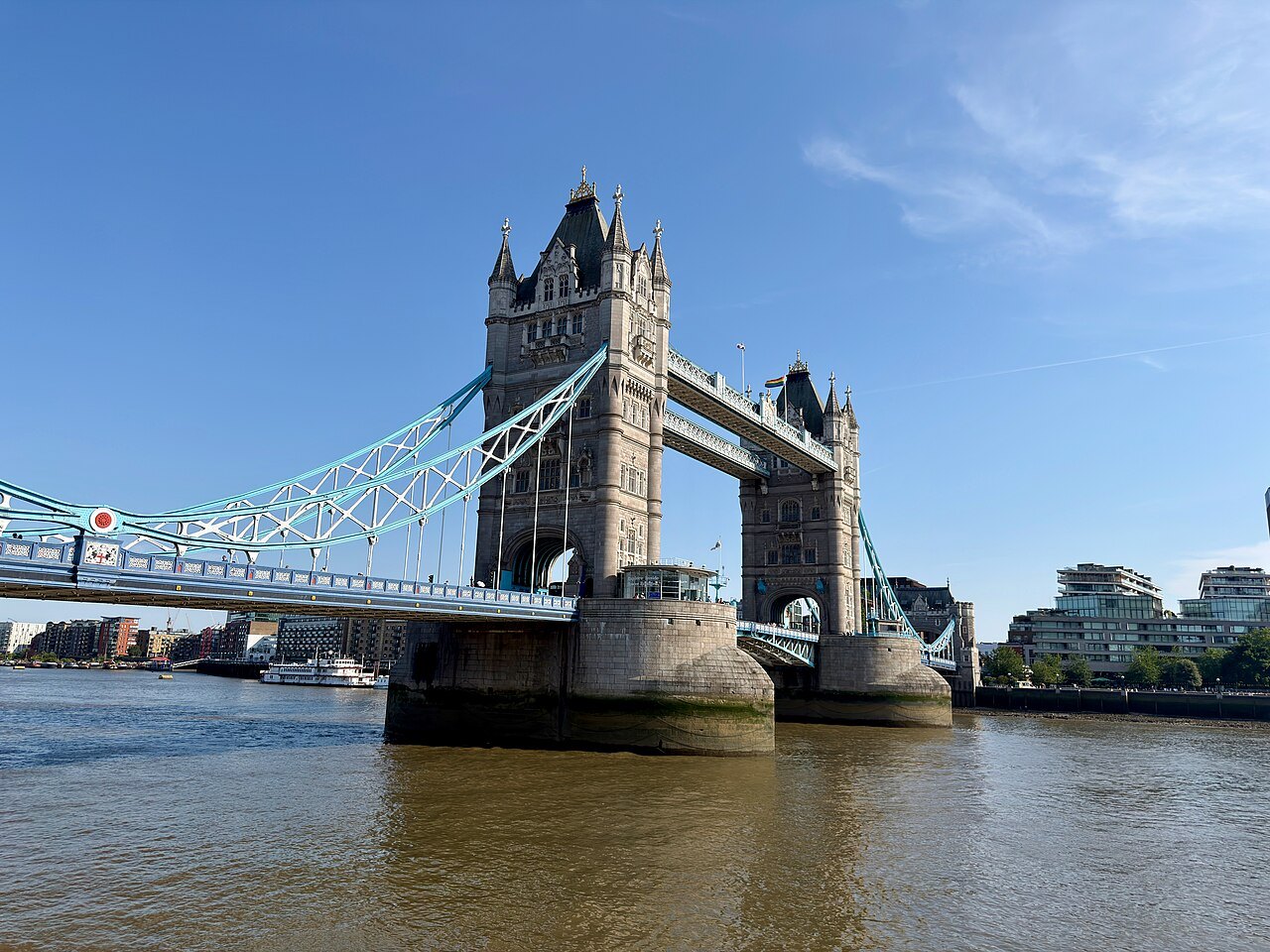
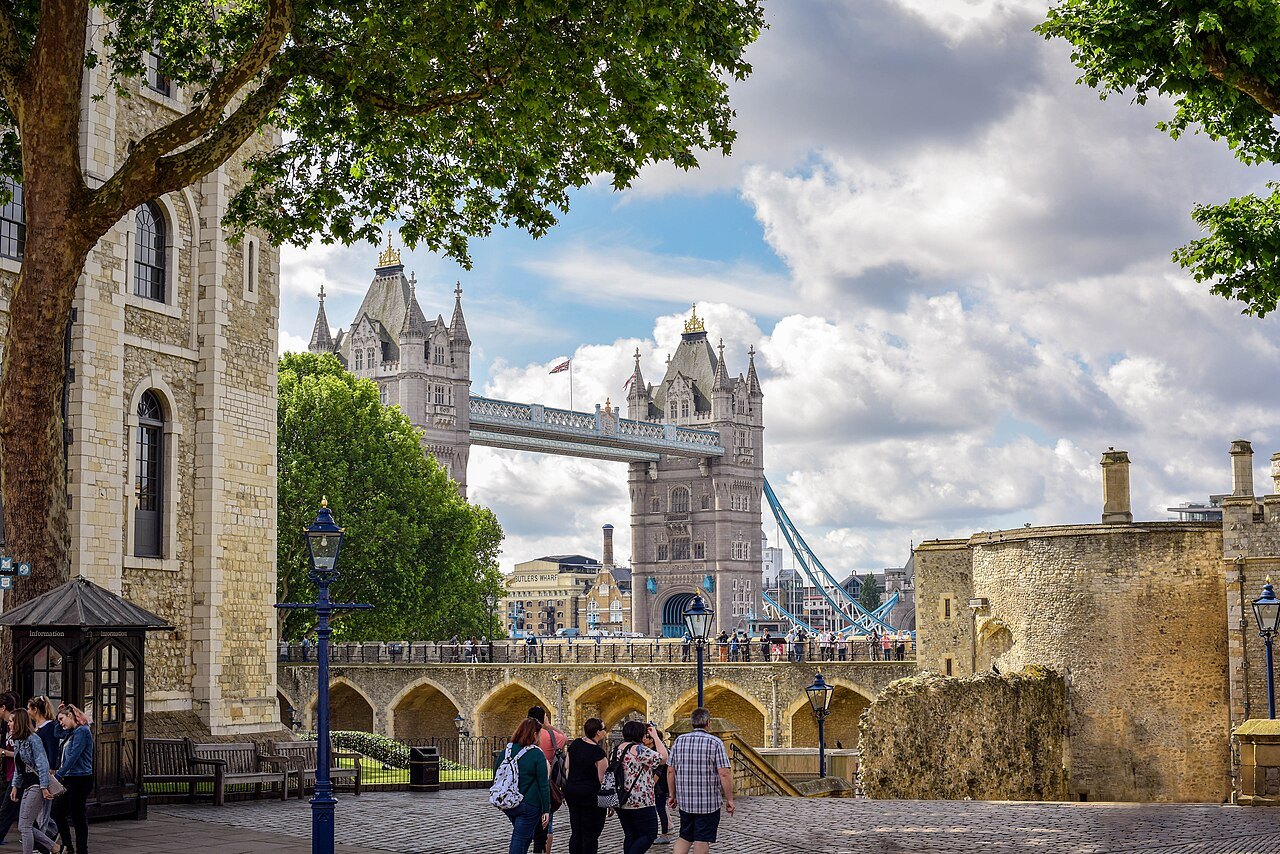
The act of Parliament that authorized it, in 1885, was specific. The opening span had to be 200 feet clear, the bridge had to be able to open at any time for any vessel regardless of delays to road traffic, and its design had to accord with the architecture of the Tower of London. That last clause explains the turrets.
Building it
Work began on 22 April 1886 and the Prince of Wales laid the foundation stone on 21 June. It took eight years and an average of 432 people on site at a time, with ten fatal accidents recorded. Two piers holding more than 70,000 tons of concrete were sunk into the riverbed, and more than 11,000 tons of steel made the frames of the towers and walkways, which were then clad in Cornish granite and Portland stone.
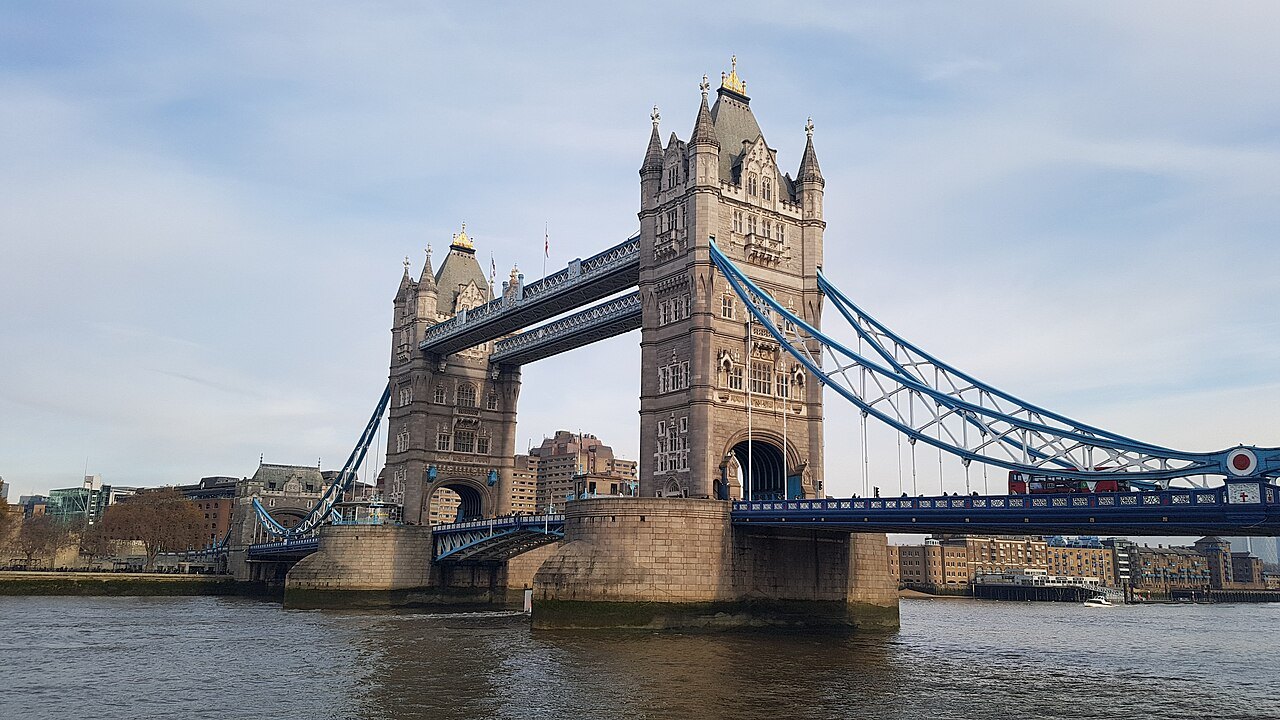
Horace Jones died in 1887 and Wolfe Barry took over as architect. His colleague Stevenson replaced Jones's brick facade with the more ornate Victorian Gothic that gives the bridge its look today. The cost was a little over a million pounds, and the bridge was opened on 30 June 1894 by the Prince and Princess of Wales.
What you see
The bridge is 940 feet long including its abutments. Each side span is a suspension bridge 270 feet long, and between the towers the 200-foot central span is split into two equal leaves. The leaves are counterbalanced so well that they can be raised in five minutes through an arc of eighty-two degrees. The structure was designed to withstand strong winds, a requirement introduced after the Tay Bridge disaster fifteen years before.
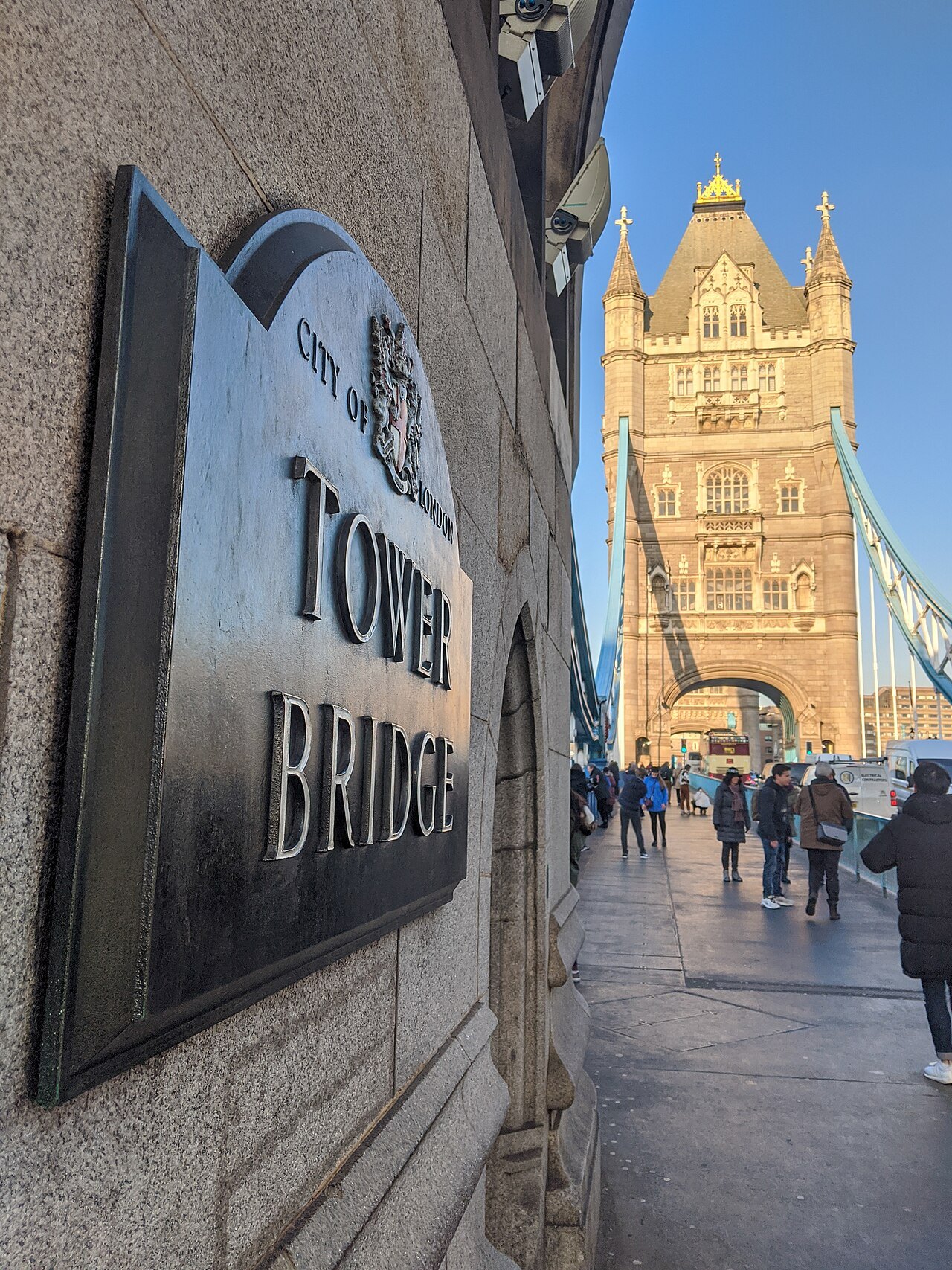
The walkways high above the road were meant to let pedestrians cross while the roadway was open to ships. They gained a reputation for pickpockets and were closed in 1910, then reopened in 1982 as part of the Tower Bridge Exhibition, which also takes in the Victorian engine rooms. In 2014 the walkway floors were changed to glass in places, so you can see the road and the Thames beneath your feet.
One detail rewards the eye: a chimney on the bridge is painted to look like a lamppost. It served a fireplace in a guardroom inside one of the piers.
How it works now
The original lifting machinery was powered by pressurized water held in hydraulic accumulators, with four engines to a pier so that the bridge always had a spare. In 1974 it was largely replaced by an electro-hydraulic system that uses oil, and only the final gear wheels are original. The old engines are on show in the engine rooms.
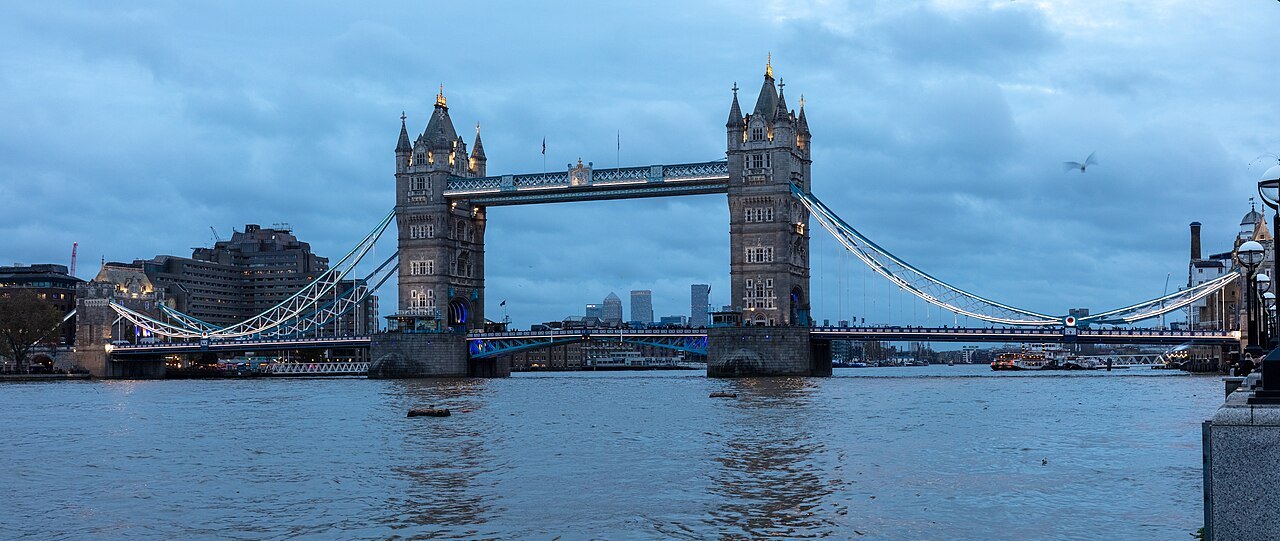
River traffic still has priority over road traffic. In the first year after opening the leaves were raised 6,160 times, an average of seventeen a day; now it happens about a thousand times a year. Vessels give 24 hours' notice and opening times are published in advance, and there is no charge to open the bridge. Pedestrians can walk across the roadway when it is down, so you can cross the Thames on foot and then watch a lift from the bank.
Strange days at the bridge
Few London structures have had stranger moments. In 1912 the pilot Francis McClean flew a floatplane between the bascules and the walkways, and in 1952 a double-decker bus found the roadway starting to rise beneath it; the driver, Albert Gunter, accelerated across a gap of about three feet and dropped onto the other leaf, and no one was seriously hurt.
In 1941 a parachute mine exploded near the bridge during the Blitz and damaged the bascules, towers and engine room; in 1940 the high-level span had taken a direct hit. In 1997 the opening of the bridge split President Clinton's motorcade in two. And in 1999 a Freeman of the City drove two sheep across it to exercise an ancient right.
Seeing it well
For the best view of the whole bridge, stand on the north bank by the Tower of London or walk onto the south bank at the Shard end, where the towers rise clear of the river. The glass floors and the engine rooms need a ticket, and what to book ahead is covered at Booking Ahead.
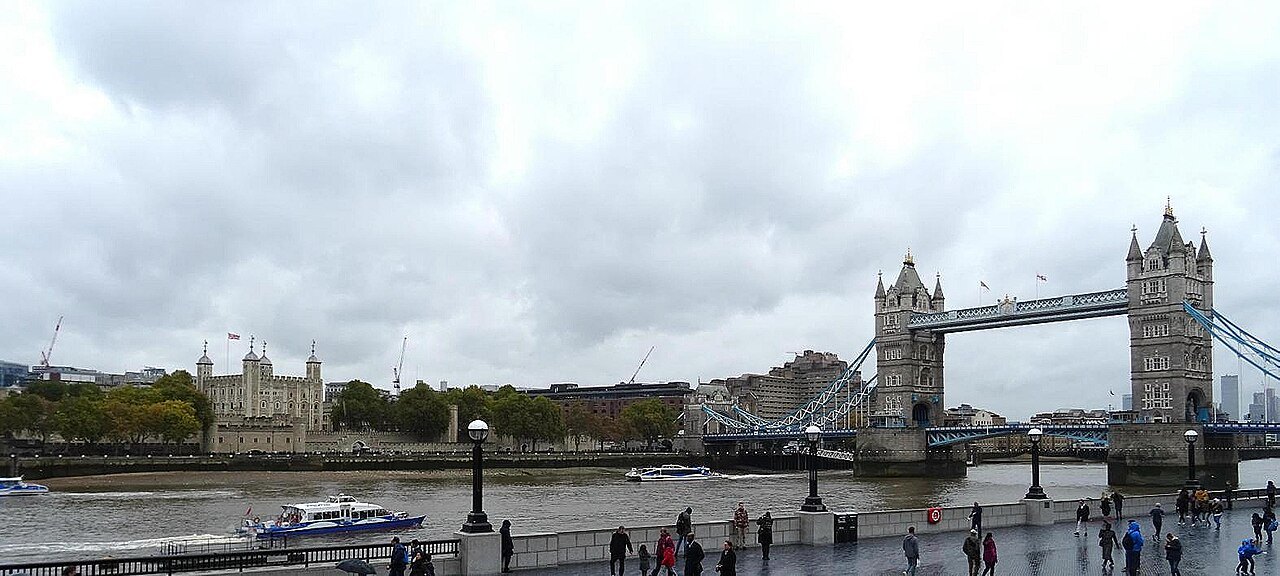
The bridge anchors the end of the downstream walk that begins at the Palace of Westminster, and the river itself is the subject of the Thames page.
Nearby
Where to go next
- Nearby · Tower Hamlets · north bankThe Tower of LondonA Norman fortress begun beside the Thames in 1066 and enlarged ring by ring, which has been a palace, an armoury, a mint, a menagerie, a prison and the home of the Crown Jewels.Read the page →
- Nearby · Southwark · south bankThe ShardA glass pyramid of 95 storeys designed by Renzo Piano, 1,016 feet high, completed in 2012 beside London Bridge station and still the tallest building in the United Kingdom.Read the page →
- Nearby · Southwark · south bankBorough MarketA food market beside London Bridge with roots in the twelfth century or earlier, now under Victorian ironwork and mostly selling specialty foods to the public.Read the page →