Home · Sights · Shakespeare's Globe
Shakespeare's Globe
What you are looking at
Bankside · south bank
- 1The open-air theatreA round wooden playhouse with a thatched roof and an open yard, seating about 1,400 spectators.
- 2The yardThe standing area in front of the stage, where Elizabethan audiences watched for a penny.
- 3The Sam Wanamaker PlayhouseA candle-lit indoor theatre that opened in 2014, modelled on a Jacobean playhouse.
- 4The exhibition and tourDisplays on the building of the theatre and the world of the stage.
- 5The Bankside walkThe river path to Tate Modern and the Millennium Bridge.
Reading the place
The sight in full
What it is
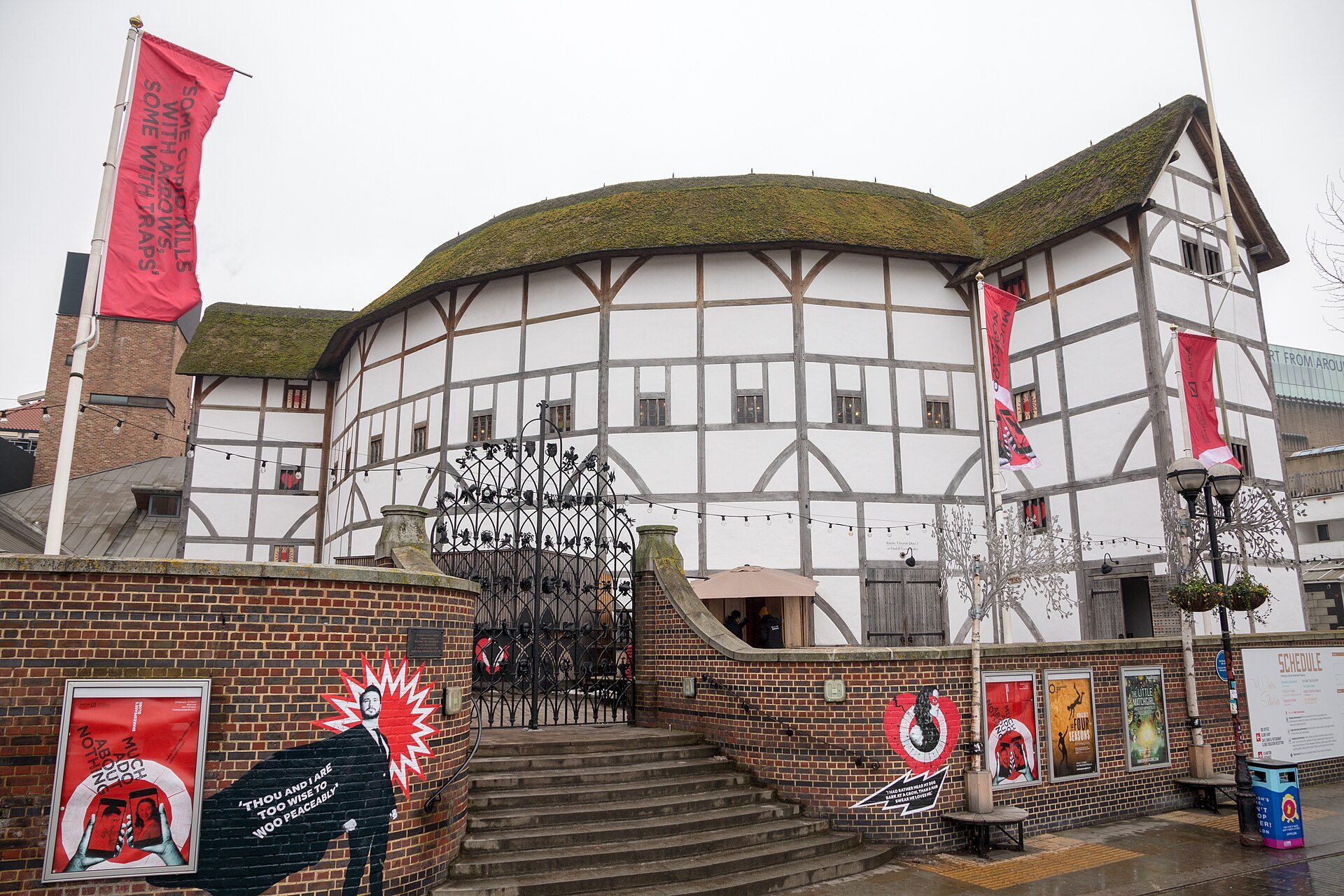
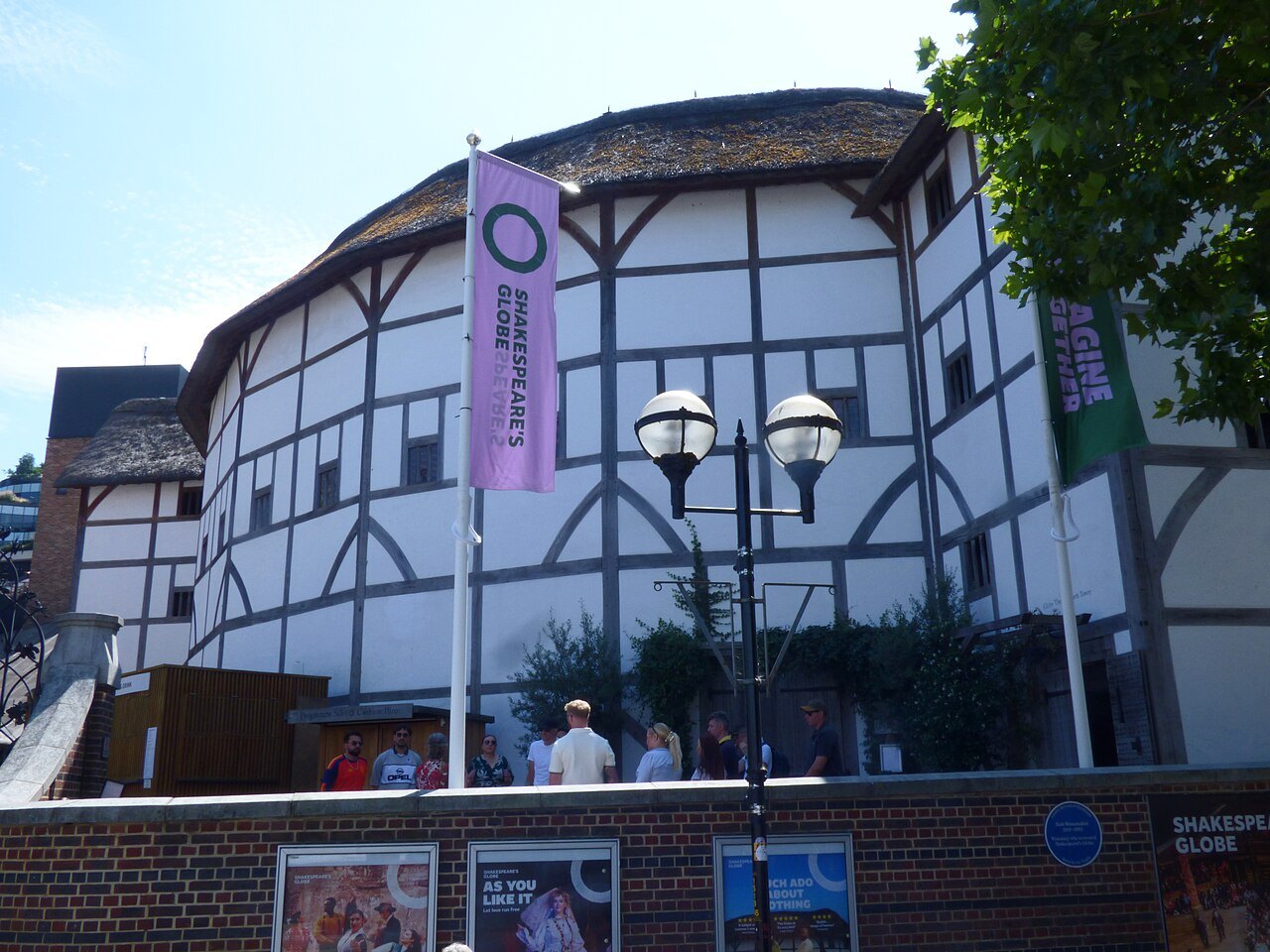
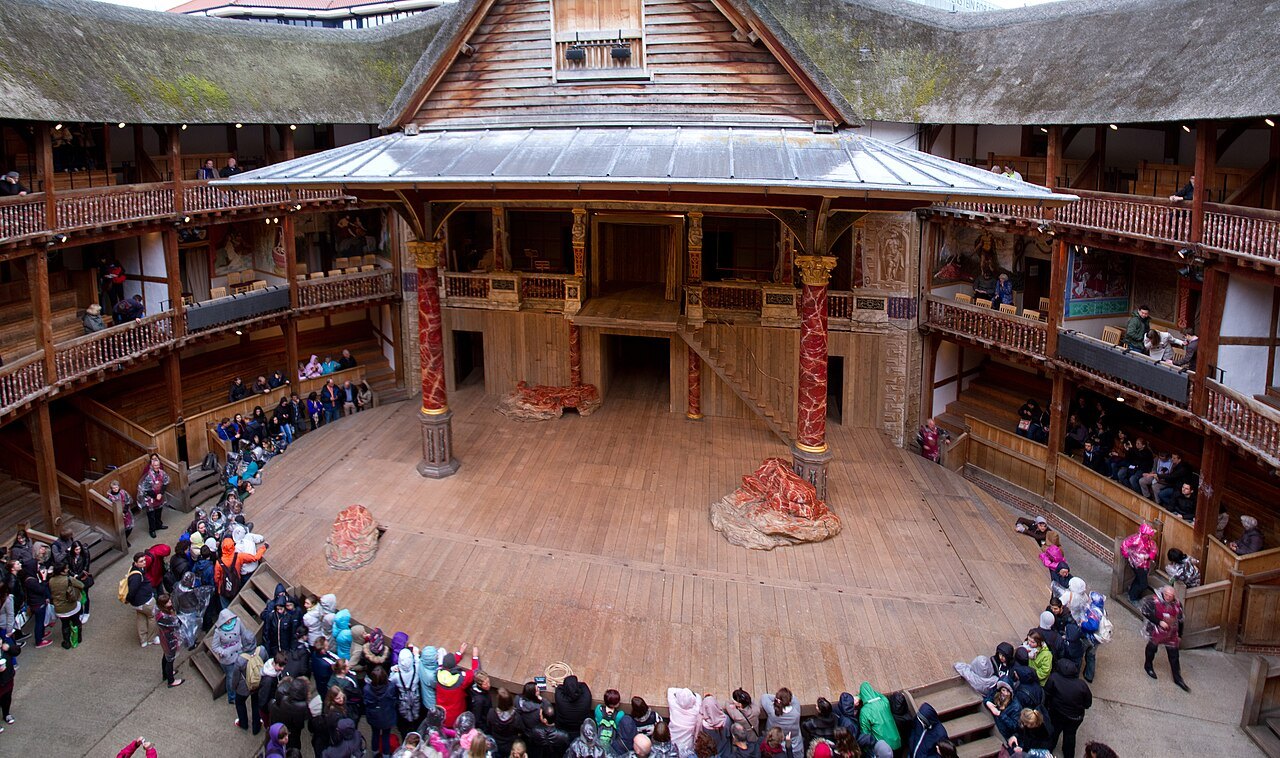
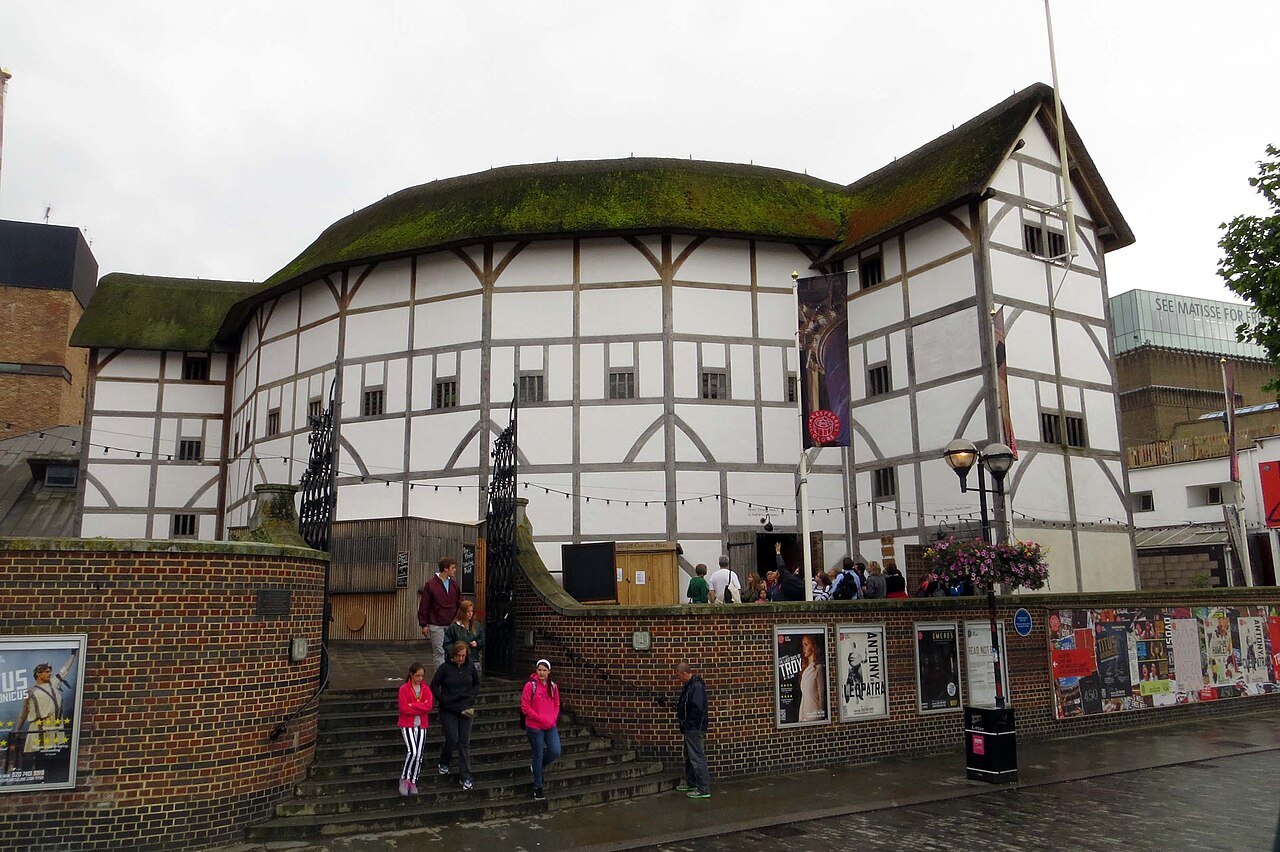
Shakespeare's Globe is a reconstruction of the Globe Theatre, an Elizabethan playhouse first built in 1599 for which William Shakespeare wrote his plays. Like the original, it stands on the south bank of the Thames in Southwark. The reconstruction was completed in 1997 and opened by Queen Elizabeth II, and its first production for the public was Henry V.
It is a working theatre, which puts on plays in the open air in the summer months and in the indoor playhouse during the rest of the year, and it is also a place to see how the building worked on a guided tour. You can see it from the outside at any time, a round timber building with a thatched roof among brick warehouses.
The original Globe
The first Globe was built in 1599 by the Lord Chamberlain's Men, the acting company in which Shakespeare was a partner. It burned down in 1613 when a theatrical cannon set the thatch alight during a performance, was rebuilt in 1614 and was demolished in 1644 after the Puritans closed the theatres. For centuries its exact location was lost, and what remained of the foundations was found in the late twentieth century beneath a row of houses.
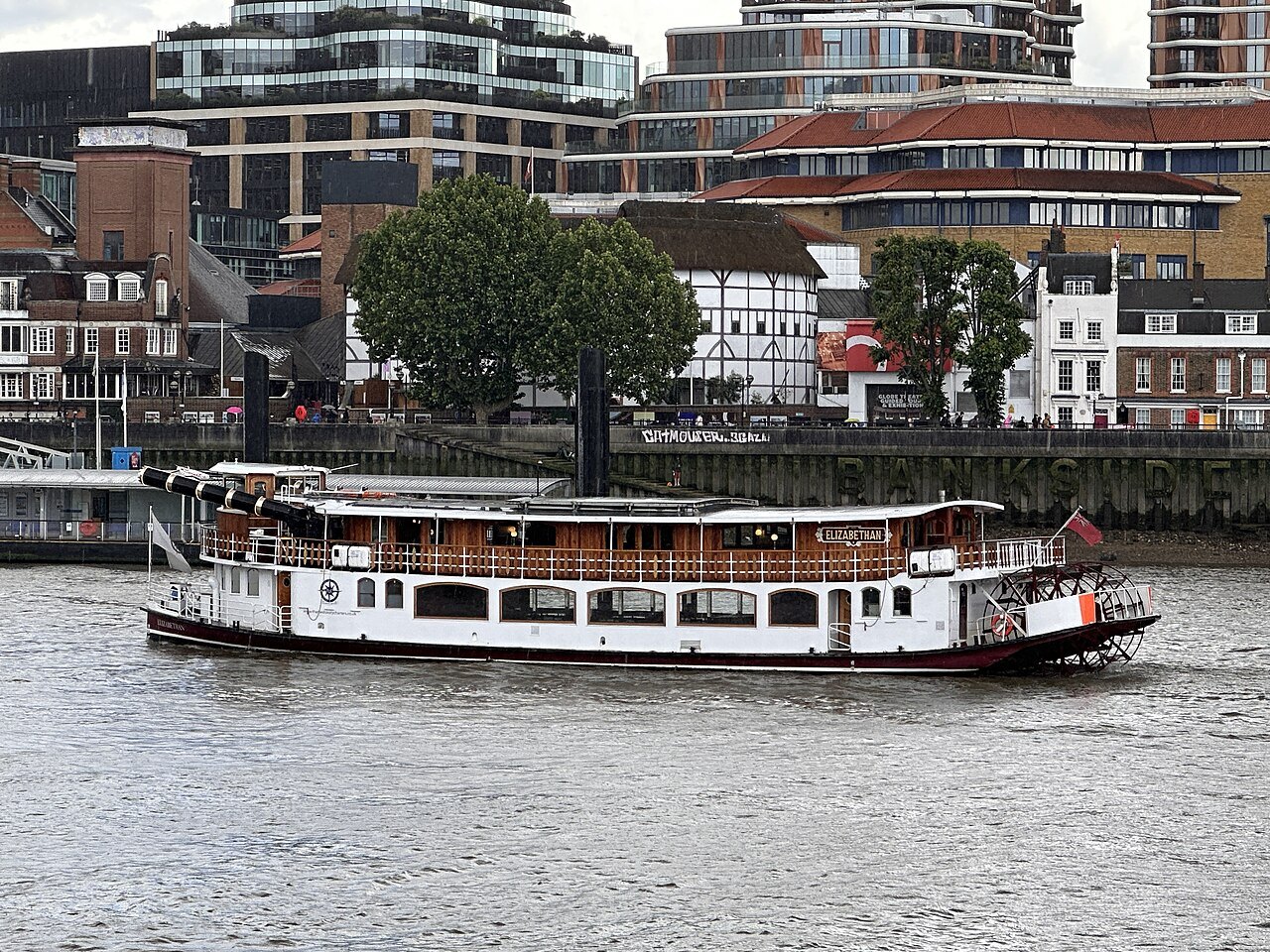
The original held some 3,000 spectators, packed on three levels of galleries and standing in the yard in front of the stage. London's playhouses were built outside the City's walls, on the south bank, where the authorities' control was weaker, which is why Bankside became a theatre district.
Sam Wanamaker's dream
The rebuilt Globe exists because of an American actor and director, Sam Wanamaker, who moved to London in the 1950s and was struck by how little marked the site of Shakespeare's theatre. In 1970 he founded the Shakespeare Globe Trust, with the aim of building a faithful reconstruction near the original site. Many people said it could not be done, because of Elizabethan building methods and modern fire safety, but he and his colleagues kept at it for more than twenty years.
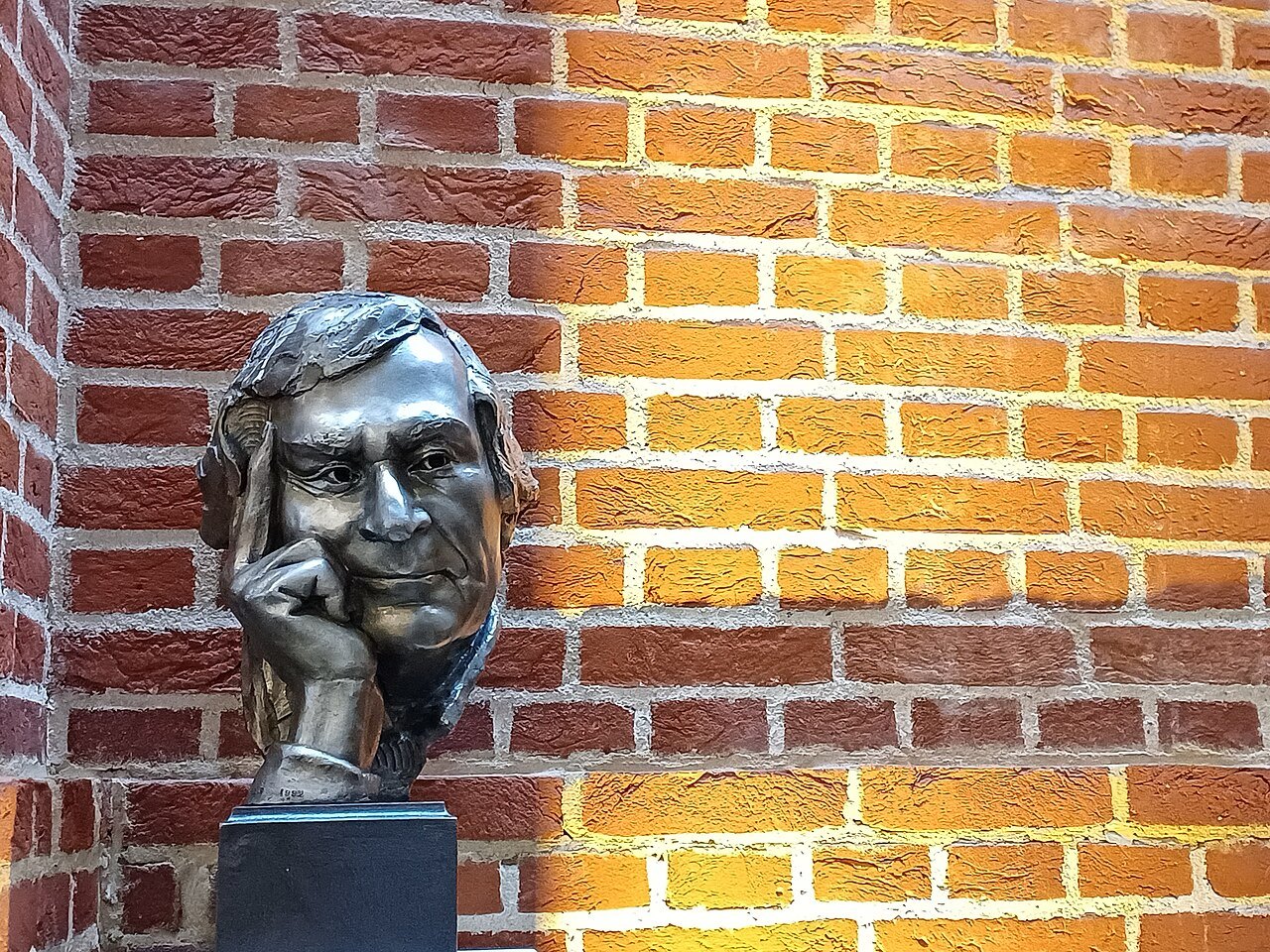
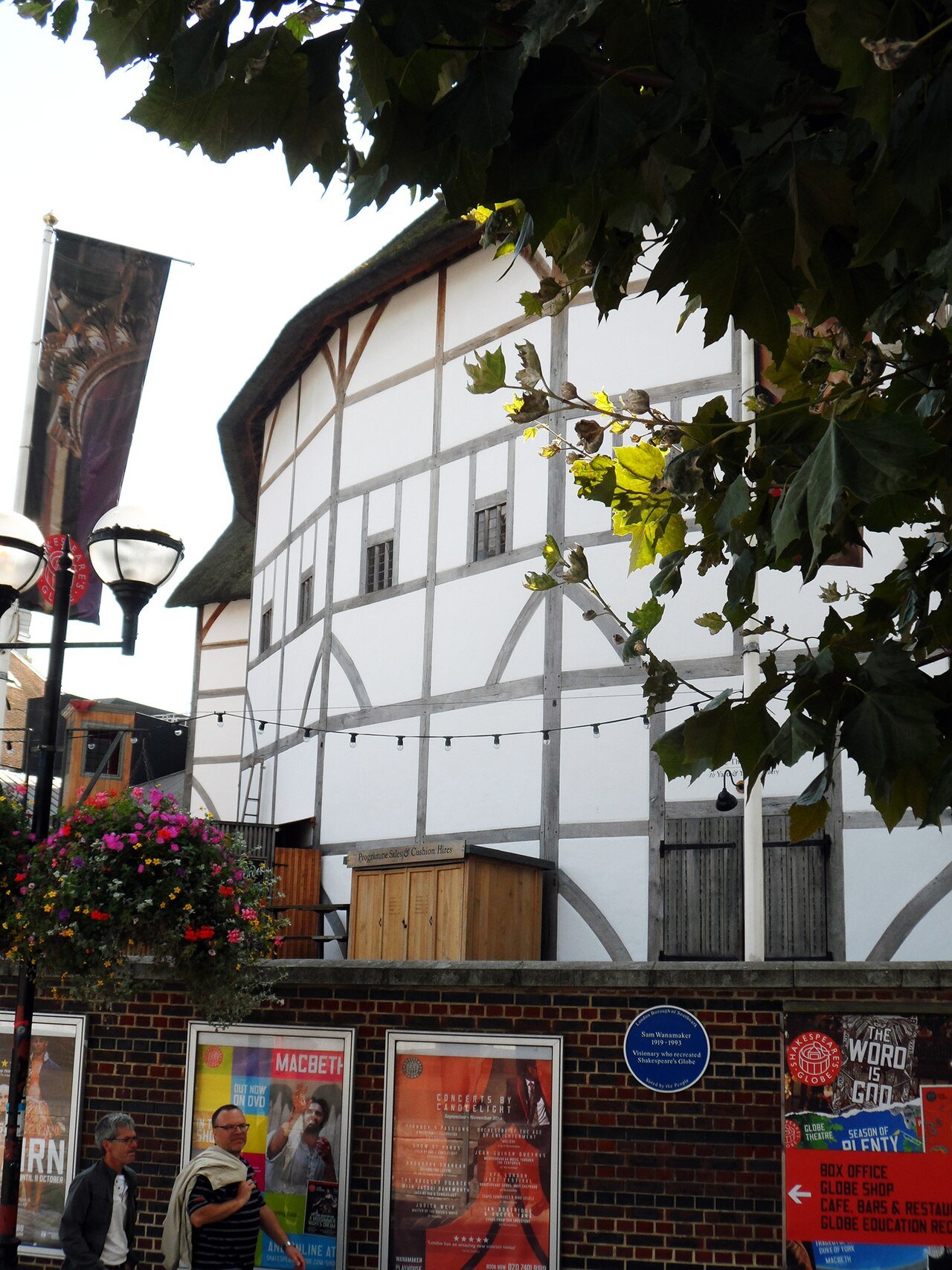
Wanamaker died in 1993, before the building was finished. The theatre opened in 1997, about 750 feet from the site of the first Globe. It is built of green oak with lime plaster and a thatched roof, the first thatch allowed in London since the Great Fire of 1666, and with sprinklers and fire exits that the Elizabethans did not have.
Watching a play here
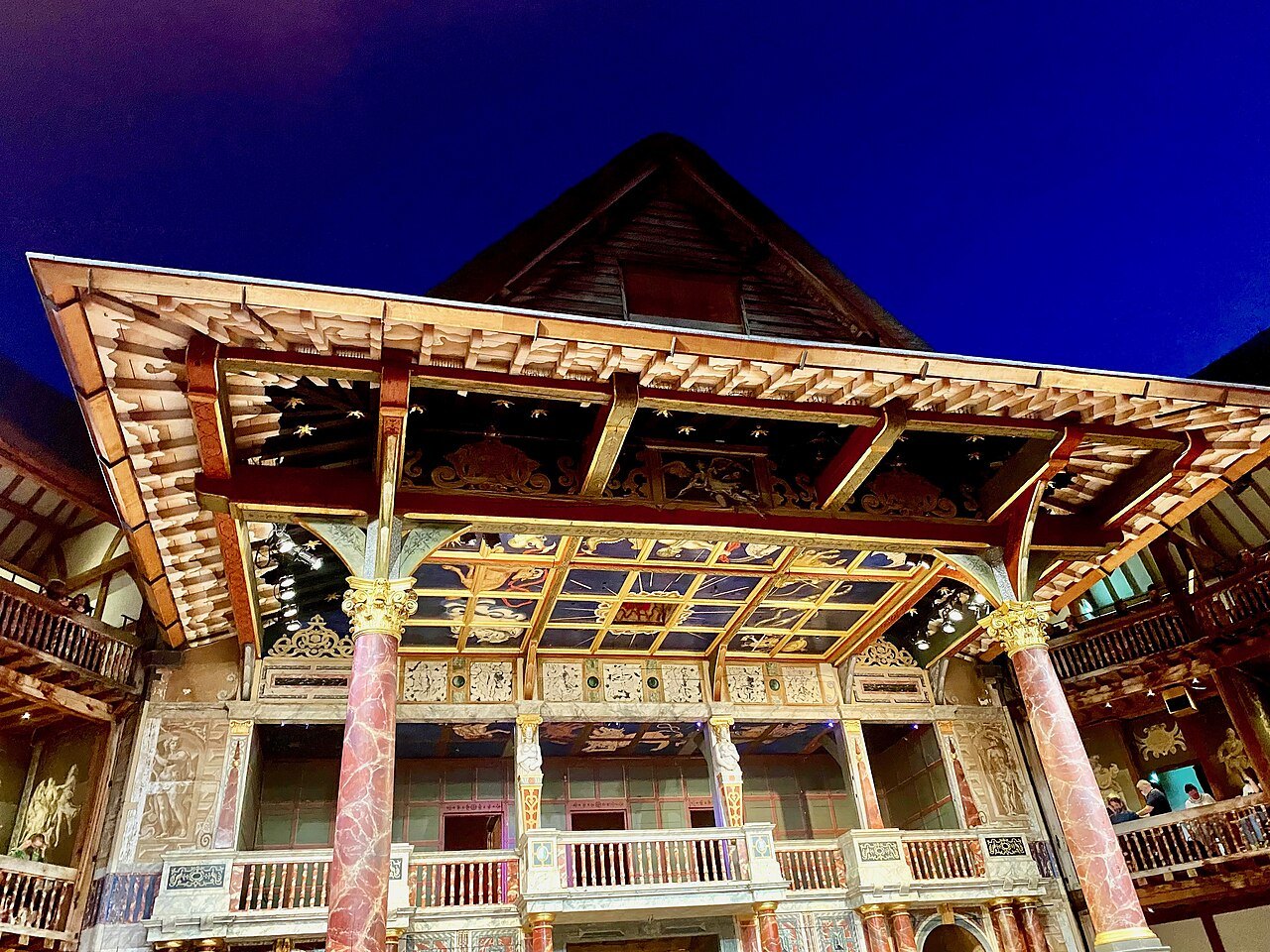
The experience is deliberately different from a modern theatre. The stage is a thrust platform, with the audience on three sides, and there is no scenery and little artificial lighting, because performances are by daylight. In the yard, groundlings stand throughout, as they did in Shakespeare's day, close enough to touch the stage. Others sit on benches in the three tiers of galleries, with cushions available for hire. The galleries are the better choice for a long play, because standing for three hours or more is tiring, though the yard is the livelier place to be. If it rains, the yard gets wet, because the roof covers only the stage and galleries.
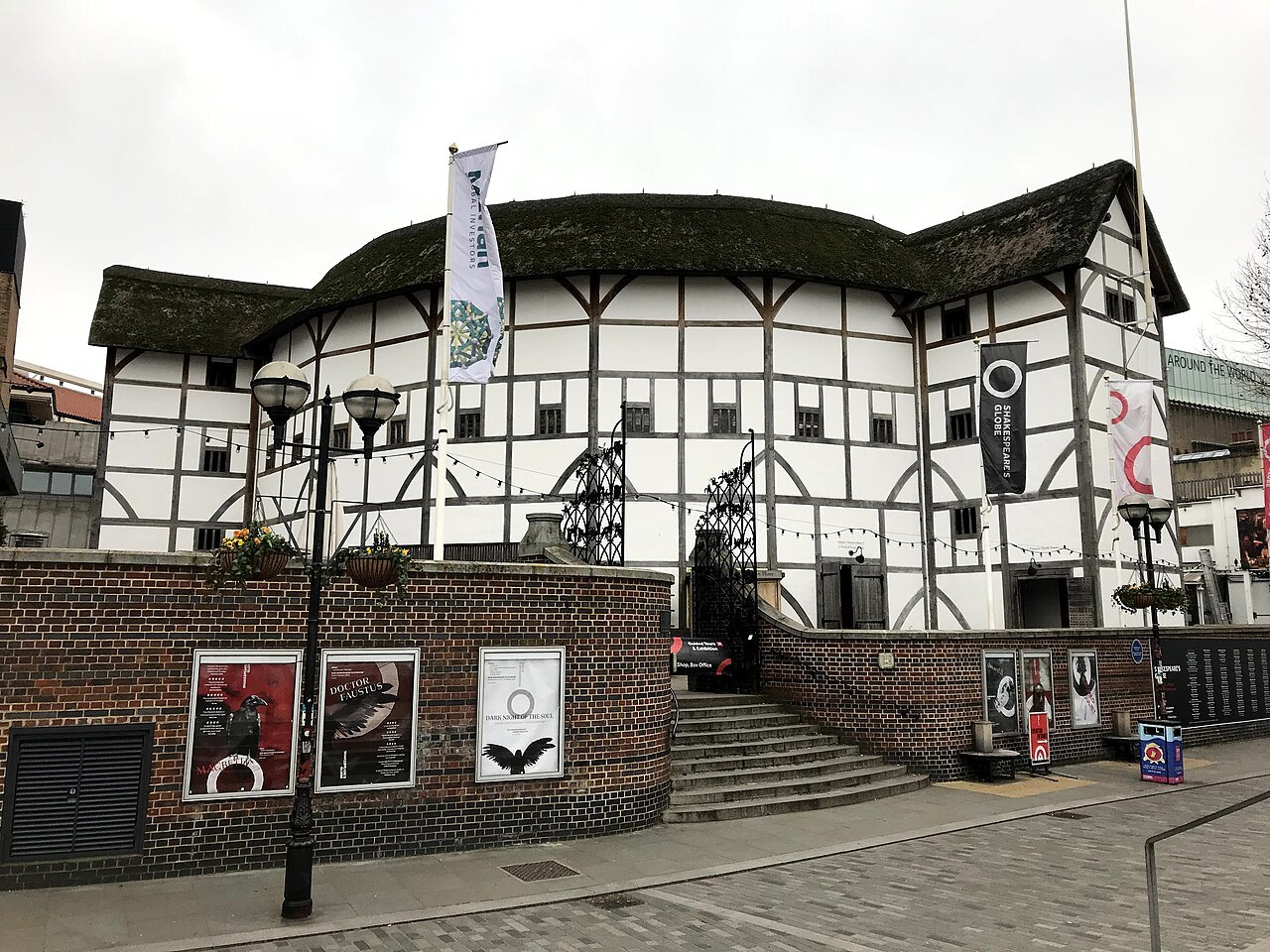
Actors speak directly to the audience and the house lights stay up, so a comic line can draw a laugh from the whole theatre. Tickets for the standing places are the cheapest, and the details of how to book for any seat are in Booking Ahead.
The Sam Wanamaker Playhouse
Next to the Globe stands a second theatre, the Sam Wanamaker Playhouse, which opened in January 2014. It is a small, candle-lit indoor theatre, based on historic plans for a Jacobean playhouse, possibly the Blackfriars Theatre where Shakespeare's company played in winter. It seats an audience in a tight horseshoe and works year round.
The exhibition, which runs under the main theatre, and the guided tours explain how the buildings were made, and you can usually see the theatre even on days with no performance.
Shakespeare's theatre world
The Globe was one of several playhouses on the south bank. The Rose, the Swan and the Hope stood nearby, and the district also held bear-baiting rings, taverns and the Clink prison. Plays were performed in the afternoon in daylight, and the audience arrived by boat across the river or on foot over London Bridge. A good house could be mixed from lords to apprentices, and the rowdiness was part of the experience.
Shakespeare's company, first the Lord Chamberlain's Men and later the King's Men, performed many of his greatest plays here, among them Julius Caesar, Hamlet and Macbeth, although the exact first performances are matters of scholarly argument. Listening to the plays in the open air, with a passing aeroplane or a gull overhead, you get a sense of how loud, quick and physical Elizabethan theatre could be.
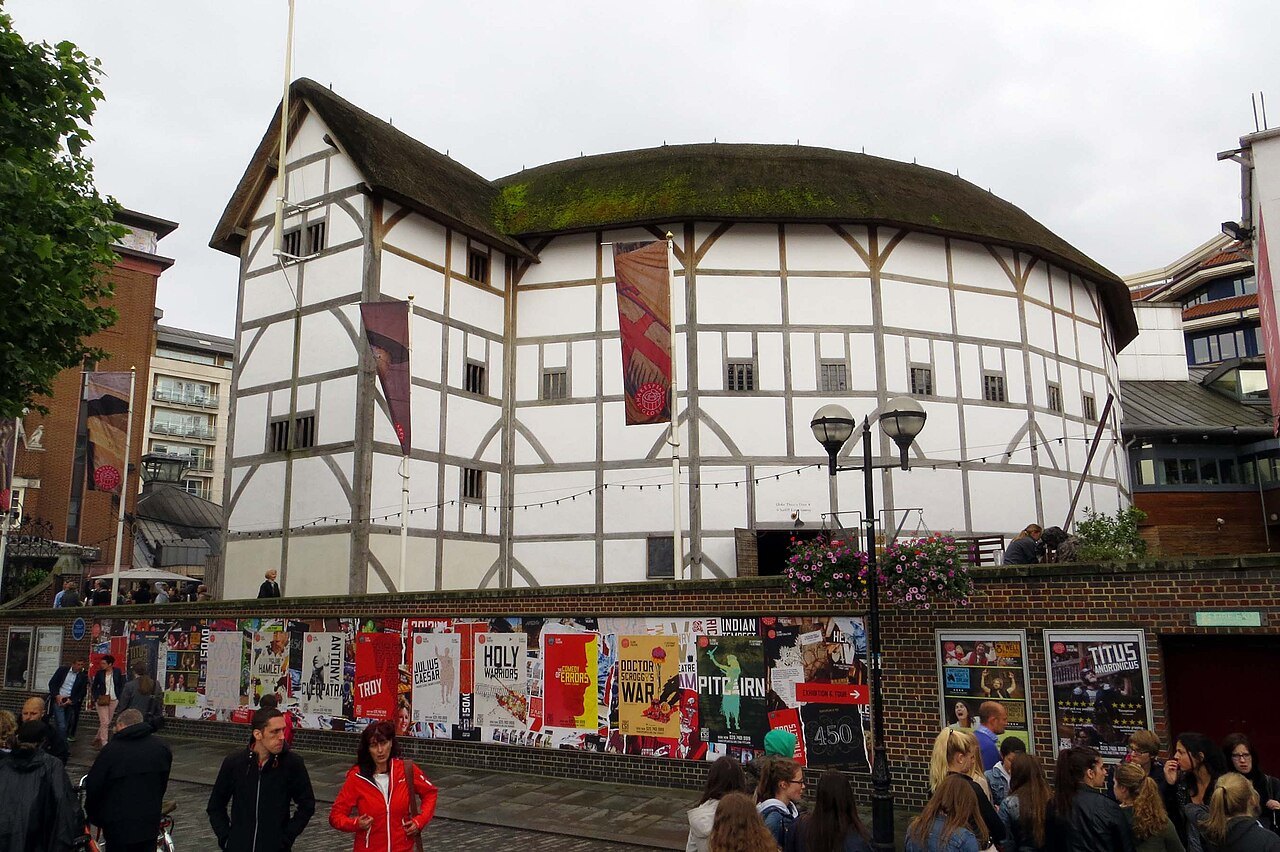
The building also carries a fine detail of its own: the painted columns of the stage, the carved figures and the heavens, the painted underside of the stage roof, are based on descriptions and drawings of the period.
Getting there
The Globe is on Bankside, a few minutes' walk west of Borough Market and next to Tate Modern. The Millennium Bridge leads across the river to St Paul's Cathedral.
The nearest stations are Blackfriars, Mansion House on the north bank, and London Bridge. The riverside path from Westminster passes the London Eye, and the whole stroll along the South Bank is one of the best free walks in the city.
Nearby
Where to go next
- Nearby · Bankside · south bankTate ModernThe national collection of international modern and contemporary art, housed since 2000 in the old Bankside Power Station on the south bank of the Thames, directly across the river from St Paul's.Read the page →
- Nearby · Southwark · south bankBorough MarketA food market beside London Bridge with roots in the twelfth century or earlier, now under Victorian ironwork and mostly selling specialty foods to the public.Read the page →
- Nearby · City of LondonSt Paul's CathedralChristopher Wren's Baroque cathedral, finished in 1710 after the Great Fire, with a dome that was the tallest structure in London for more than two and a half centuries.Read the page →