Home · Sights · St Paul's Cathedral
St Paul's Cathedral
What you are looking at
City of London
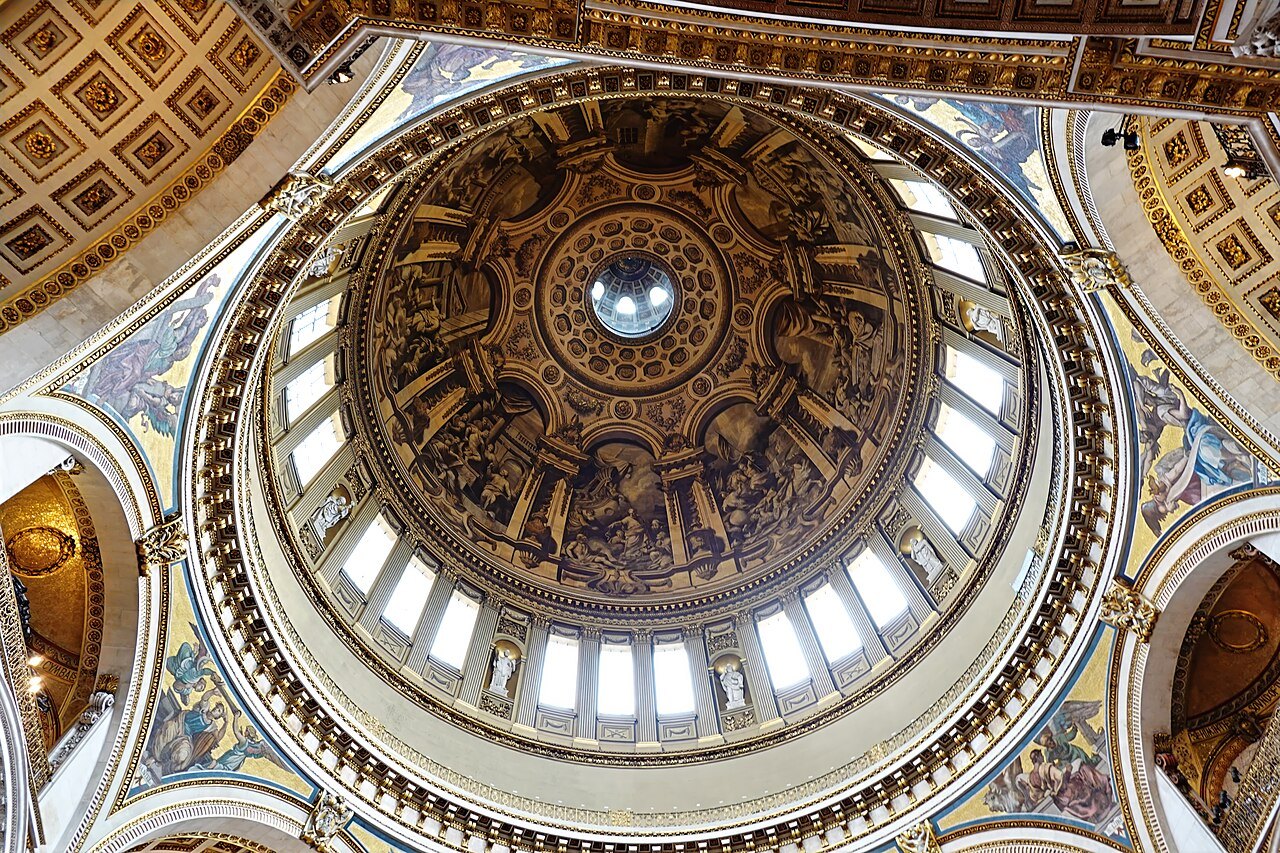
- 1The domeAt 365 feet it was London's tallest building from 1710 to 1963, built in three layers that you can climb between.
- 2The Whispering GalleryReached by 259 steps, a ring inside the dome where a whisper carries across to the far wall.
- 3The Stone and Golden GalleriesTwo outdoor galleries higher up, with the widest view over the City.
- 4The cryptThe largest in Europe, running under the whole building, with the tombs of Nelson and Wellington.
- 5The Geometric StaircaseWren's spiral of 88 stone steps in the south-west tower, held up by the steps beneath.
- 6Wren's churchesThe spires of the City churches that Wren rebuilt after the fire still stand around the cathedral.
Reading the place
The sight in full
The cathedral on the hill
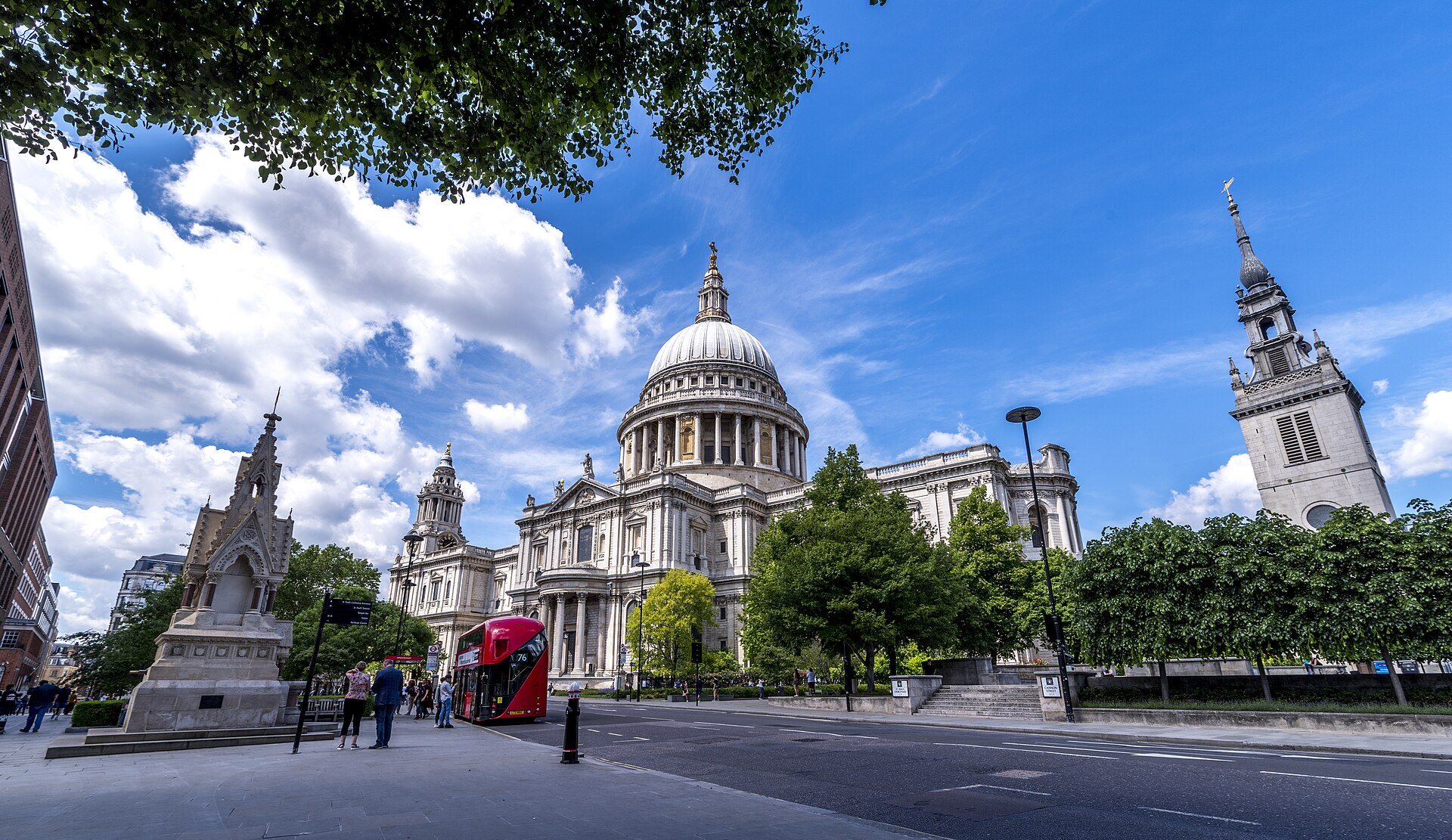
St Paul's Cathedral stands on Ludgate Hill, the highest ground in the City of London, and has been the seat of the Bishop of London for more than a thousand years. It is a working Anglican church, with daily services and hourly prayer, and it is also the setting for the big national occasions: the funerals of Nelson, Wellington and Churchill, jubilee services for several monarchs and the wedding of Prince Charles and Lady Diana Spencer in 1981.
It is not Westminster Abbey, which sits two miles upstream beside Parliament and is a royal church with a medieval, Gothic design. St Paul's is Baroque and round-topped, and it belongs to the City and to the Church of England's diocese. If you can see a great dome on the skyline, it is St Paul's; the Abbey has two pale towers and no dome.
Four cathedrals on one site
The first St Paul's was built in 604, when Augustine, the missionary sent from Rome, consecrated Mellitus as bishop of the East Saxons and a church was dedicated to St Paul. The cathedral was burned in 1087, and the Normans began what became known as Old St Paul's, a vast Gothic building consecrated in 1240 and later enlarged. By the later Middle Ages it was one of the longest churches in Europe, with a spire that rose about 489 feet.
The spire was destroyed by lightning in 1561, and the building deteriorated through the sixteenth and seventeenth centuries. Christopher Wren had already been asked to propose repairs, and he suggested replacing the central tower with a dome. Then, in September 1666, the Great Fire swept through the City and destroyed Old St Paul's, whose wooden roof and scaffolding fed the flames.
Wren's design
Wren produced several designs over the next years, including a Great Model of oak and plaster in 1673 that the clergy rejected as too unlike a cathedral. The scheme that received a royal warrant had a traditional Latin cross plan. Wren was allowed to make ornamental changes while it was built, and he used the freedom to reshape the dome. The first stone was laid in June 1675, and the building was finished in 1710 within Wren's own lifetime, which was unusual for a cathedral.
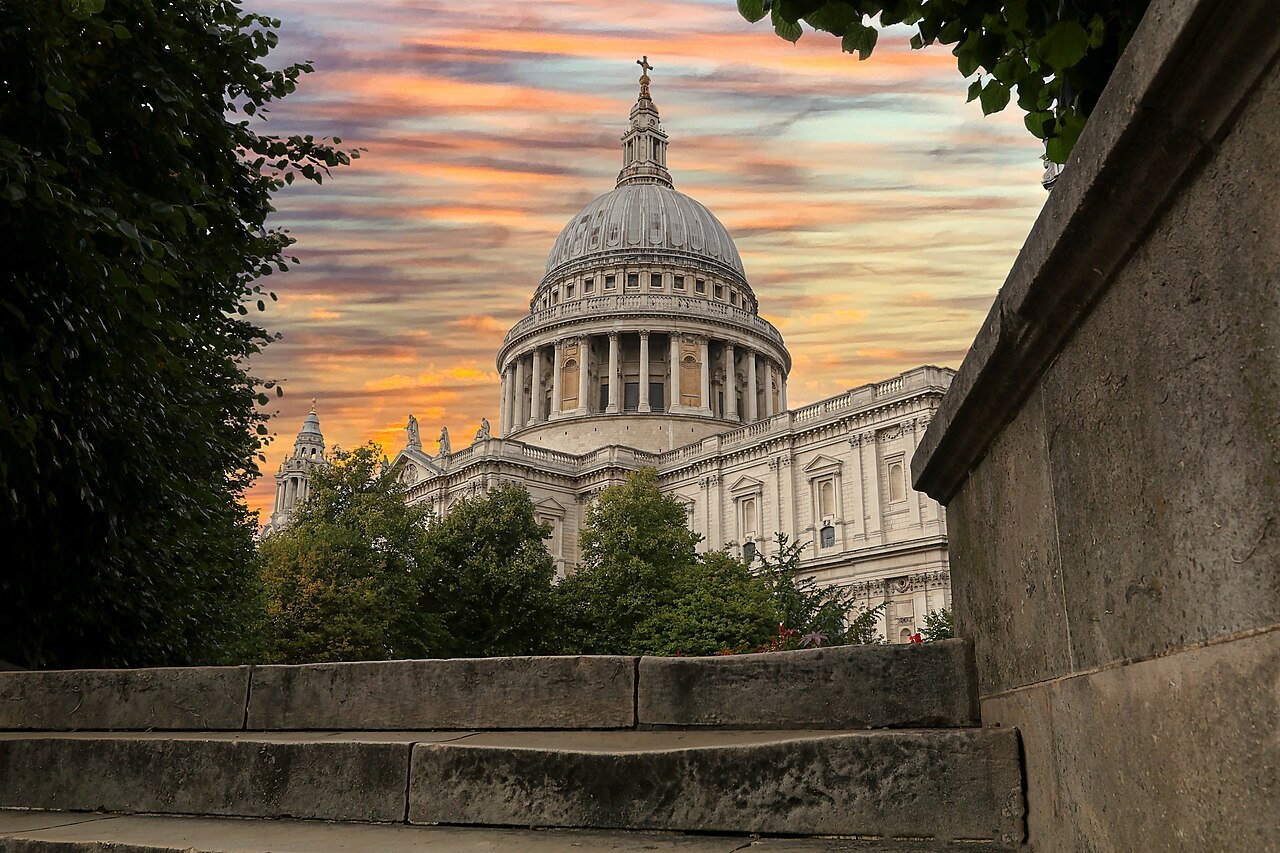
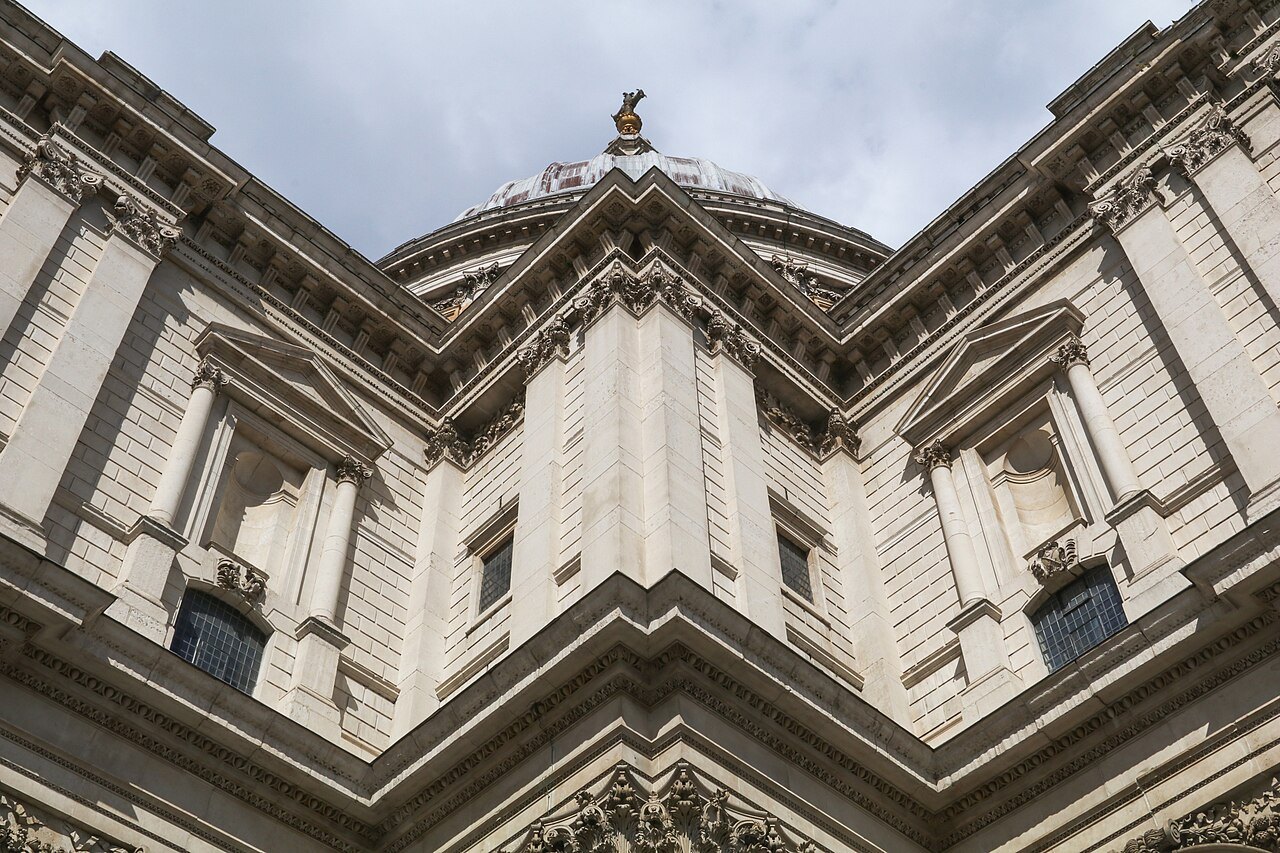
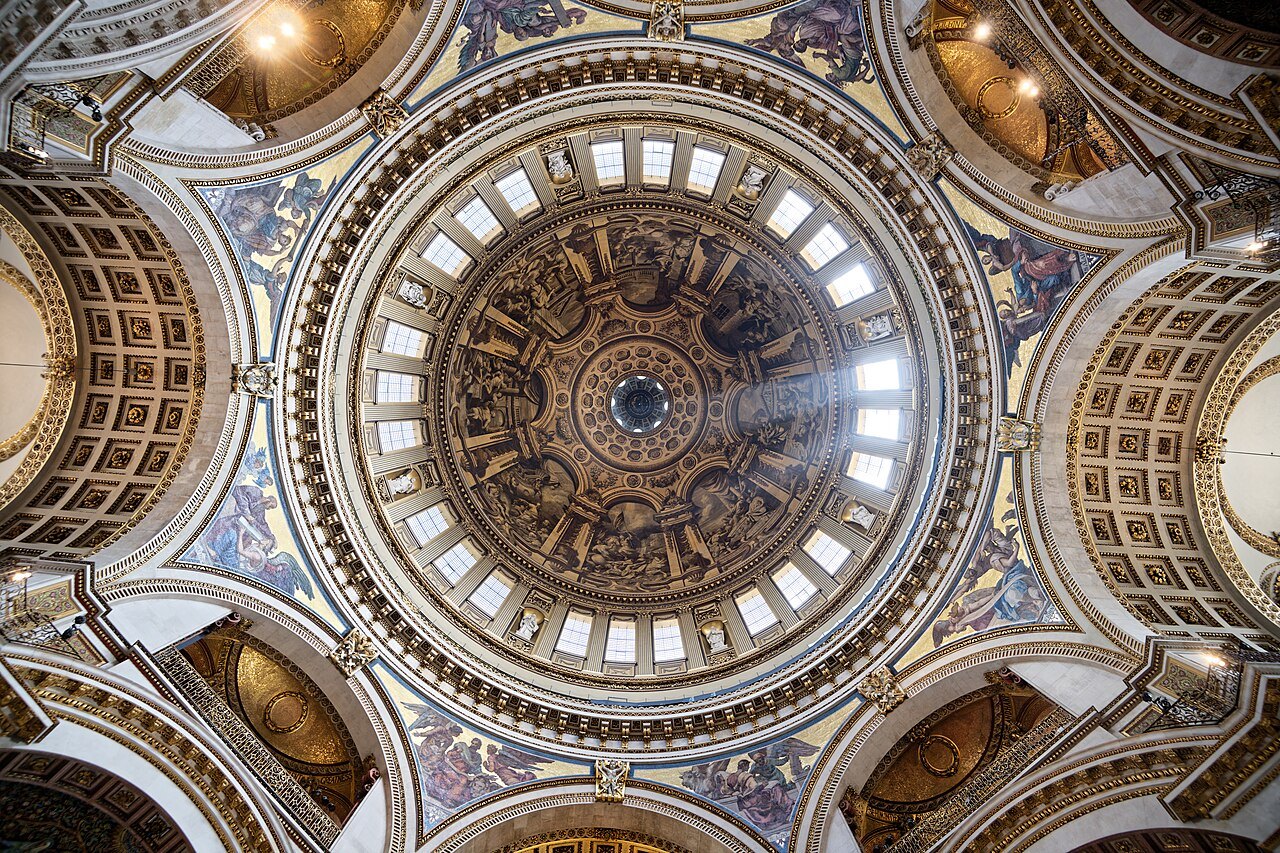
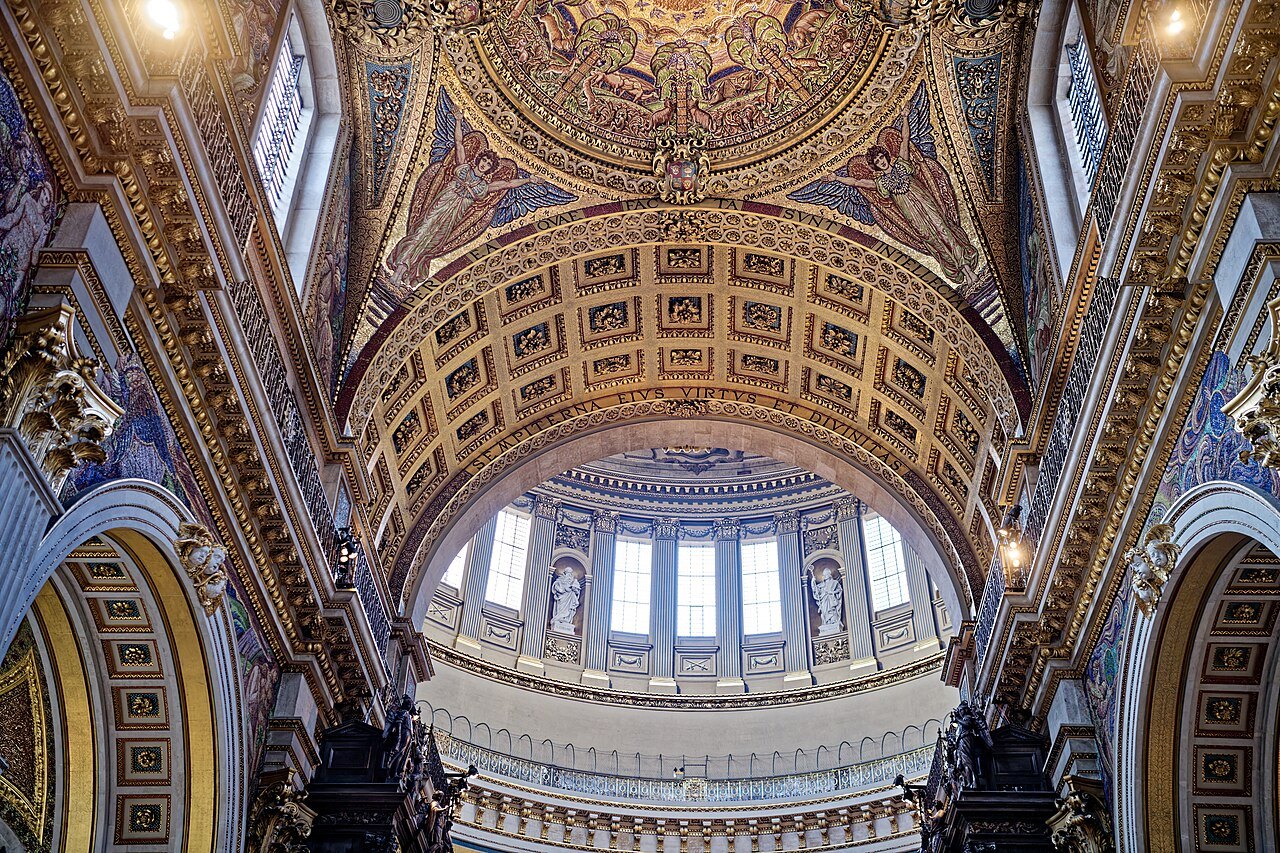
The dome rises in stages: a colonnade called the peristyle, an attic stage ringed by the Stone Gallery, then the lead-covered dome itself and a lantern with the Golden Gallery. It is actually three structures, an inner dome you see from below, a brick cone that carries the lantern, and an outer shell of timber and lead that gives the skyline its profile. The cathedral stands on weak London clay, so the crypt beneath the entire building carries the weight on massive piers.
Climbing the dome
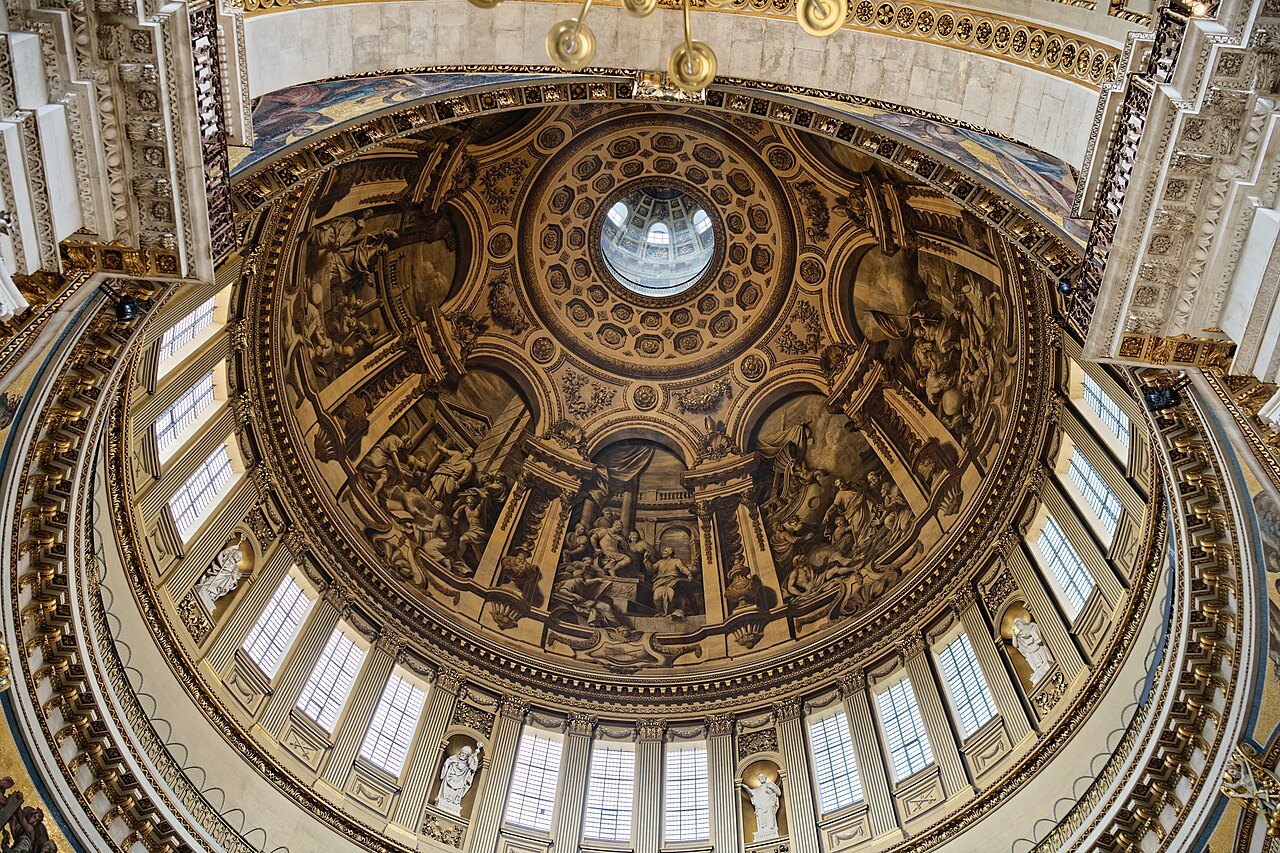
The first stop is the Whispering Gallery, 259 steps up from the floor and 99 feet above it, a circular walkway around the foot of the inner dome. A whisper against the wall can be heard by someone with an ear to the wall on the far side, and a clap produces several echoes. The gallery gave its name to the acoustic effect, which was first described here.
Higher still are the Stone Gallery and the Golden Gallery, both outdoors, and from the top you look down onto the roofs of the City, with the river beyond. The climb is on narrow stone stairs with no lift, so it is not for everyone. How tickets and the climb work is covered in Booking Ahead.
What's inside
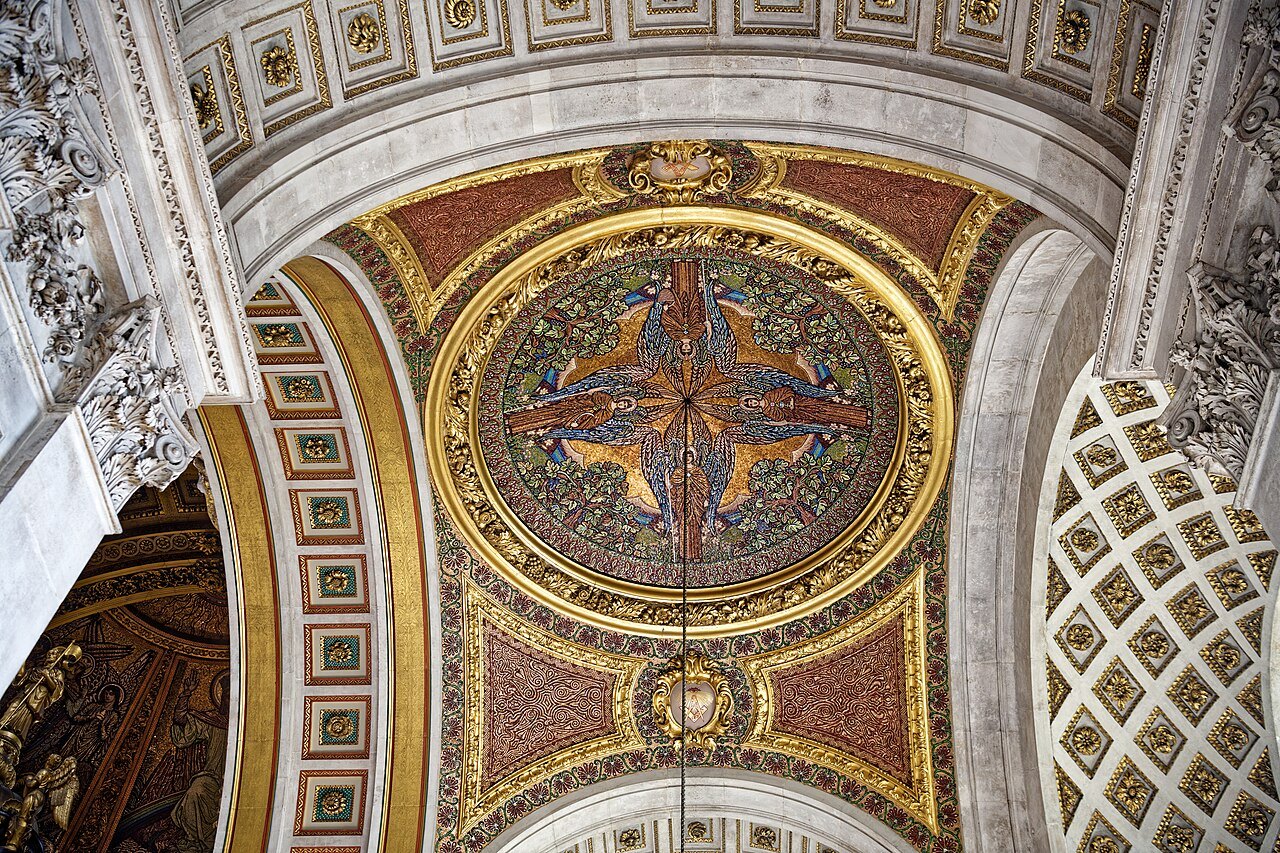
Inside, the decoration is lavish but not Gothic. The carved wood and stone are by Grinling Gibbons, the wrought iron by Jean Tijou and the paintings in the dome by James Thornhill. The mosaics in the choir were added in the Victorian era by William Richmond.
The crypt is the largest in Europe, and it is where Nelson lies in a marble sarcophagus made for Cardinal Wolsey, beside Wellington. Wren's own tomb is there with a Latin inscription that says, in effect, if you seek his monument, look around you. Many others are commemorated, including Florence Nightingale and J. M. W. Turner.
A short history of its people
The cathedral has always been a public place. In the Middle Ages the nave of Old St Paul's, known as Paul's Walk, was a meeting place for merchants, lawyers and gossips, and the booksellers and printers who set up in the churchyard around it made the area the centre of London publishing. The preaching cross in the yard was where proclamations were read and sermons were delivered to crowds. Those habits ended with the fire, but the churchyard remains a gathering place, and the steps on the west front are a favourite spot for a sandwich.
Wren's building then became the church of the nation. It holds the monument to the Duke of Wellington, the largest in the cathedral, with the duke's statue astride his horse Copenhagen. The poet John Donne, who was Dean of St Paul's, has a monument too, a stone figure in a shroud that he posed for before his death. Eminent people from Samuel Johnson to Alexander Fleming are remembered in the crypt or the nave.
The staircase and the viewpoints
Wren built a remarkable stair in the south-west tower, the Geometric Staircase, a spiral of 88 stone steps rising about 50 feet. Each step is embedded in the wall by only a few inches and is supported mostly by the step below it, which is why it was called a wonder when it was finished in 1710. The staircase has appeared in several films. The tower is part of the standard route on a guided tour, and you cannot normally wander into it alone.
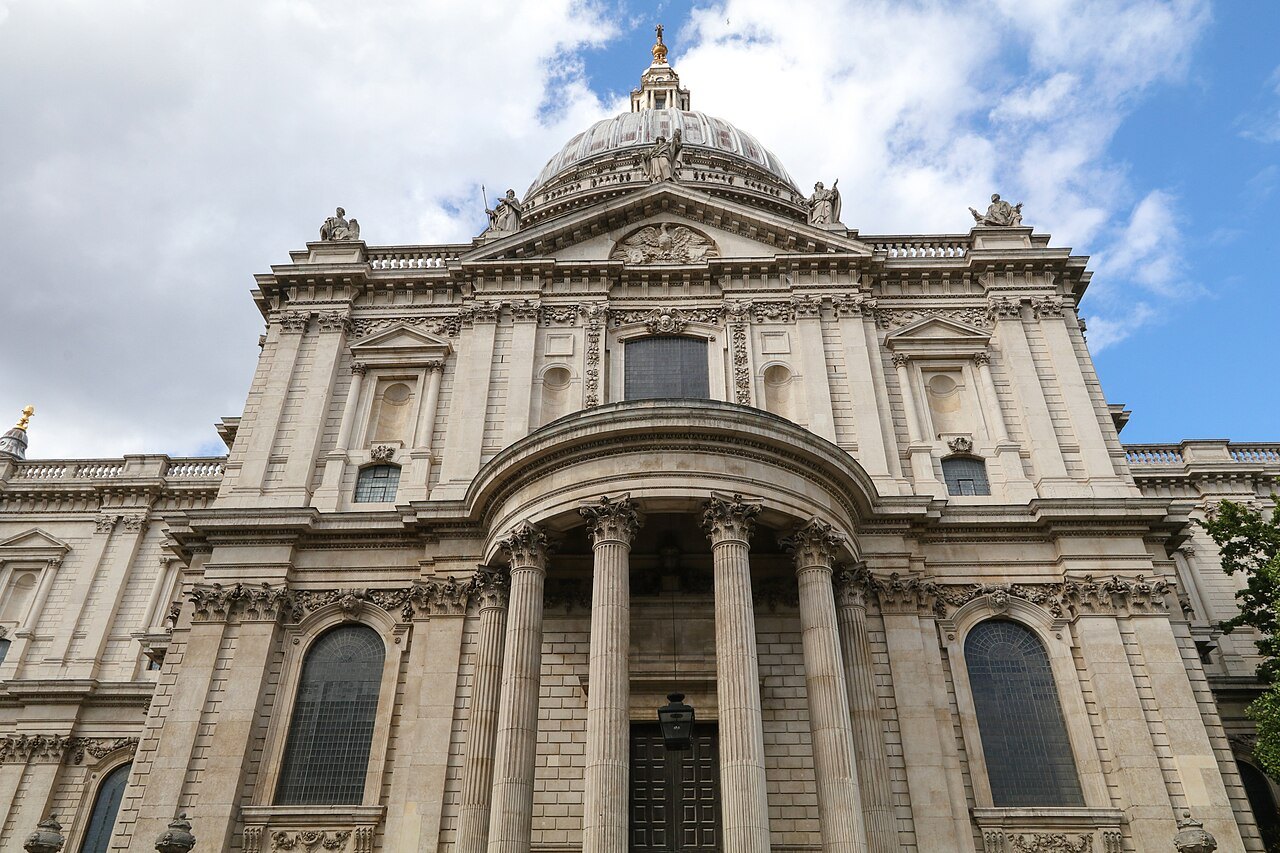
If you do not want to climb, the view from the nearby Millennium Bridge or from the south bank in the evening shows the whole dome lit against the sky, and the wide steps of the west front give a classic photograph of the facade's two towers and its portico of paired columns.
The Blitz
St Paul's came through the Second World War, though it was struck by bombs on 10 October 1940, which destroyed the high altar, and on 17 April 1941, which shifted the whole dome slightly. Photographs of the dome rising out of the smoke of the Blitz became a lasting symbol of the city's resistance, and they are often reproduced in books about London.
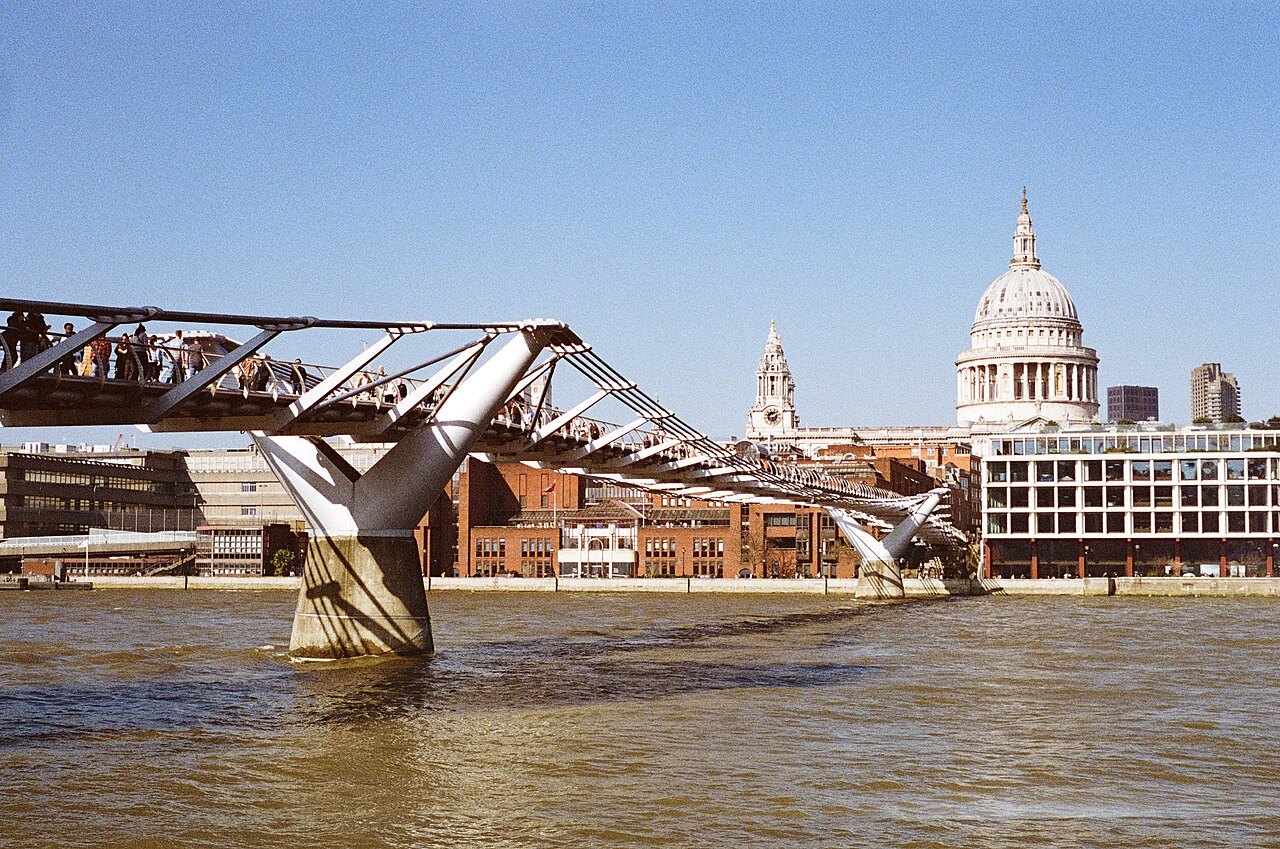
A short walk away the Globe and Tate Modern sit on the opposite bank, reached by the Millennium Bridge, which gives a sightline back to the dome. Westminster Abbey is the other great church.
Nearby
Where to go next
- Nearby · WestminsterWestminster AbbeyThe Gothic church beside Parliament where monarchs have been crowned since 1066 and more than 3,300 people are buried or commemorated, from kings to poets to the Unknown Warrior.Read the page →
- Nearby · Bankside · south bankTate ModernThe national collection of international modern and contemporary art, housed since 2000 in the old Bankside Power Station on the south bank of the Thames, directly across the river from St Paul's.Read the page →
- Nearby · Bankside · south bankShakespeare's GlobeA reconstruction of the open-air Elizabethan playhouse where Shakespeare's company performed, completed in 1997 close to the site of the original beside the Thames.Read the page →