Home · Sights · The Natural History Museum
The Natural History Museum
What you are looking at
South Kensington
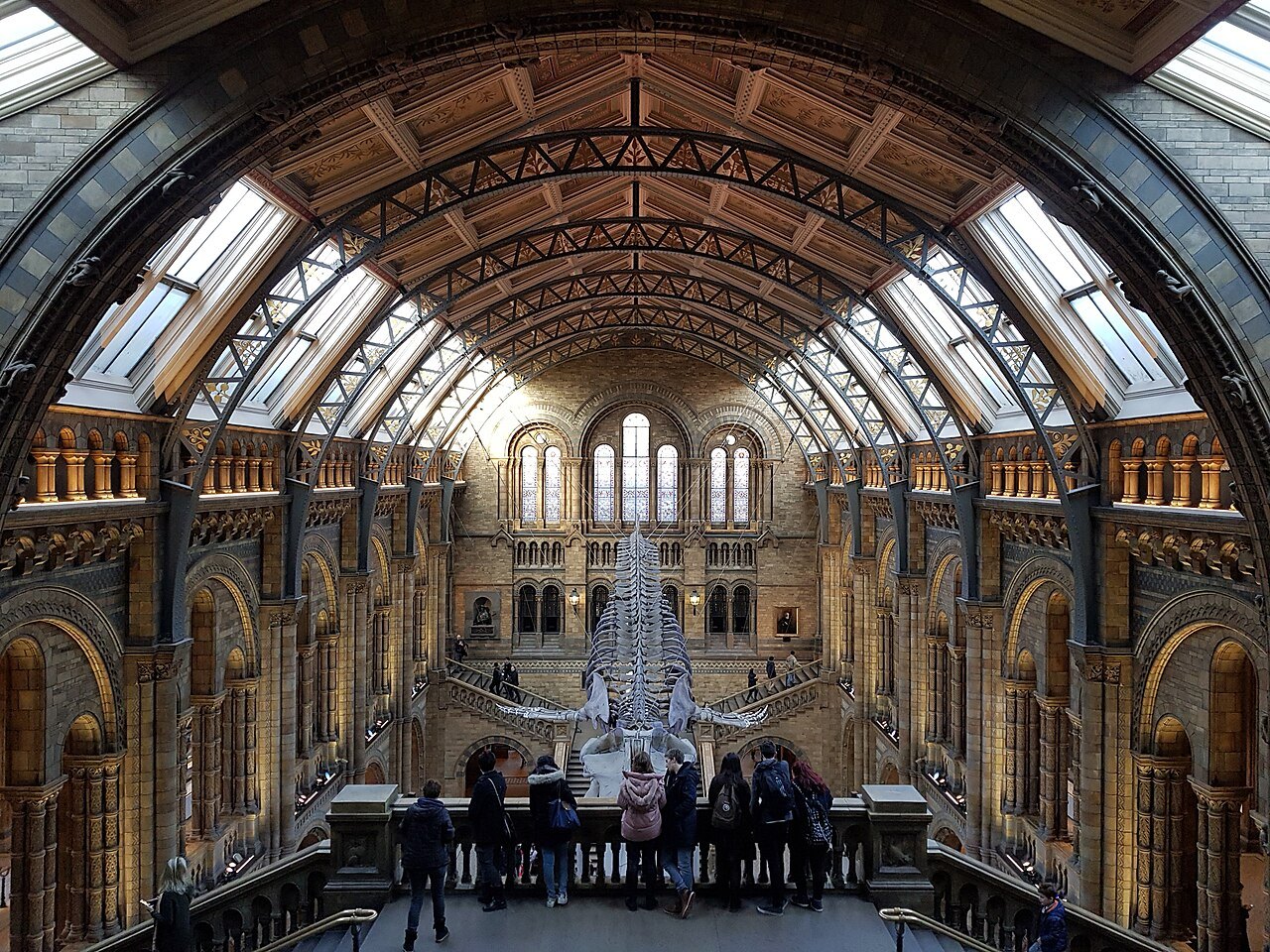
- 1Hintze HallThe great central hall, with a blue whale skeleton hanging from the roof since 2017.
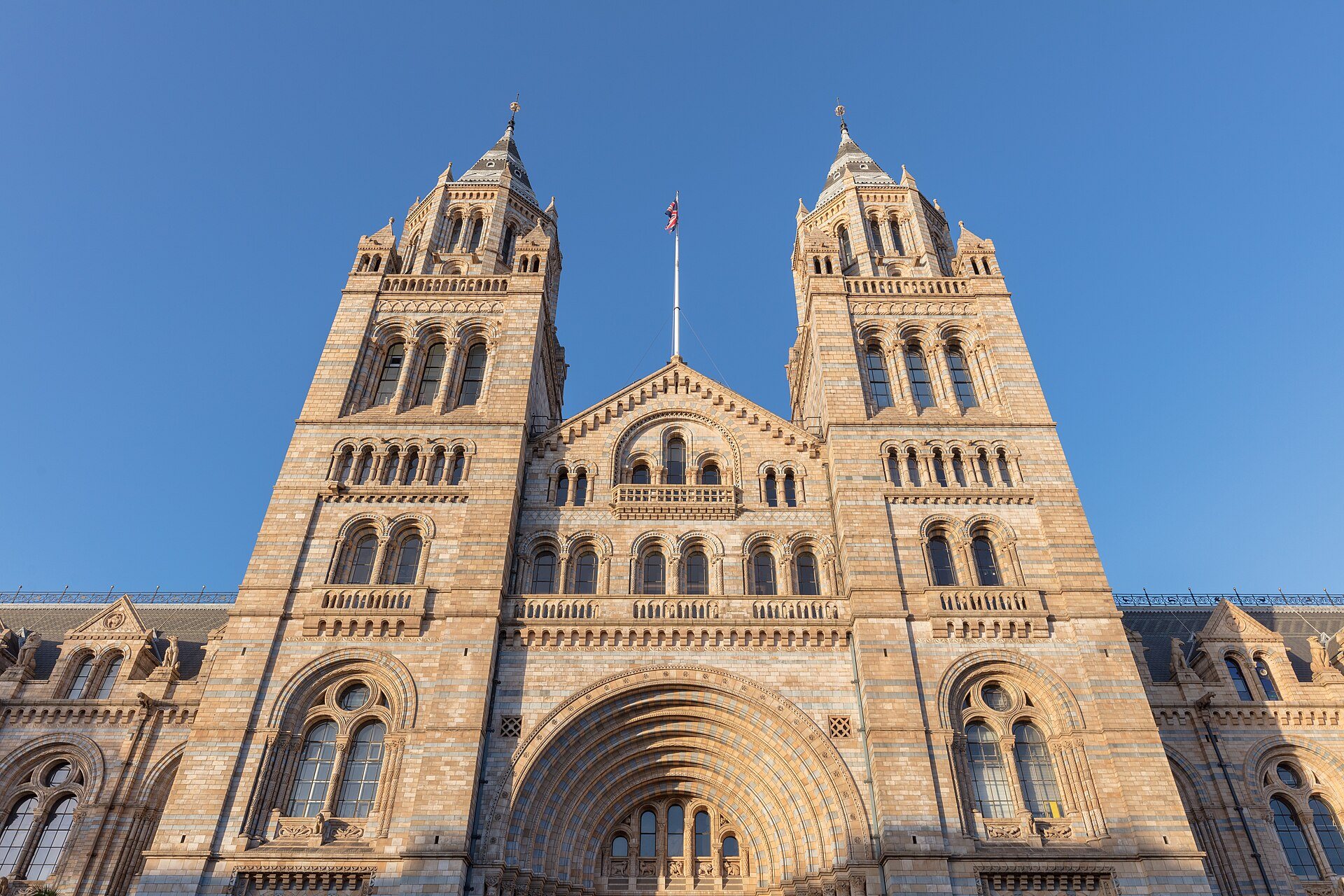
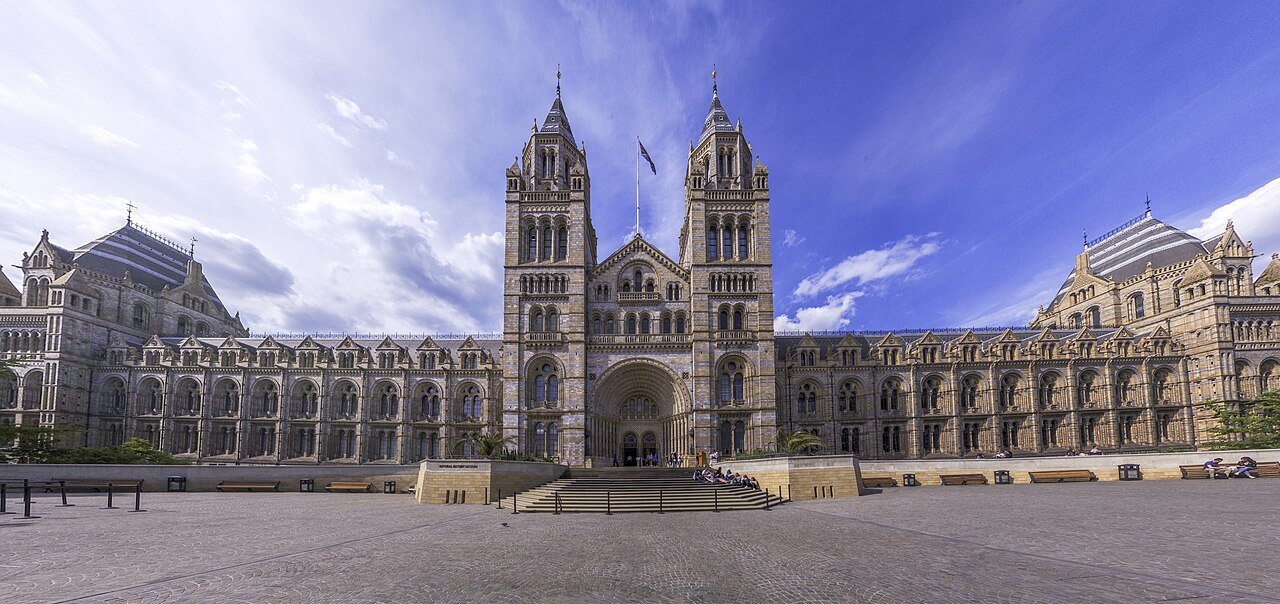
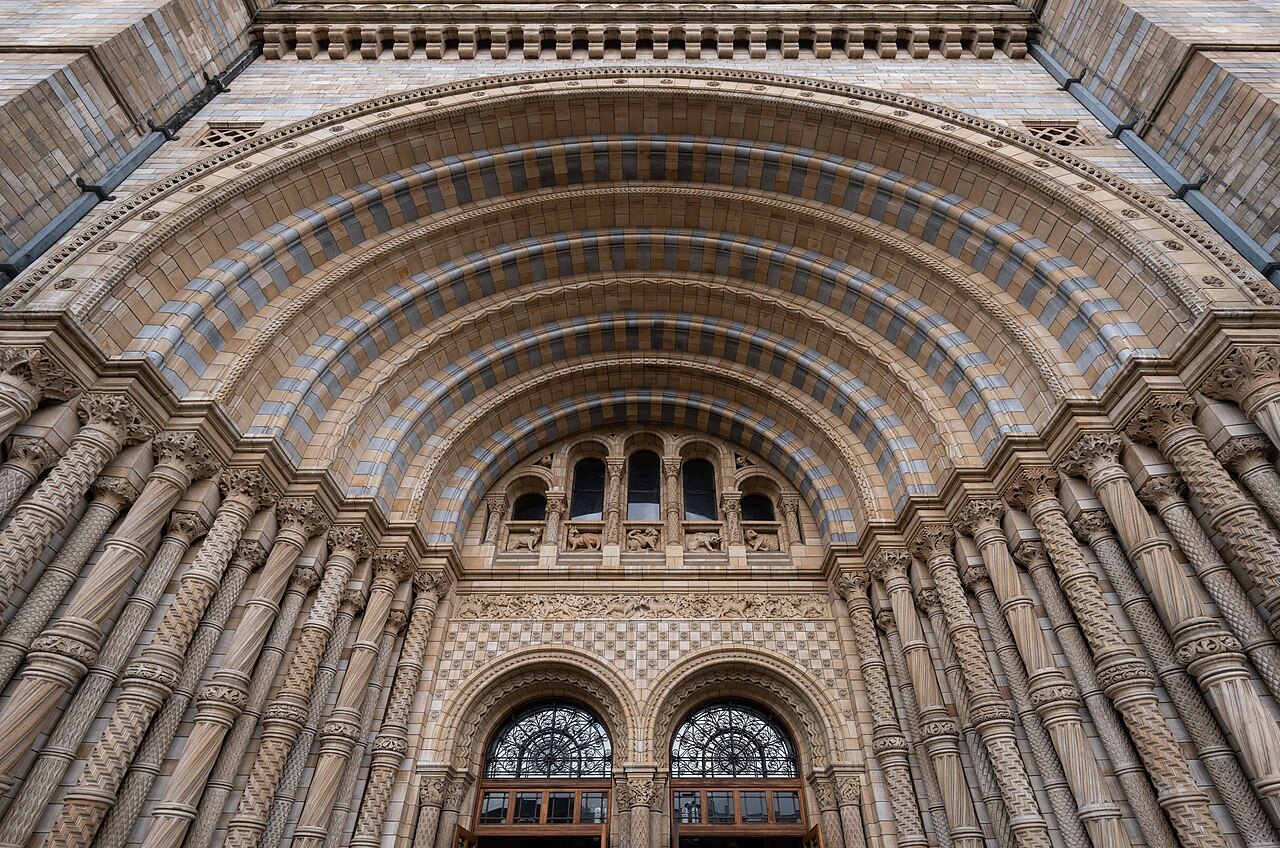
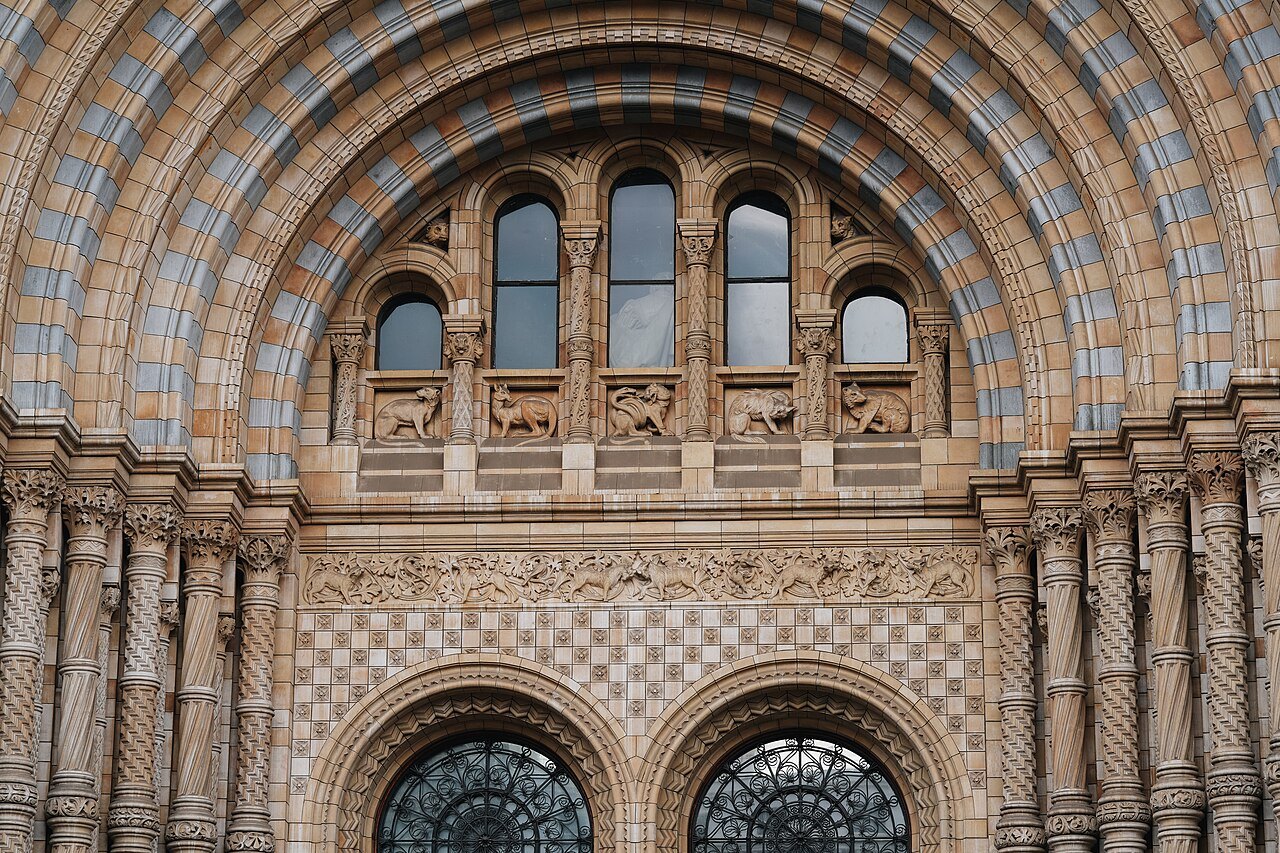
- 2The Romanesque facadeAlfred Waterhouse's long terracotta front, carved with animals and plants.
- 3The dinosaur galleriesThe museum's best-known rooms, with skeletons and casts.
- 4The Darwin CentreA modern building that stores and studies the collections.
- 5The earth galleriesMinerals, volcanoes and earthquakes, in the old Geological Museum wing.
Reading the place
The sight in full
What it is
The Natural History Museum is on Cromwell Road in South Kensington, one of three major museums on Exhibition Road along with the Science Museum and the V&A. It holds about 80 million specimens in five main collections: botany, entomology, mineralogy, palaeontology and zoology. It is both a public museum and a research centre, working on identification and conservation, and its collections include specimens gathered by Charles Darwin.
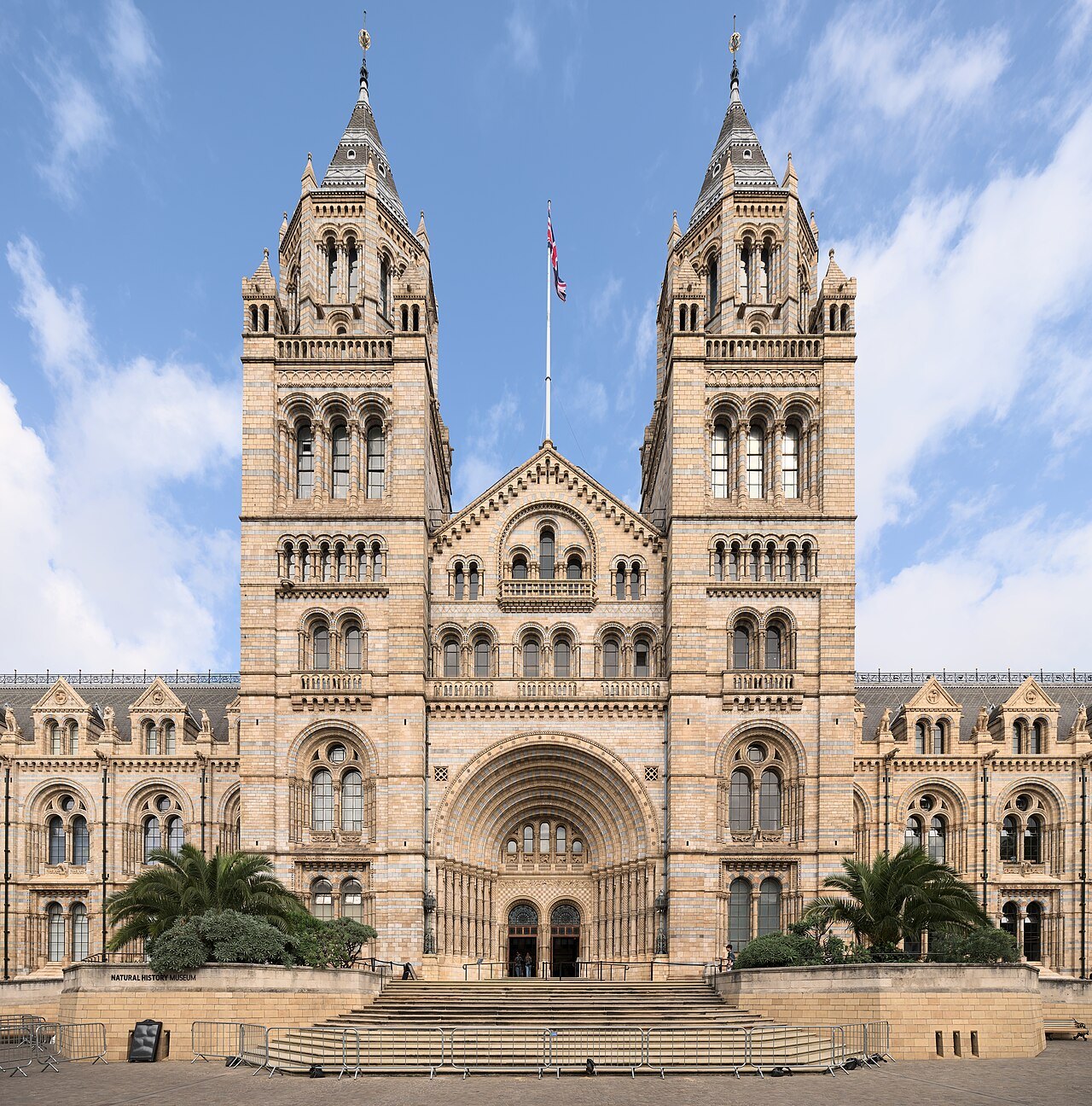
Admission is free, like the other national museums. The building itself is a draw: its facade and its great central hall are often called a cathedral of nature, and the first thing most visitors do is look up.
From the British Museum to South Kensington
The natural history collection began in the British Museum, with the specimens of Sir Hans Sloane, who left his collection to the nation. For decades those specimens were poorly looked after, and a great deal of Sloane's material had disappeared by the 1830s. The public was not encouraged to visit.
That changed when the palaeontologist Richard Owen took charge of the natural history departments in 1856. Owen, who coined the word dinosaur, argued that the collection needed its own building and its own purpose: to be a museum for everyone. A site was bought in South Kensington, and the new museum separated from the British Museum in law in 1963, though it was officially still called the British Museum (Natural History) until 1992.
Waterhouse's design
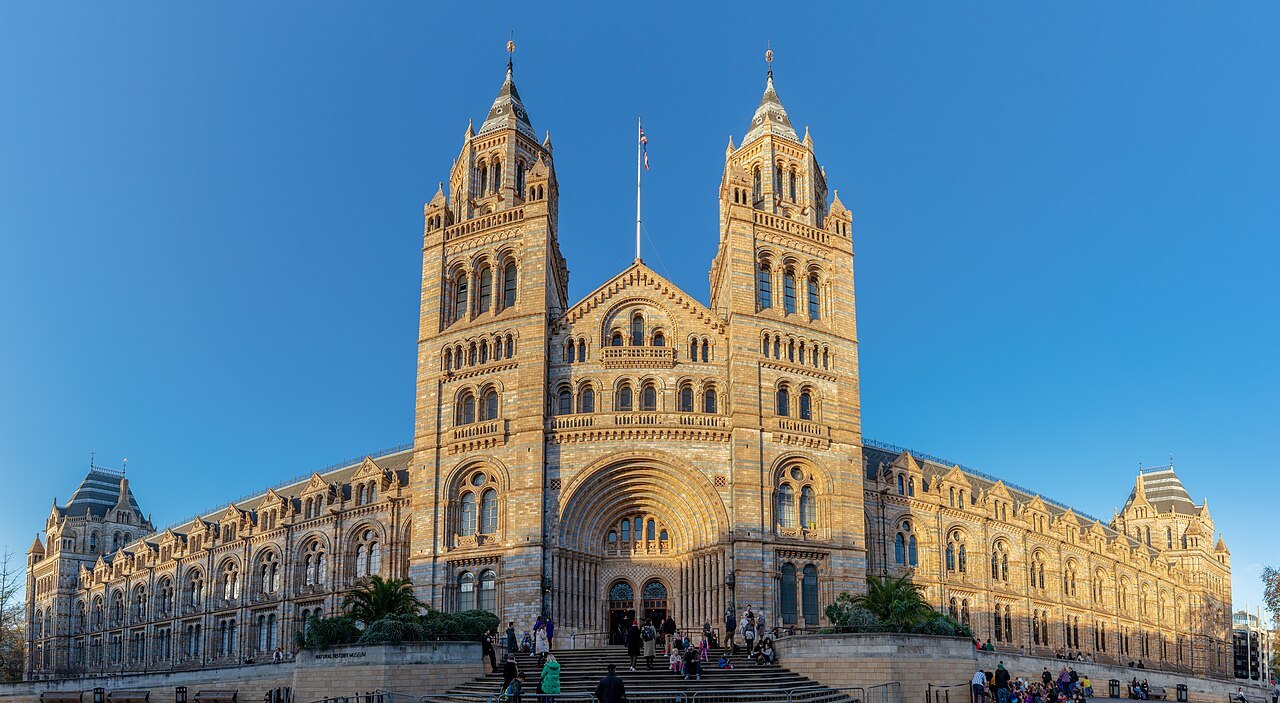
A competition in 1864 was won by Captain Francis Fowke, an engineer, who died in December 1865. Rather than give the work to the runner-up, the commissioners kept his plans and hired the architect Alfred Waterhouse in 1866. Waterhouse reworked the design completely and gave the building a Romanesque style inspired by his travels on the Continent.
The result is a vast terracotta building whose surfaces are covered with moulded animals and plants. Living creatures decorate the west side and extinct ones the east, so the facade itself is a lesson in natural history. Terracotta was chosen because it stands up to London's smoke, and it is a pale blue-grey and cream colour in stripes. The building opened to the public in 1881.
Hintze Hall
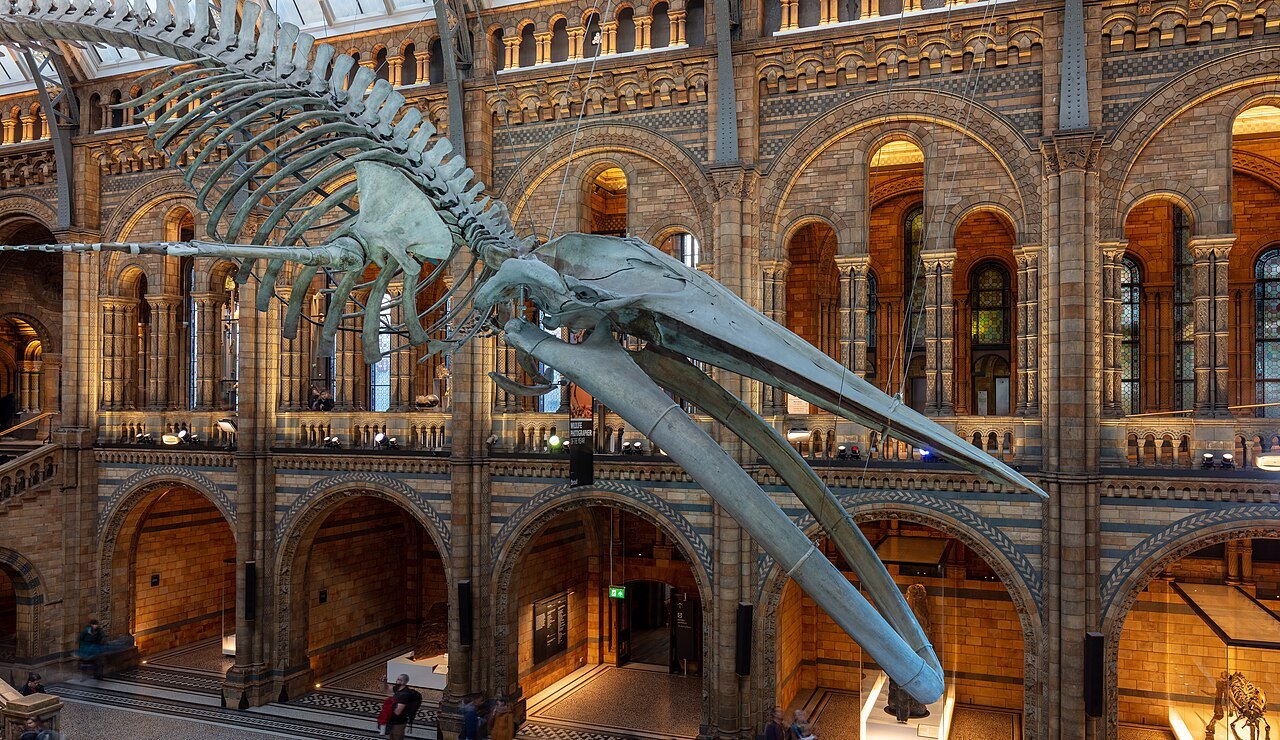
You enter into the central hall, a vaulted space with a painted ceiling of botanical panels and a great staircase at the far end. For decades a plaster cast of a Diplodocus dominated the room. It was replaced in 2017 by the skeleton of a blue whale, hung from the ceiling in a diving pose, which gives the hall a sense of scale and motion.
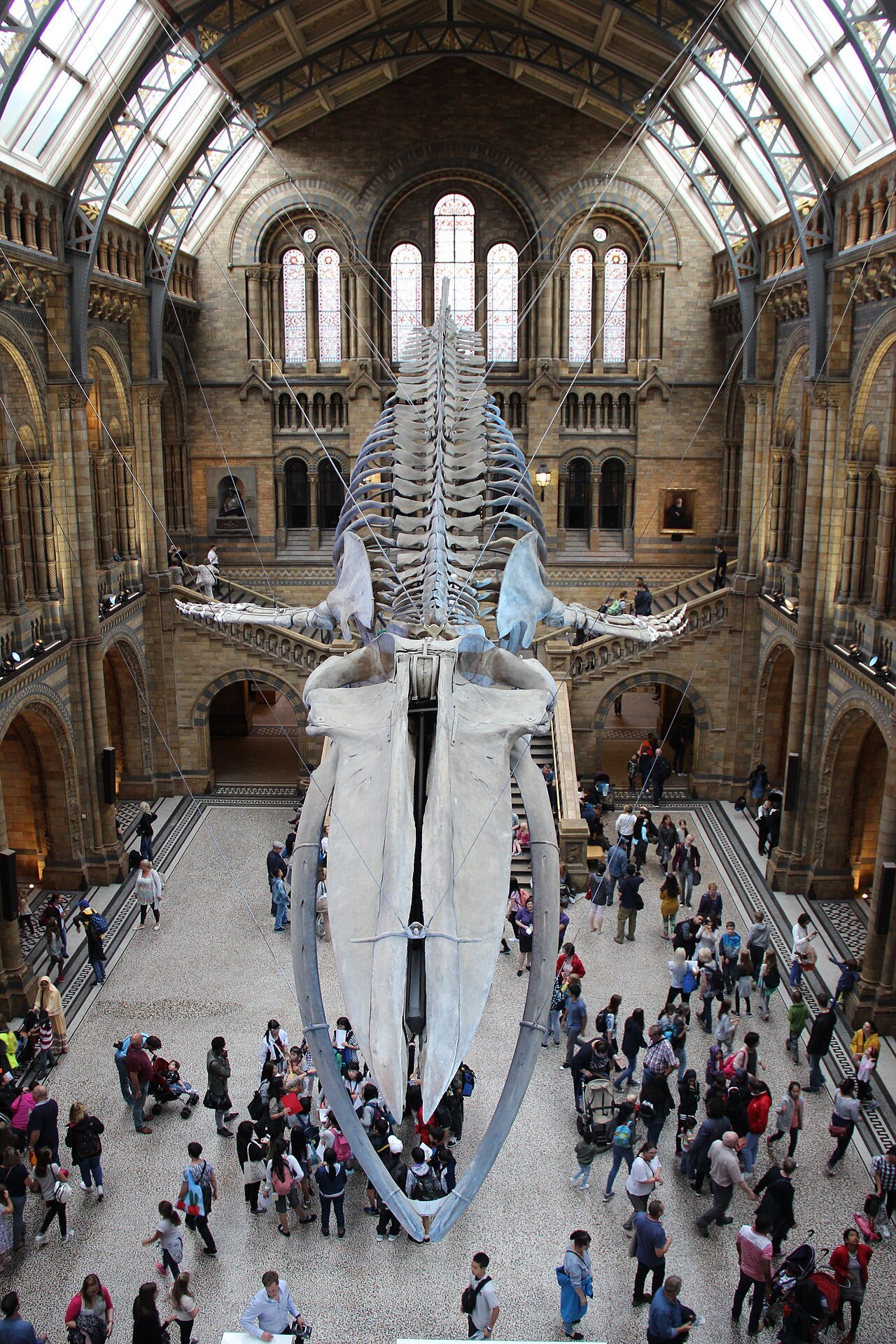
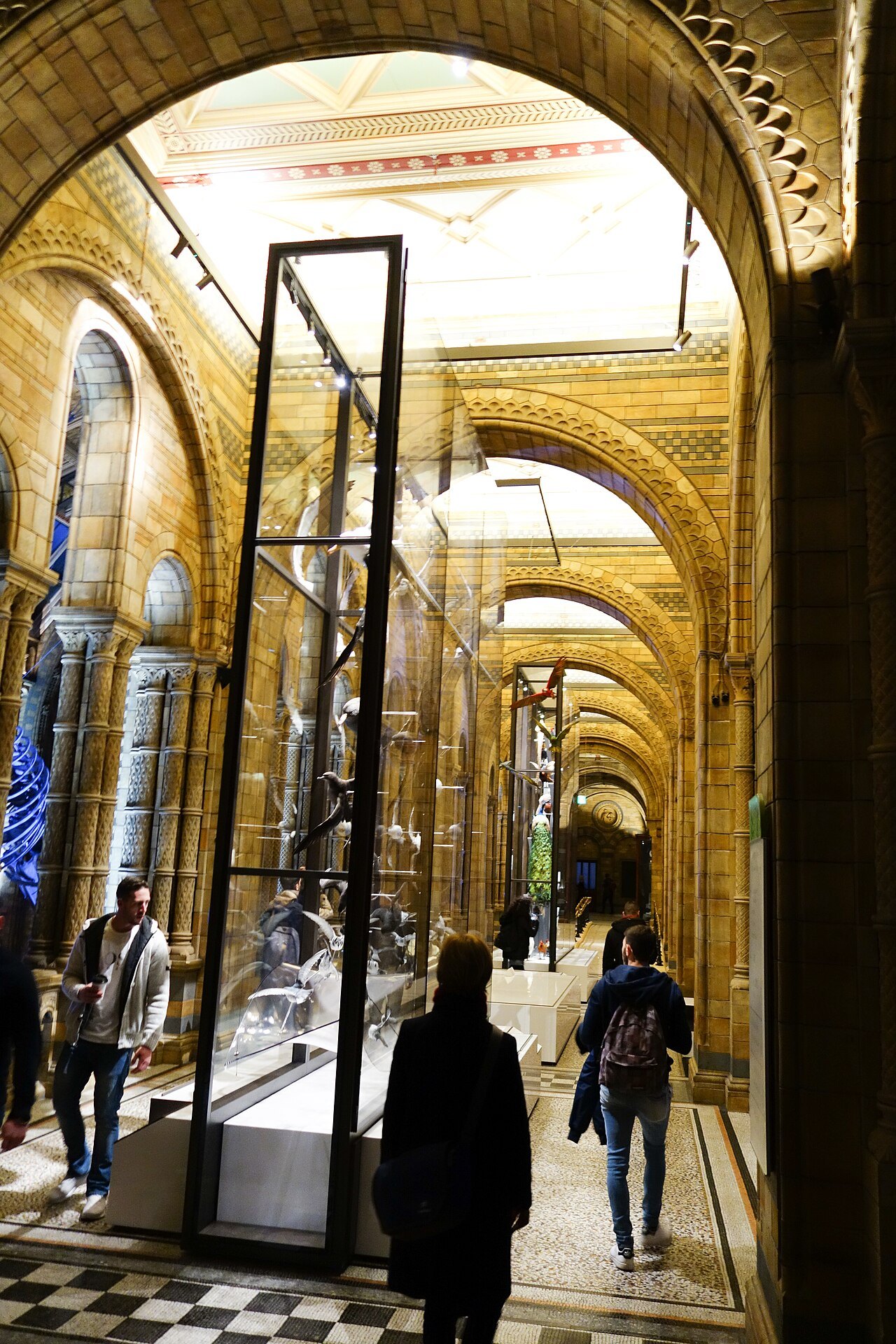
Look at the arches and balusters as well, because the carved animals continue inside. Monkeys climb the columns of the main stair and the iron-framed roof rests on piers carved with fossils and plants. It is worth taking five minutes to see the decoration before heading for the galleries.
What to see
The dinosaur galleries are the most popular and the most crowded, so go early or late in the day if you can. The collection includes skeletons and casts, and a moving model of a tyrannosaur. The other galleries are quieter and often more rewarding: the mammals, the birds, the minerals and the displays on evolution and human biology.
The earth galleries sit in the wing that was once the Geological Museum, and they take you through volcanoes and earthquakes by way of a famous escalator that rises into a great turning globe. The Darwin Centre, a more recent building, is partly a working science facility where you can see researchers at work behind glass.
Looking closely
Spend a few minutes in the halls of fossils and early life, where the oldest specimens sit in cases beside modern relatives so that you can compare them. The mineral gallery holds crystals, meteorites and gemstones in dark cases that make them glow, and the mammal and bird galleries include specimens that have been on show for more than a century. Some of the taxidermy is old enough to be a historical document in its own right, showing how earlier generations imagined animals they had never seen alive.
The museum's research is part of the story. Scientists here describe new species, trace the movements of invasive insects and study how climate change is shifting habitats. The Darwin Centre lets visitors watch some of that work, and the museum's own website explains how the collections are used by researchers around the world.
Children tend to head straight for the dinosaurs, but older visitors often linger in the quieter rooms where a single specimen, a coral, a beetle or a long-extinct bird, gets a case to itself, with a label that tells you where it was found and who found it. Those labels, in the hands of curators, are some of the most carefully written text in London.
Planning your visit
Entry is free, but popular days can be very busy, and timed entry may apply during peak periods, so see Booking Ahead. The museum is a short walk from South Kensington station through a pedestrian tunnel, and you can reach the V&A across the road in a few minutes.
Families with young children often plan a day around the museum, and the dinosaur gallery is the usual first stop. For the other great collection that began with Sloane, see the British Museum, and for a green space afterwards, Hyde Park is a short walk to the north.
Nearby
Where to go next
- Nearby · South KensingtonThe Victoria and Albert MuseumThe largest museum of applied arts, decorative arts and design in the world, born from the profits of the Great Exhibition, with more than two million objects and free entry.Read the page →
- Nearby · Westminster · KensingtonHyde Park and Kensington GardensA 350-acre Royal Park in the middle of London, first a royal hunting ground and now the city's great open lawn, with a lake, a free-speech corner and Kensington Gardens beside it.Read the page →
- Nearby · BloomsburyThe British MuseumFounded in 1753 on the collections of Sir Hans Sloane, the museum holds some eight million objects of human history and culture, from the Rosetta Stone to the Parthenon sculptures, and admission to its permanent collection is free.Read the page →