Covent Garden
What you are looking at
West End
- 1The PiazzaThe arcaded square planned by Inigo Jones, the prototype of London's later estates.
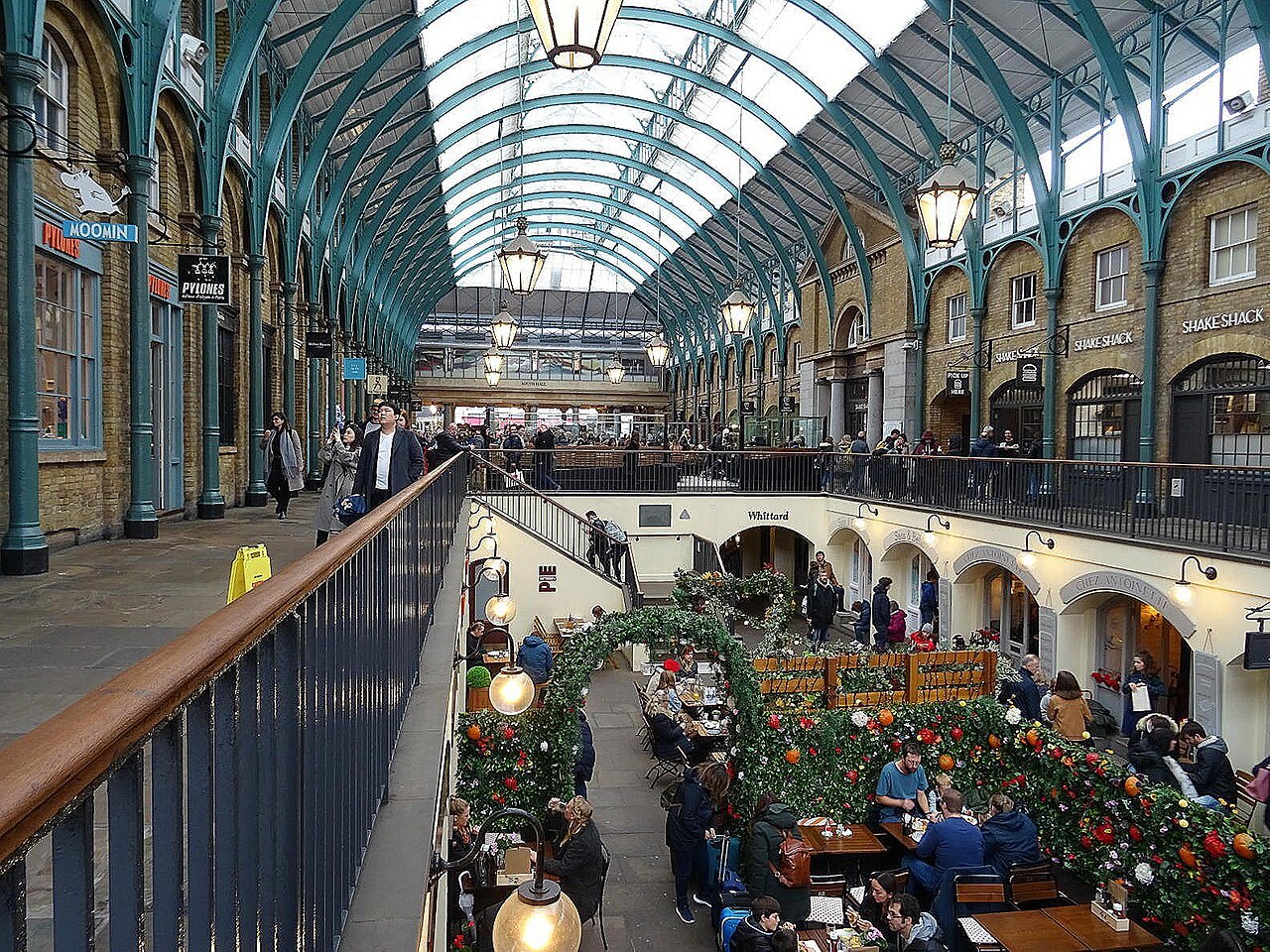
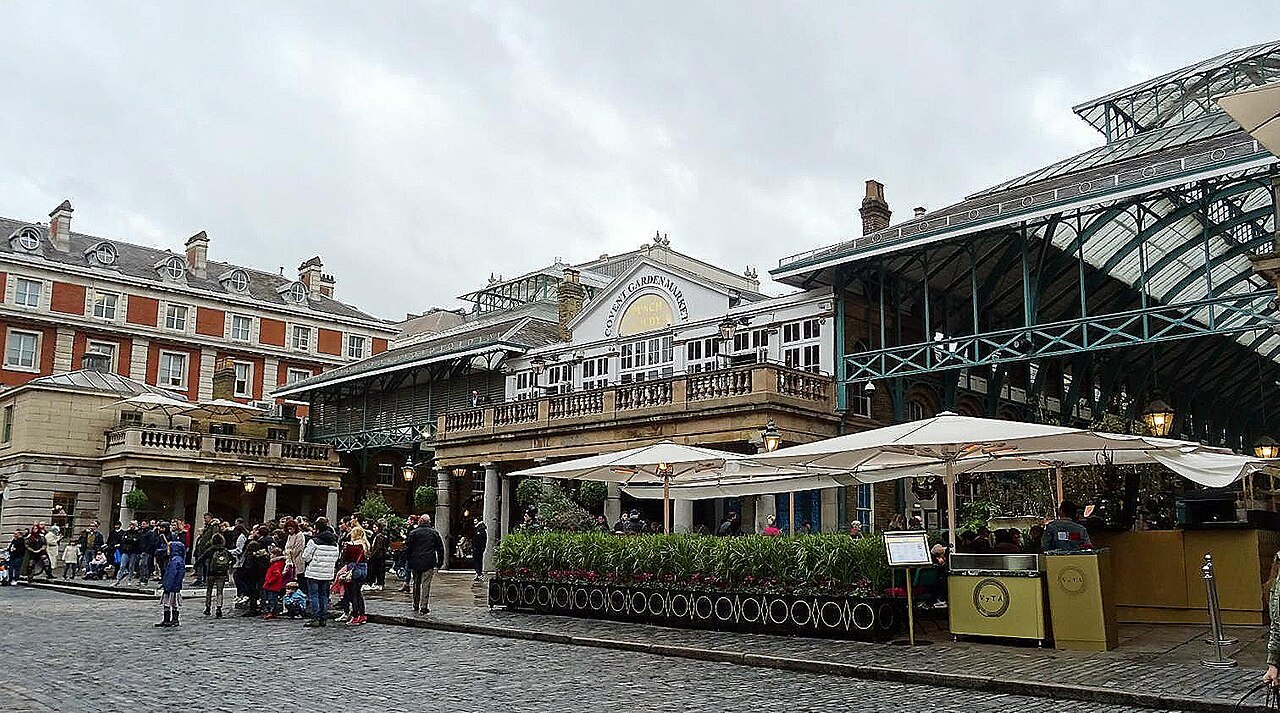
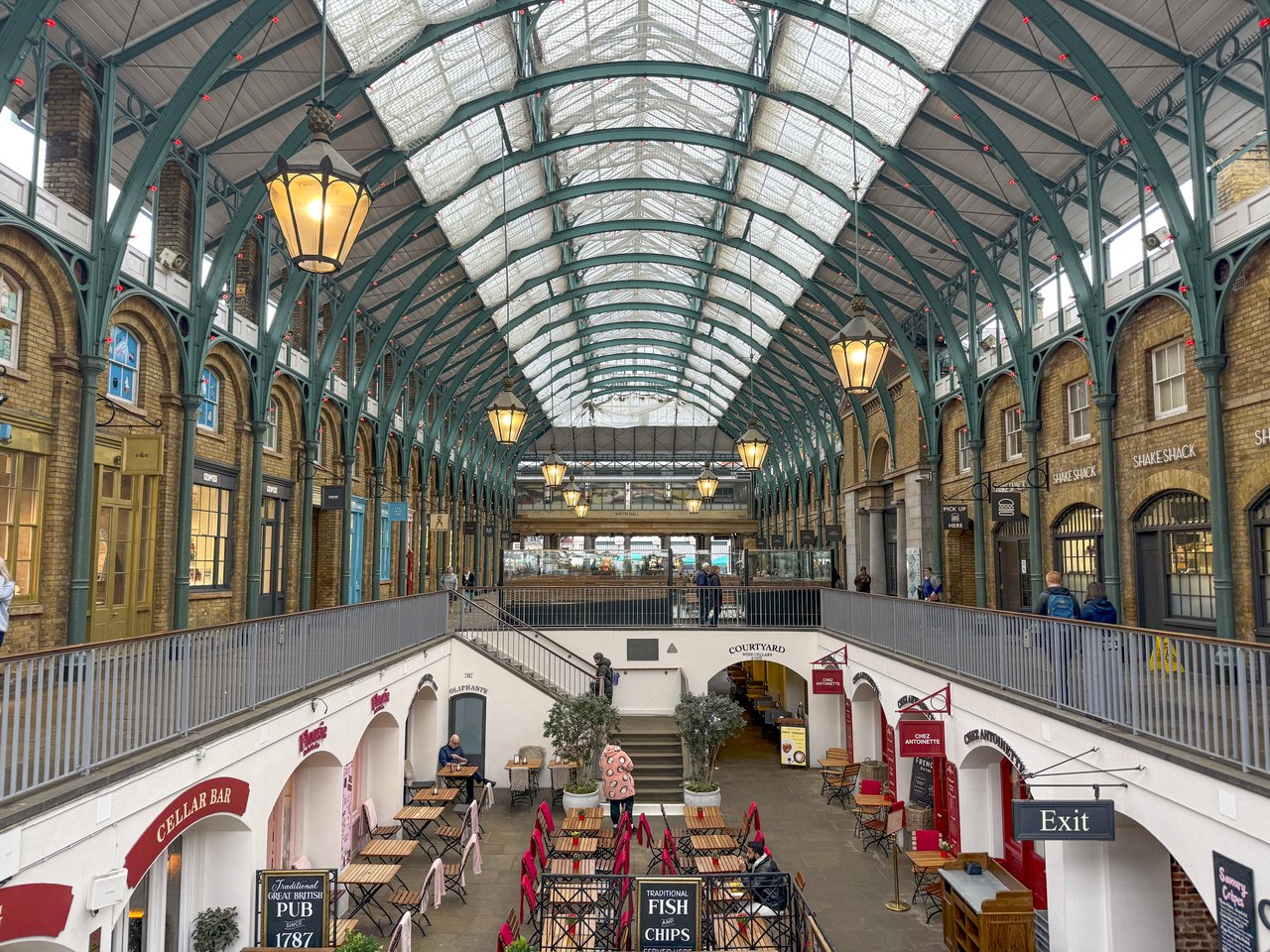
- 2The Market BuildingCharles Fowler's neo-classical hall of 1830, now with shops, cafes and a craft market.
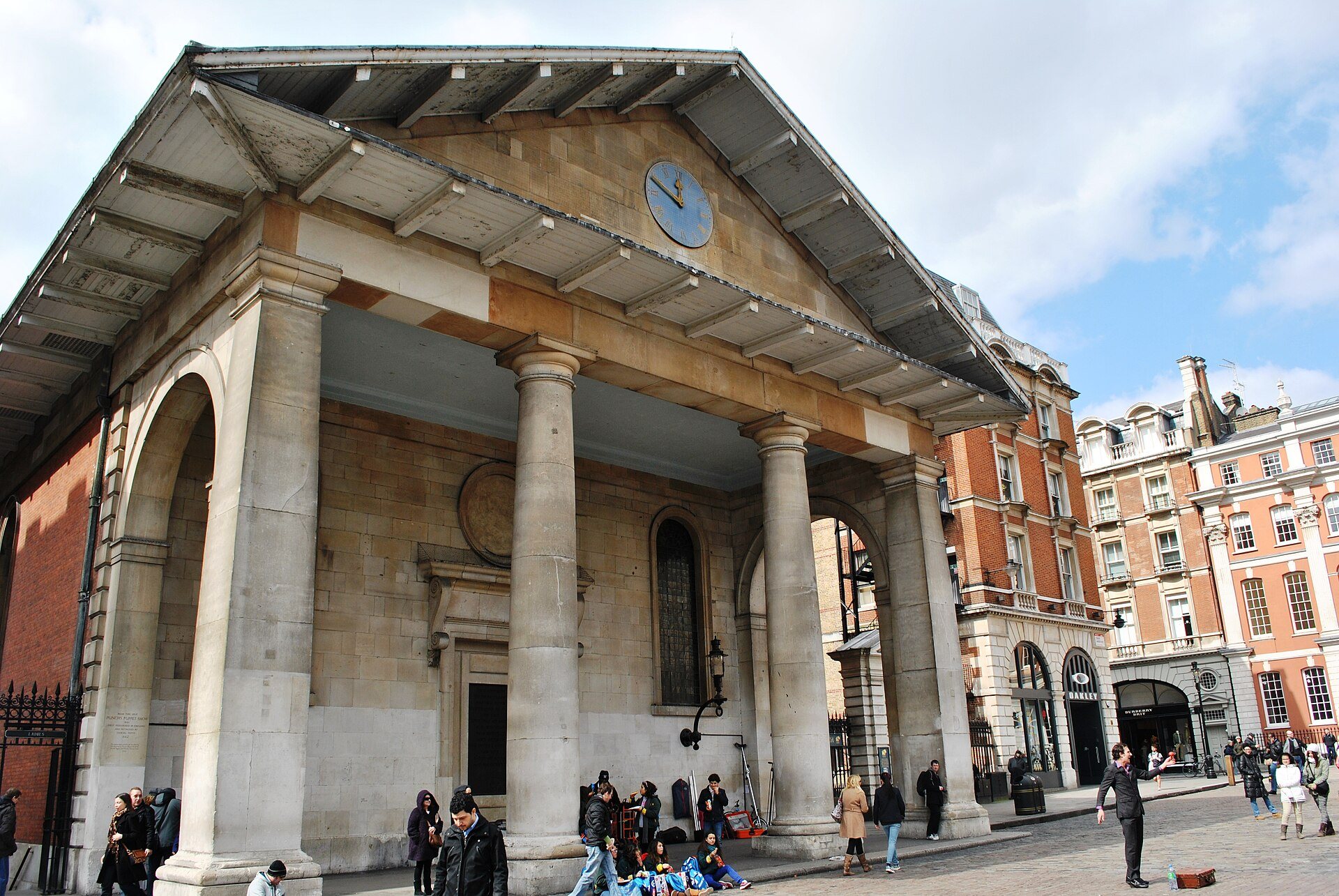
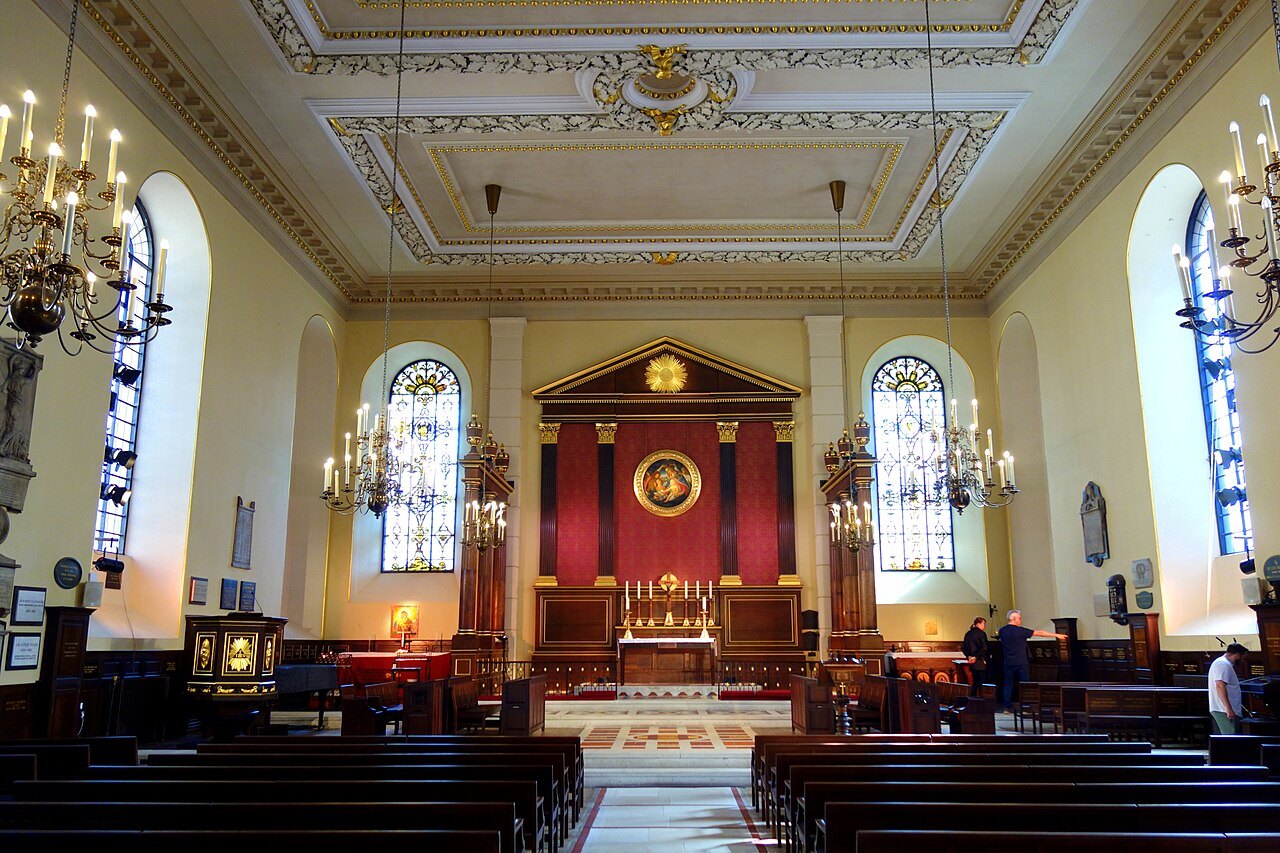
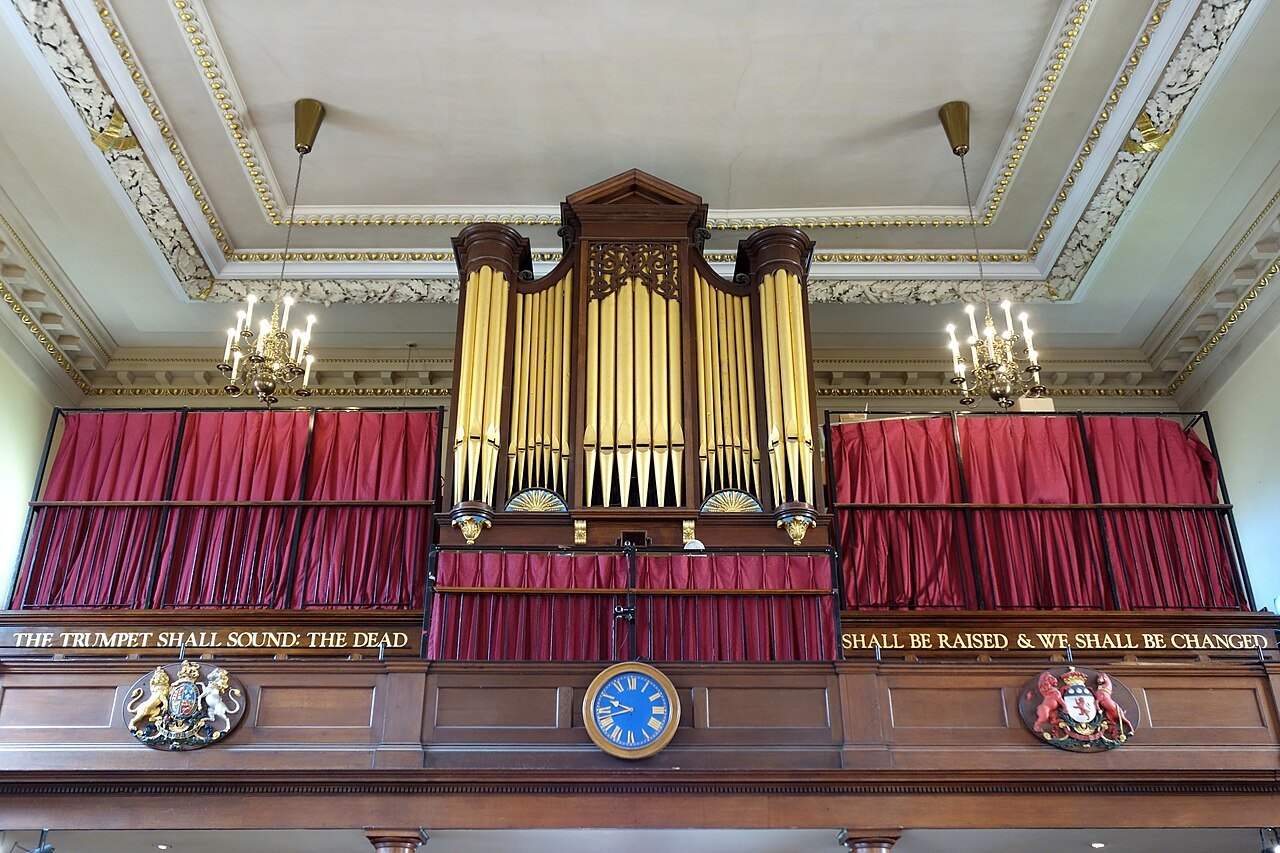
- 3St Paul's ChurchThe actors' church on the west side, also by Inigo Jones.
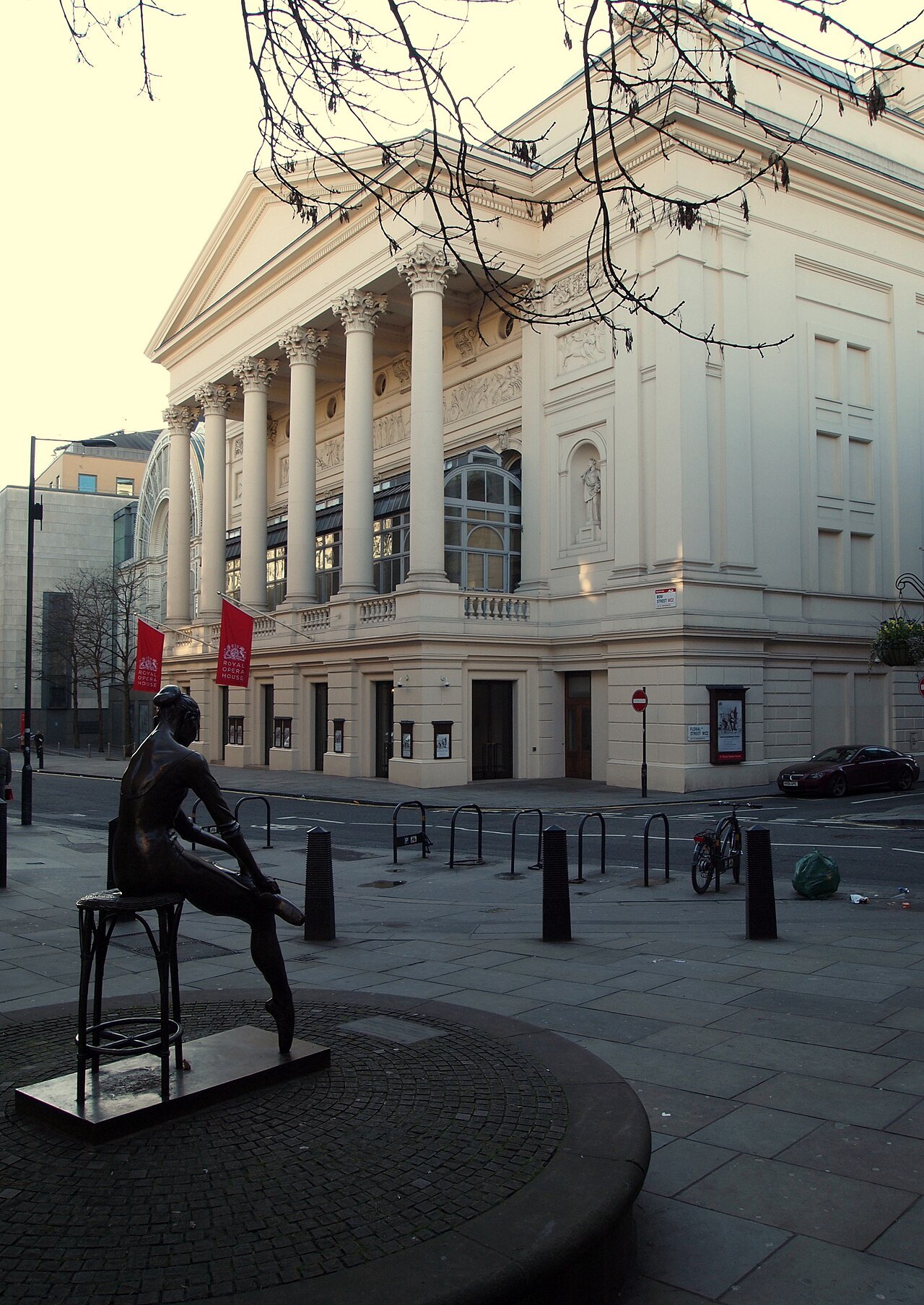
- 4The Royal Opera HouseThe third theatre on the site, home of opera and ballet, with its facade and auditorium dating from 1858.
- 5Seven DialsA star-shaped junction of seven streets to the north, ringed with independent shops.
- 6The London Transport MuseumA museum of the capital's buses, trams and Tube, in the old Flower Market.
Reading the place
The sight in full
What it is
Covent Garden is a district on the eastern edge of the West End, between St Martin's Lane and Drury Lane. It is known for the old fruit-and-vegetable market in its central square, now a popular shopping and tourist site, and for the Royal Opera House, which is itself often called Covent Garden. Long Acre splits the district: north of it are independent shops around Neal's Yard and Seven Dials, and south are the square, the street performers and most of the historic buildings and theatres.
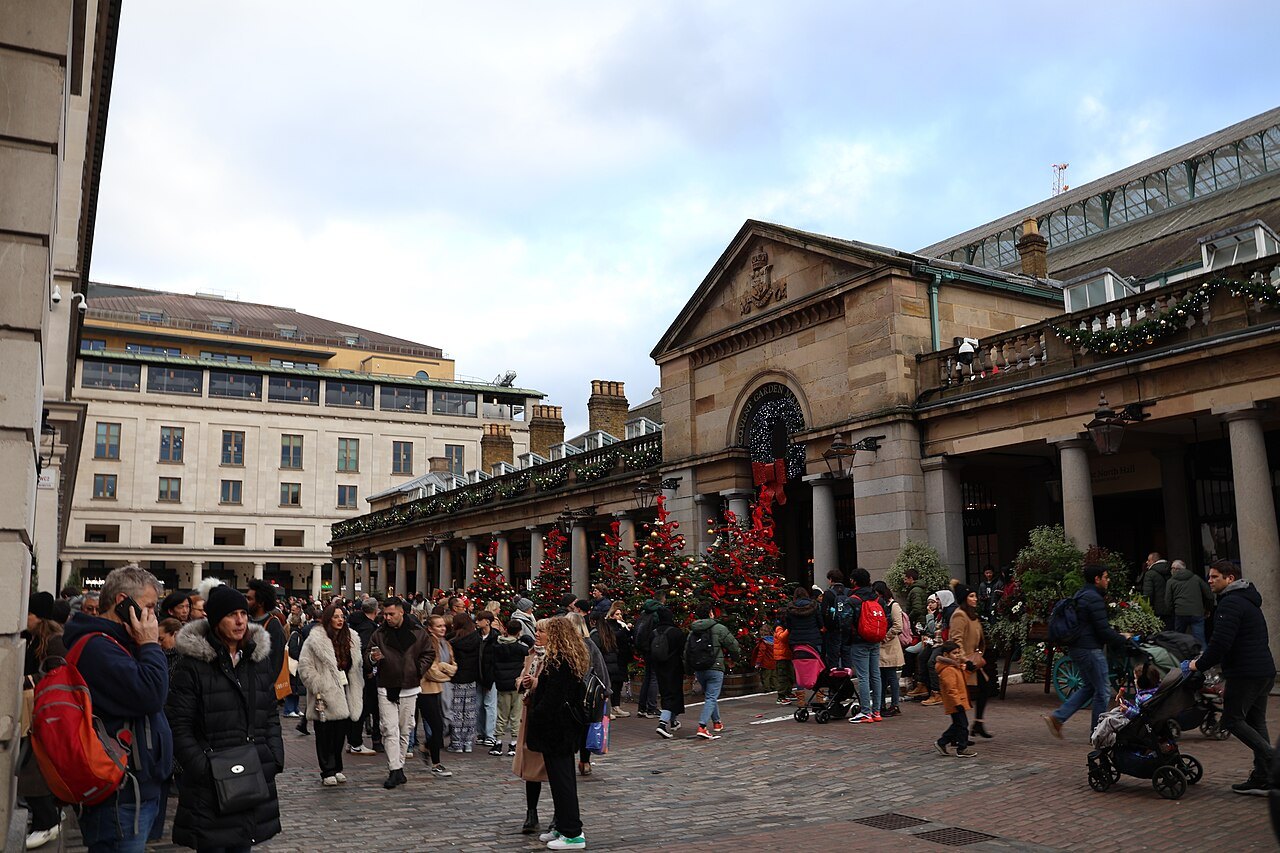
It is a place to wander with no plan, and it is best on a weekday morning before the crowds, or in the evening when the theatres are filling.
The convent garden
The name is a corruption of the Convent Garden. By about 1200 the monks of Westminster Abbey had walled off part of their land for arable fields and orchards, later described as the garden of the Abbot and Convent. When the monasteries were dissolved, Edward VI granted the land in 1552 to John Russell, the first Earl of Bedford, and the Russell family held it for centuries.
Before that the site had a still older past. Excavations have shown that a Saxon trading town called Lundenwic grew up here around 600, with Covent Garden at its centre, until King Alfred moved the settlement inside the old Roman walls in the late ninth century and the site went back to fields.
Inigo Jones's piazza
In the 1630s the fourth Earl of Bedford commissioned Inigo Jones to build fine houses that would attract wealthy tenants. Jones designed an Italianate square with an arcade on two sides and a church, St Paul's, on the west. The idea of a regular, classical residential square was new to London, and it became the prototype for the estates that followed as the city grew.
The church is plain on the outside and its portico faces the square, which was a design joke: the main door at the east end opens onto a churchyard, and the portico is a dummy because the altar stands against the east wall. It is known as the actors' church, with memorials to many performers, and is the setting for the opening of Shaw's Pygmalion.
The market
By 1654 a small open-air fruit-and-vegetable market had grown on the south side of the square. In time the market, and the taverns, theatres and coffee houses around it, gave the area a rough reputation, and by the eighteenth century it was notorious for its brothels. Parliament drew up an act in 1813 to control it, and Charles Fowler's neo-classical building was erected in 1830 to cover and organise the market.
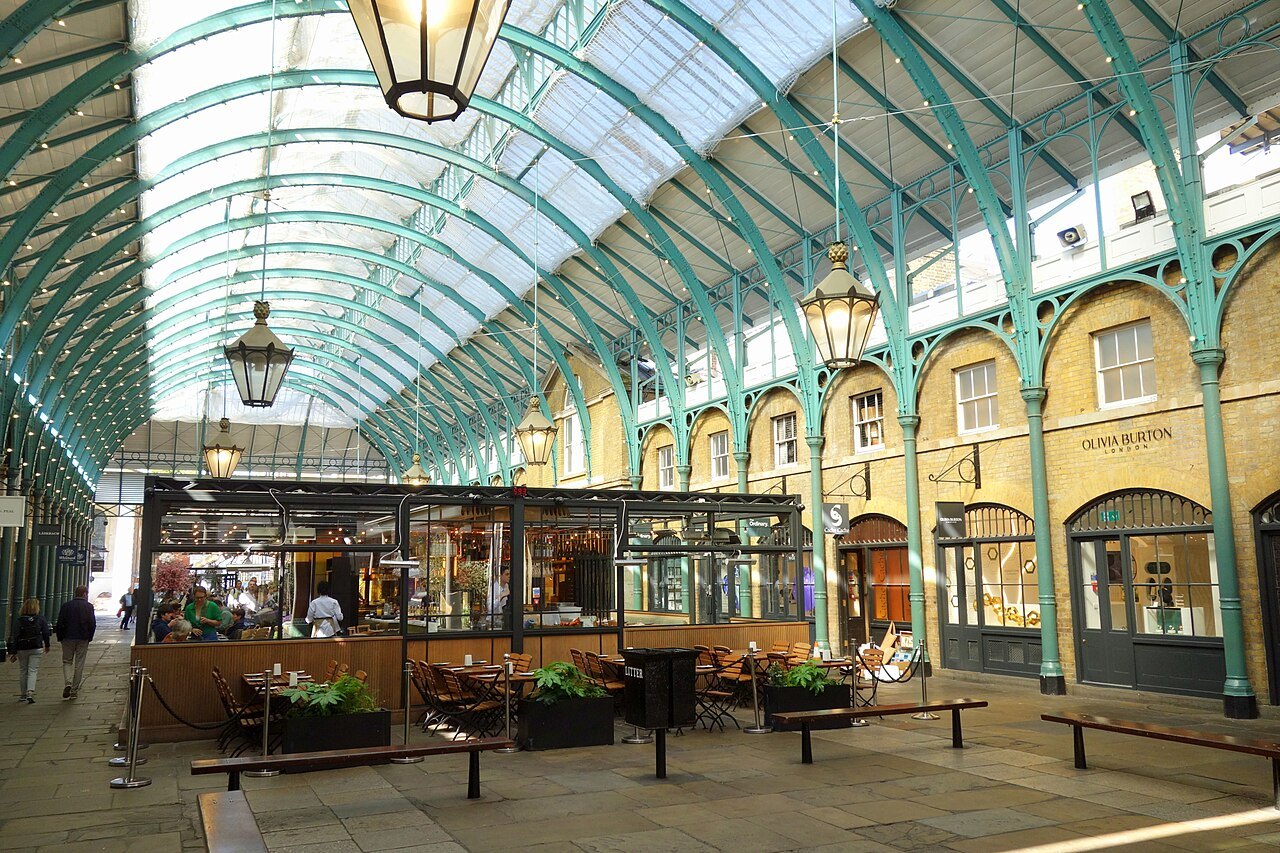
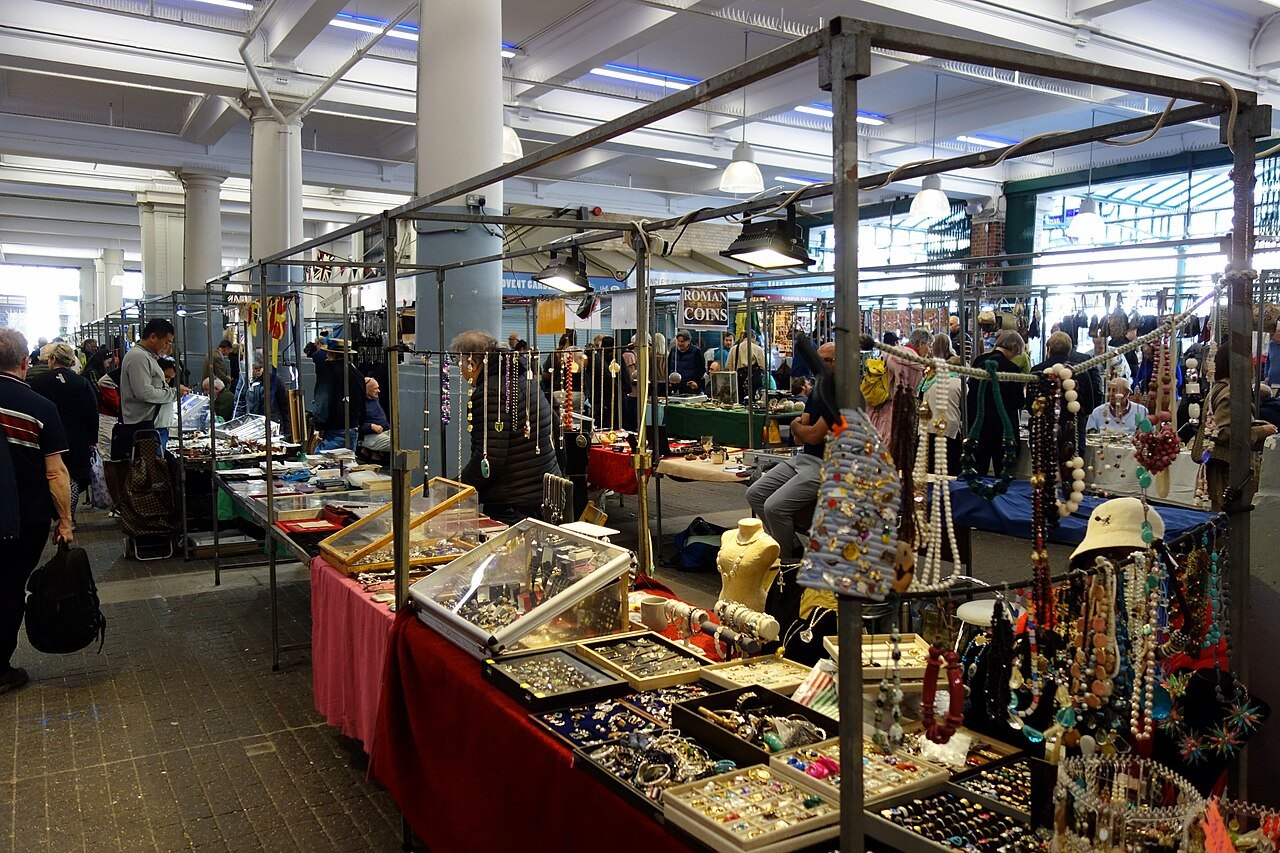
The market grew until traffic congestion became impossible. In 1974 it moved about three miles south-west to Nine Elms, and the central building reopened in 1980 as a shopping centre. Today it holds cafes, pubs, small shops and a craft market in the Apple Market, with another market in Jubilee Hall. The London Transport Museum now fills the old Flower Market.
Opera, ballet and the street
The Royal Opera House, on the east side, is the third theatre on its site, after fires in 1808 and 1856. The facade, foyer and auditorium date from 1858, and nearly everything else from a big reconstruction in the 1990s. The first theatre opened in 1732, and Handel's operas and oratorios premiered here. It is the main home of the Royal Ballet and the Royal Opera.
Street performance has been part of the square for centuries. Samuel Pepys recorded a Punch and Judy show here in 1662, and today the portico of St Paul's and the cobbles of the square are a stage for jugglers, musicians and living statues, who work under a licensing system.
Beyond the square
North of Long Acre the district changes character. Neal's Yard is a small courtyard of painted buildings, with cafes and a health-food tradition that began in the 1970s, and Seven Dials is a junction where seven streets meet at a pillar topped with sundials. The shops here are mostly independent, and the lanes are quieter than the central piazza.
To the east, Drury Lane has been a theatre street since the seventeenth century, and the Theatre Royal there is one of the oldest working playhouses in London. On a pre-theatre evening the whole district fills with people looking for dinner, and the pubs of Covent Garden are among the most crowded in the centre, so book ahead if you want a table. Street food and snack stalls cluster around the Apple Market, and the cafes on the piazza charge a premium for the view, so walking two streets away usually brings a quieter table and lower prices.
Wandering between these streets gives a better sense of the area than the piazza alone. A good loop leaves the piazza by the church, crosses Long Acre to Neal's Yard, climbs to Seven Dials and returns by Floral Street, past the stage door of the Opera House, where the scenery for the evening's performance is sometimes wheeled in and out in full view of the street.
Getting there and around
Covent Garden station is on the Piccadilly line, and the 300-yard journey from Leicester Square is the shortest in the network, so it is faster to walk. The district is a short walk from the British Museum to the north and from Trafalgar Square to the south-west.
Neighborhoods places Covent Garden within the wider West End, and Eating and Drinking covers the pubs and restaurants of the area.
Nearby
Where to go next
- Nearby · BloomsburyThe British MuseumFounded in 1753 on the collections of Sir Hans Sloane, the museum holds some eight million objects of human history and culture, from the Rosetta Stone to the Parthenon sculptures, and admission to its permanent collection is free.Read the page →
- Nearby · Westminster · Charing CrossTrafalgar SquareLondon's great public square, laid out in the 1830s and 1840s beside the National Gallery, centred on a column to Admiral Nelson, guarded by four bronze lions and treated in law as the centre of London.Read the page →
- Nearby · Trafalgar SquareThe National GalleryThe national collection of more than 2,300 paintings from the thirteenth century to 1900, on the north side of Trafalgar Square, with free entry to the main collection.Read the page →