Home · Sights · The British Museum
The British Museum
What you are looking at
Bloomsbury
- 1The Rosetta StoneThe decree of 196 BC that unlocked Egyptian hieroglyphs, and the most visited object in the building.
- 2The Parthenon sculpturesMarble figures from the Acropolis in Athens, long the subject of disputes over where they belong.
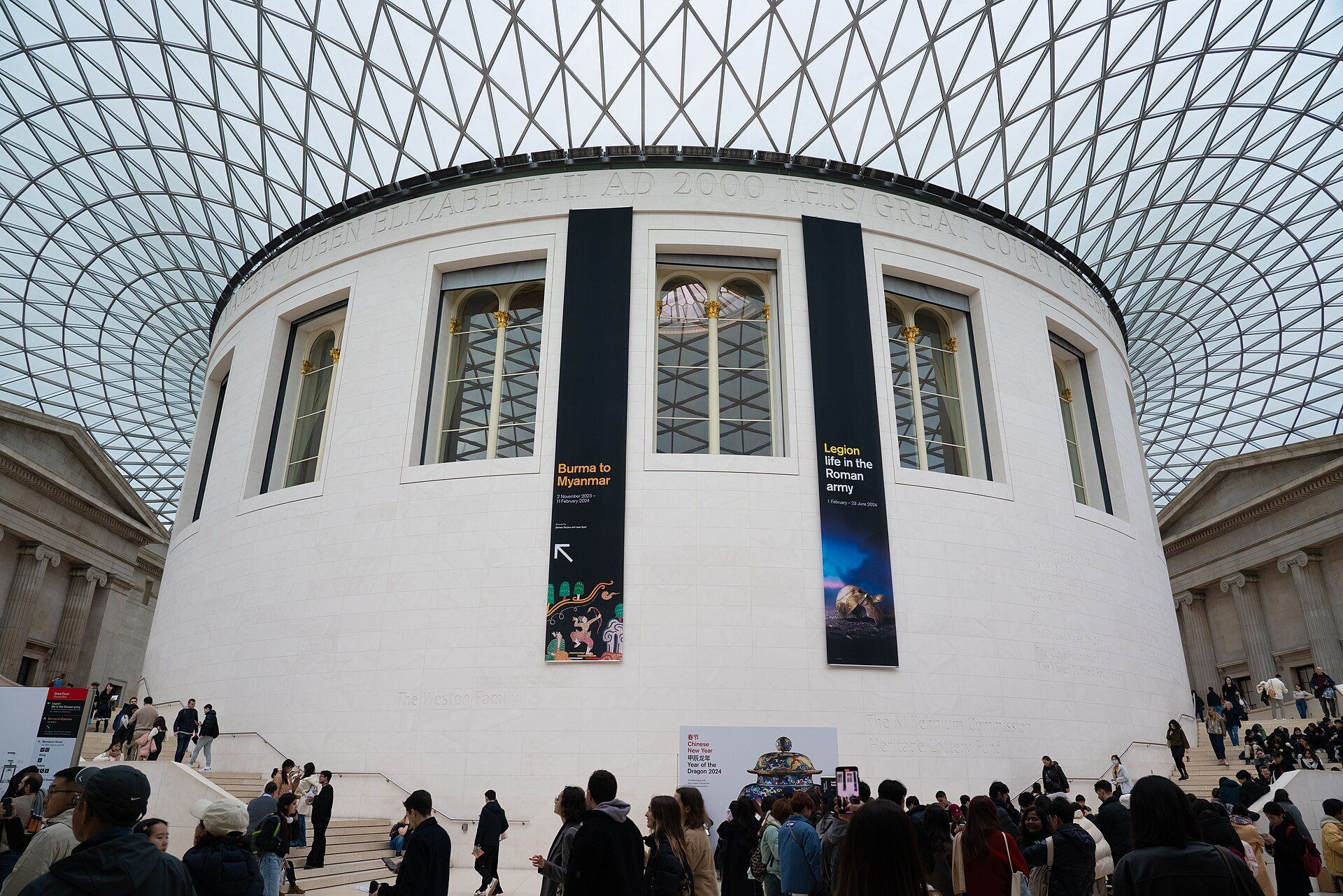
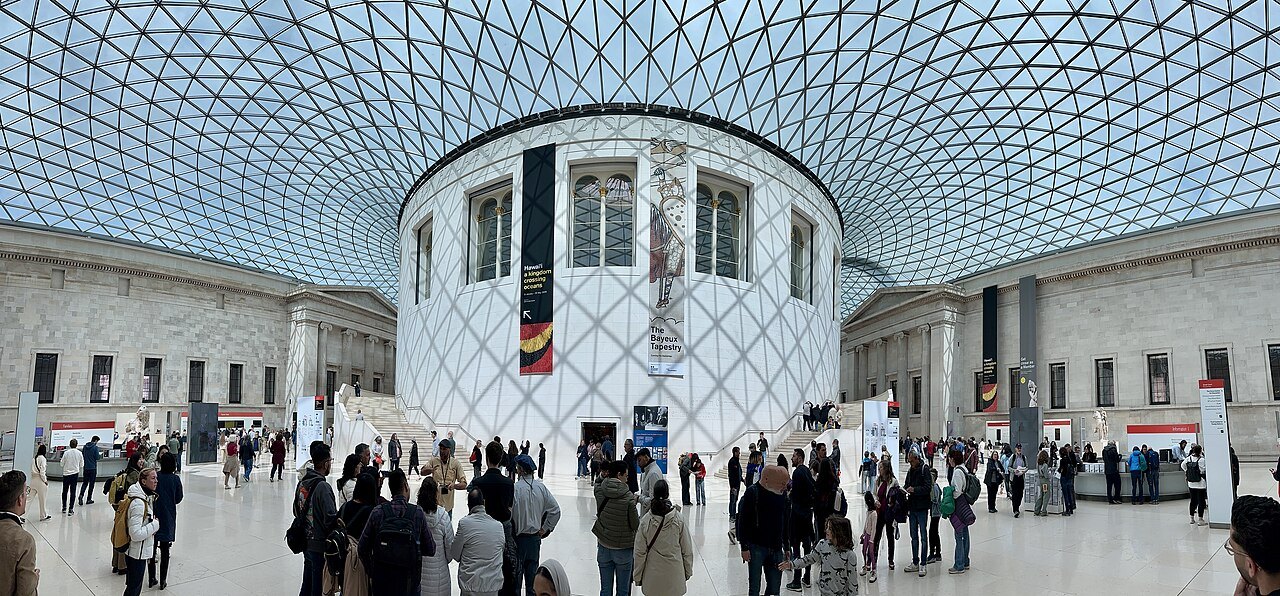
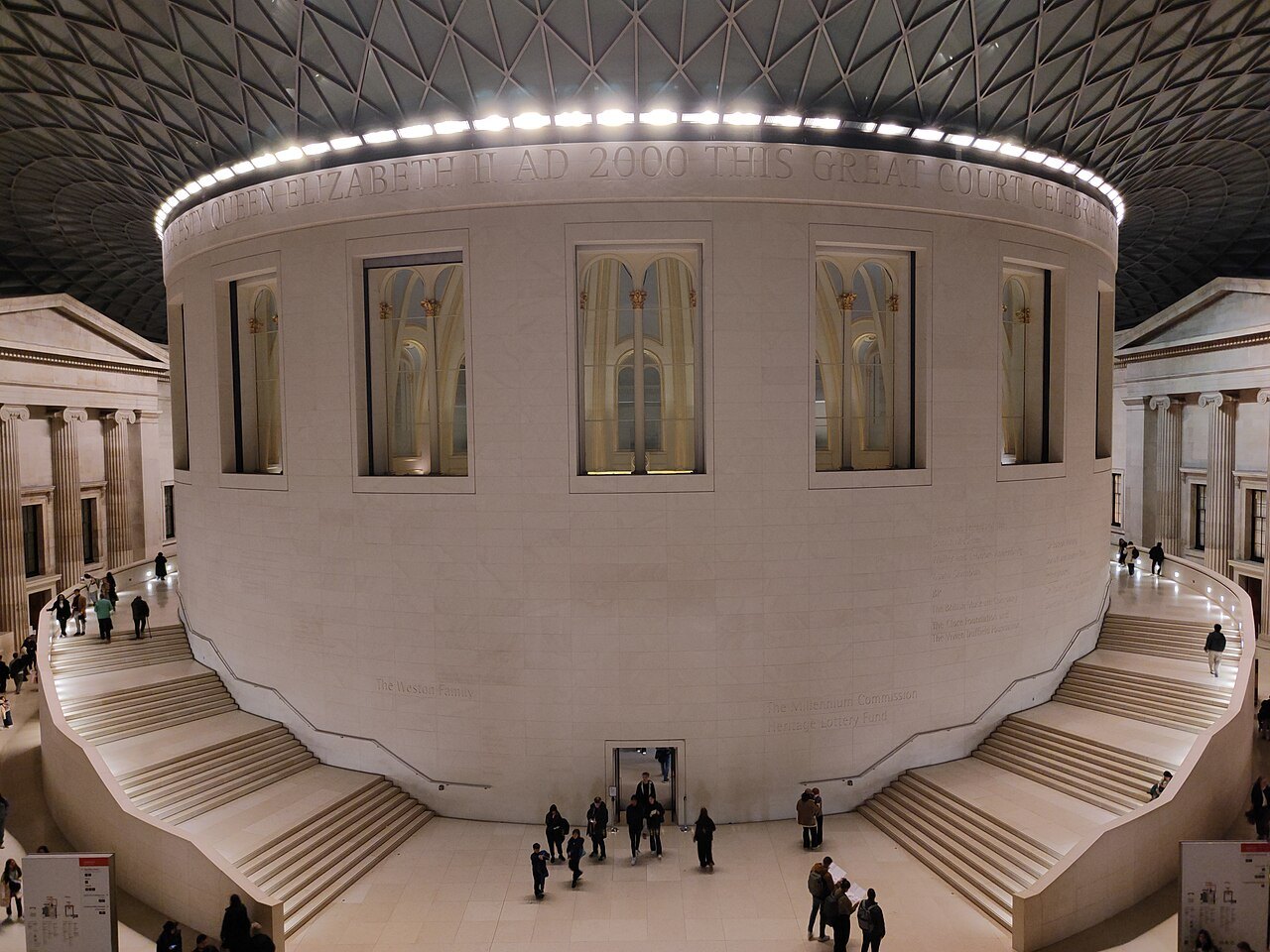
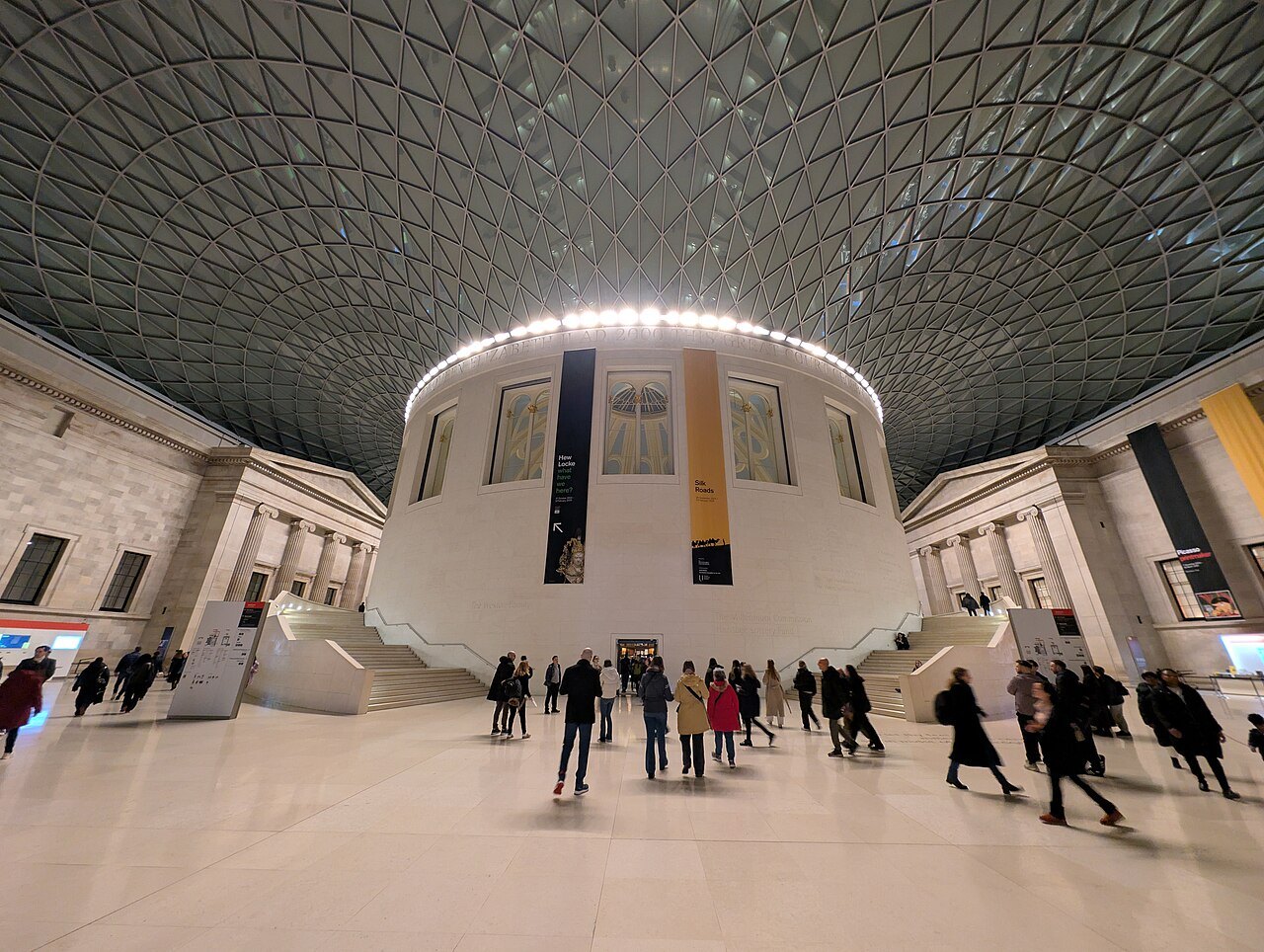
- 3The Great CourtA glass-roofed courtyard around the old Reading Room, one of the largest covered public squares in Europe.
- 4Egyptian galleriesColossal statues, coffins and mummies, among the largest collections outside Cairo.
- 5The Greek buildingRobert Smirke's colonnaded facade, a Greek Revival temple front facing Great Russell Street.
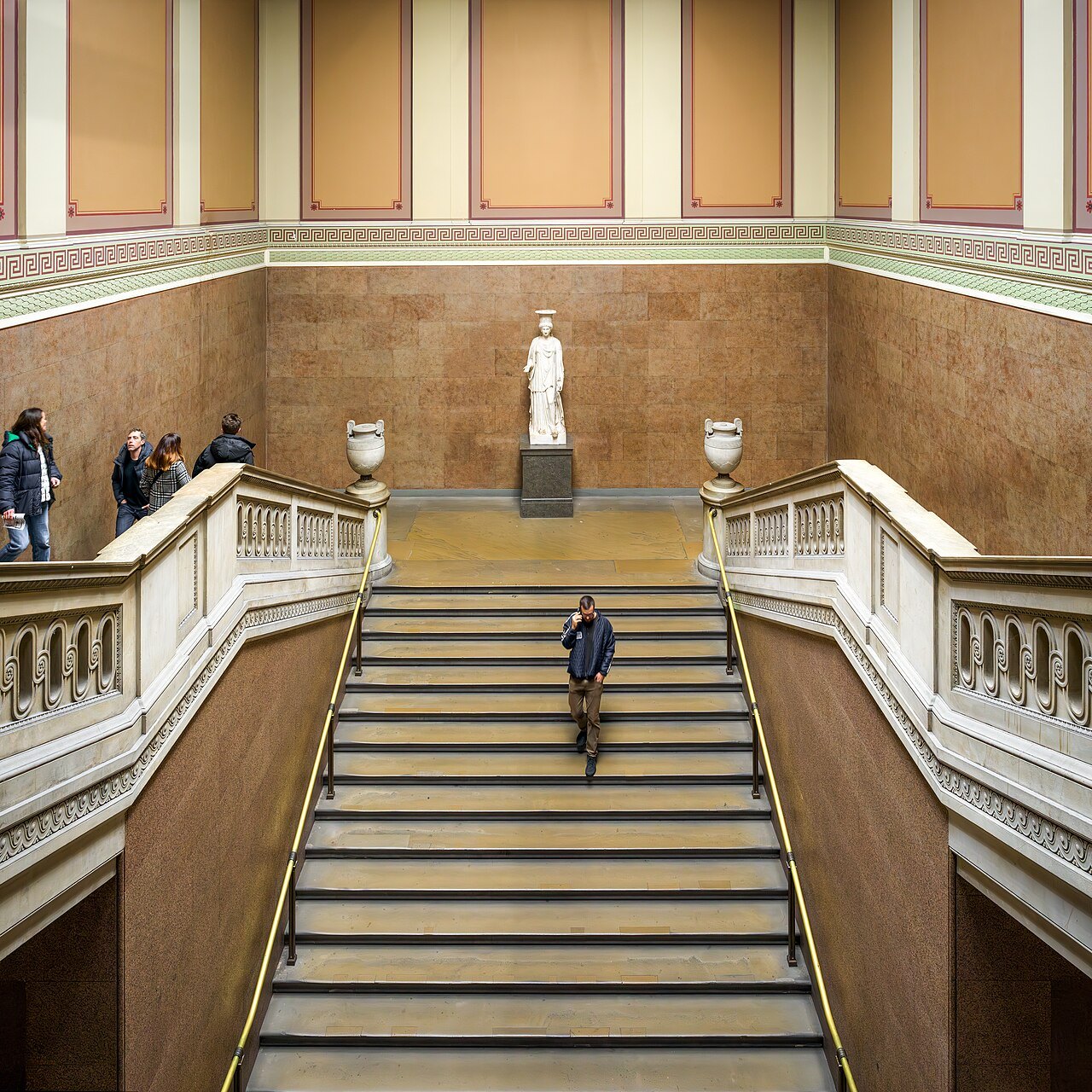
- 6The Enlightenment GalleryThe old King's Library, now the room that shows how the collection began.
Reading the place
The sight in full
A museum for everyone
The British Museum is a public museum of human history, art and culture in Bloomsbury, and its permanent collection of around eight million objects is the largest in the world. It was established in 1753 and was the world's first public national museum: belonging to neither church nor king, open to the public and aiming to collect everything. Like the other national museums in the UK, it charges nothing for entry to the permanent collection, though special exhibitions have a fee.
That makes it among the most visited places in the country, and in busy periods the galleries around the Rosetta Stone and the Egyptian sculpture can be crowded. It is also very big, so a first visit works best with a plan: choose three or four galleries and leave the rest. You cannot see everything in a day, and trying to is the usual mistake.
Sir Hans Sloane's collection
The museum began with the will of Sir Hans Sloane, a physician and naturalist from Ulster who lived in London and died in 1753. Sloane had gathered some 71,000 objects, including 40,000 printed books, 7,000 manuscripts, dried plants, prints and antiquities from Egypt, Greece, Rome and the Americas. He did not want the collection broken up, so he left it to George II for the nation in return for a payment to his heirs that was far less than its value.
Parliament passed the British Museum Act in 1753 and added the libraries of Sir Robert Cotton and Robert Harley, with the old royal library following in 1757. Between them the foundation collections included the Lindisfarne Gospels and the only surviving manuscript of Beowulf, which now belong to the British Library. The trustees bought Montagu House on this site, rejecting Buckingham House on grounds of cost, and the museum opened to the public in 1759.
The building
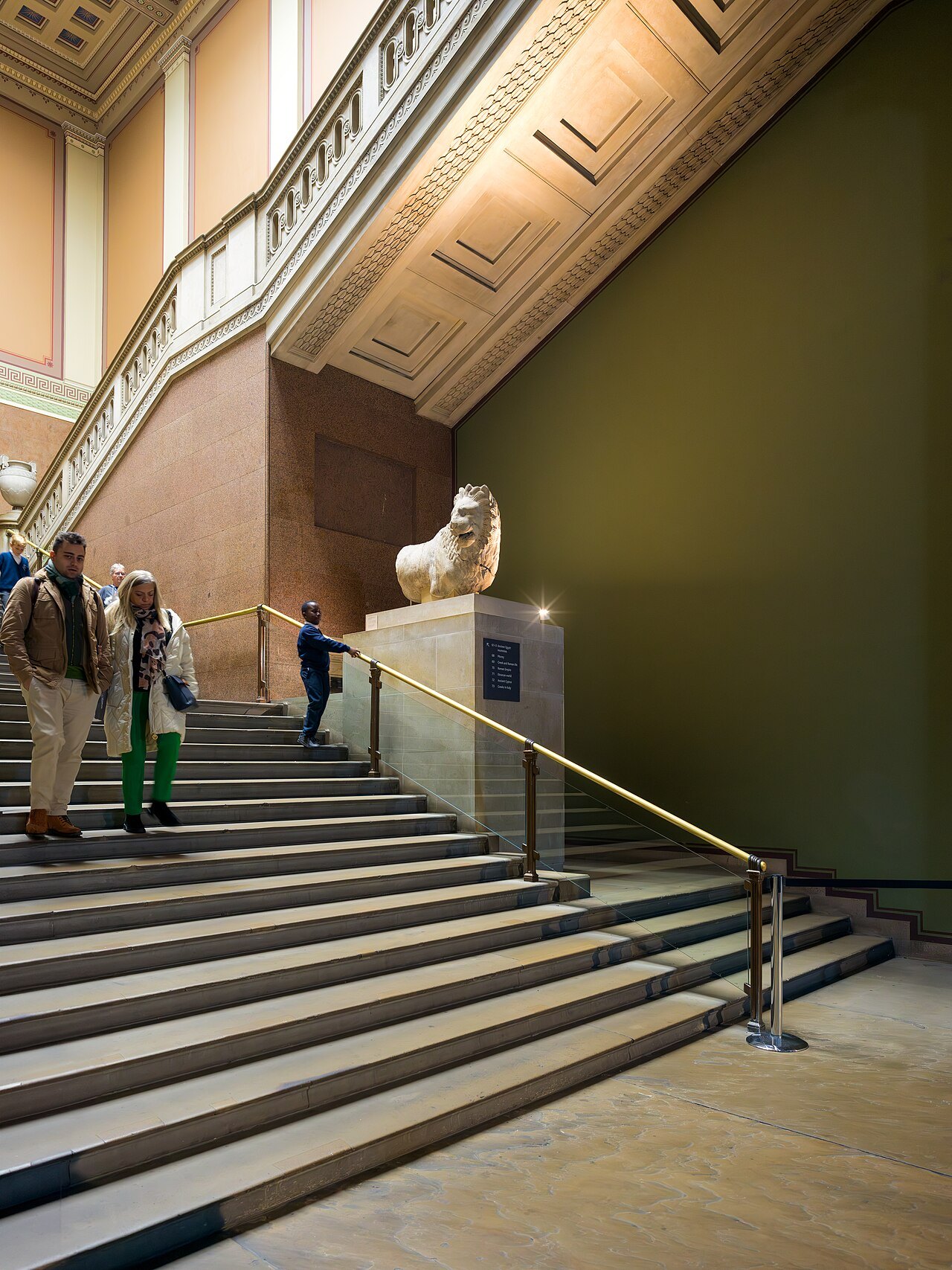
Montagu House became too small, and the present building was begun in the 1820s to the designs of Robert Smirke. Its south front is a long colonnade in the Greek Revival style, with a pediment sculpted with allegorical figures, which suits the collection of classical sculpture it was built to hold. The wings of the quadrangle around the old garden were finished over the next decades.
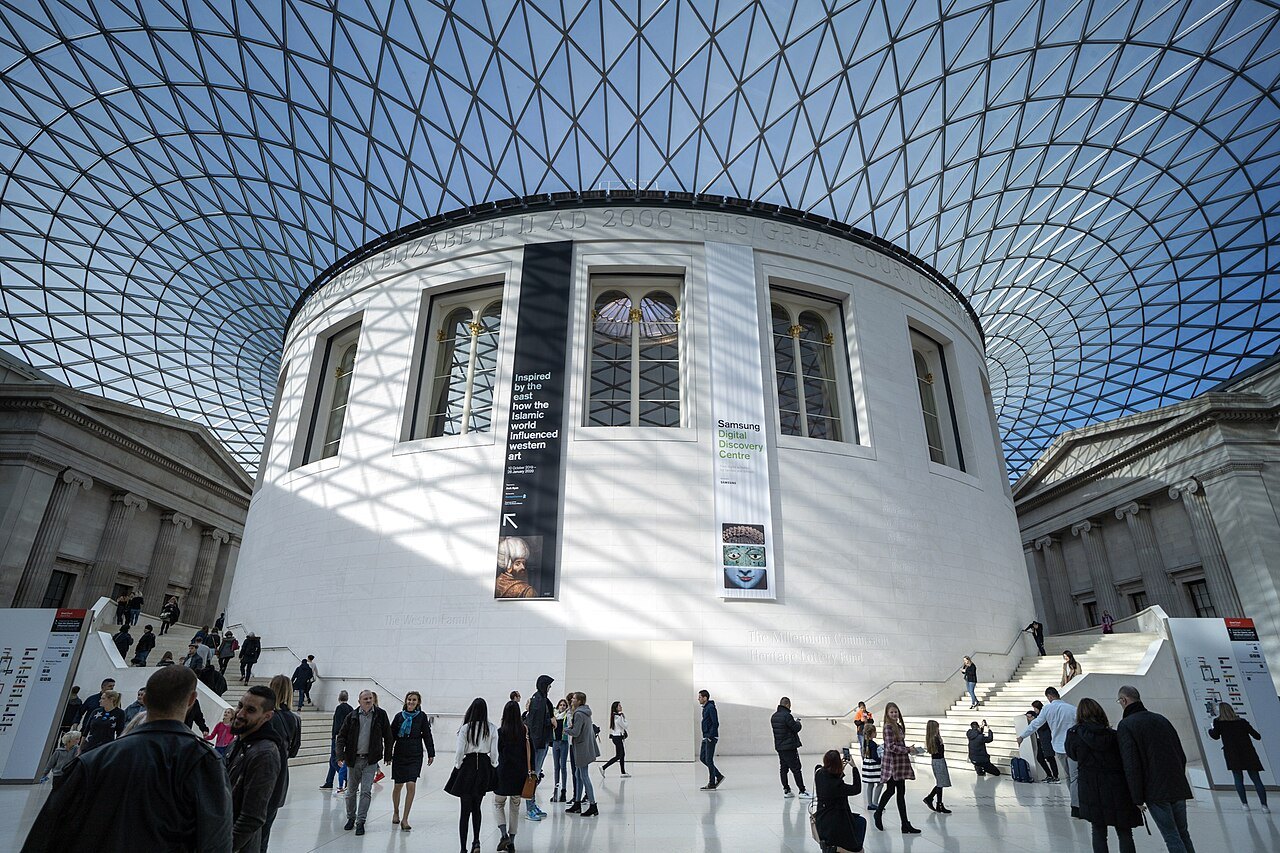
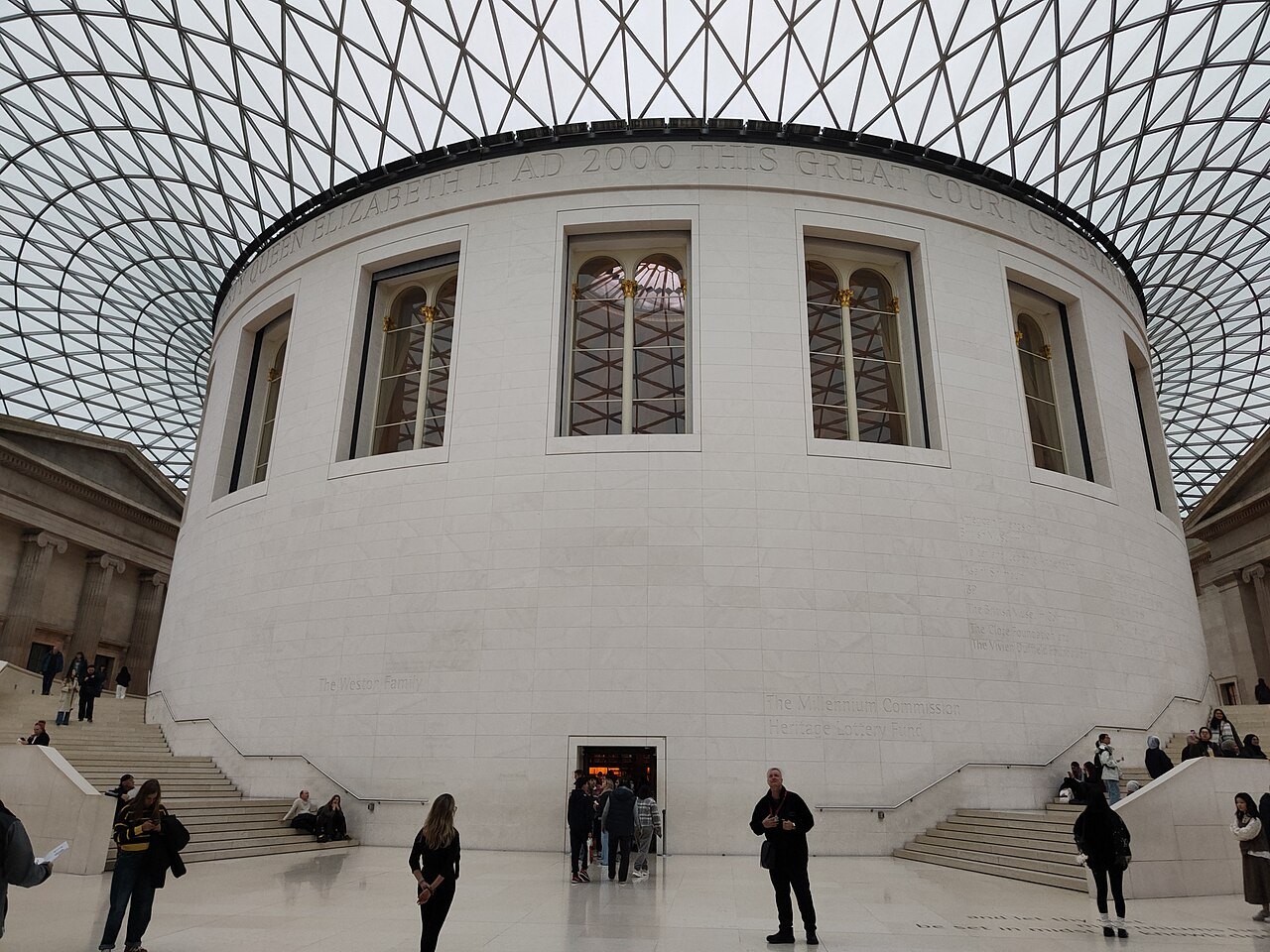
In the middle of the quadrangle stood the circular Reading Room, where Karl Marx and many others worked. When the British Library left in 1997 the courtyard around it was roofed over to a design by Norman Foster, and the Great Court opened in 2000. Its glass roof is made of thousands of unique panes, and it is now the museum's main concourse and a way of crossing the building. The Reading Room at its centre is used for exhibitions and events.
The Rosetta Stone
The Rosetta Stone is a block of granodiorite carved with a decree of 196 BC issued for the Egyptian king Ptolemy V. The same text appears in three scripts: hieroglyphs at the top, Demotic in the middle and Ancient Greek at the bottom. Because scholars could read Greek, the stone offered a way to decode the other two.
French soldiers found it in July 1799 near the town of Rosetta in the Nile Delta, and after the British defeated the French, it came to London under the Capitulation of Alexandria in 1801. It has been on display here since 1802 almost without a break. Jean-François Champollion announced his reading of the Egyptian scripts in 1822. It is the museum's most visited object, and Egypt has requested its return.
The Parthenon sculptures and the disputes
Among the best-known pieces are the sculptures from the Parthenon in Athens, often called the Elgin Marbles after the Earl of Elgin, who removed them in the early nineteenth century. They are the subject of long-running disputes, and Greece has sought their return for decades. The museum describes the matter in its own displays, and the argument is part of what it is now.
The same is true of other famous acquisitions. The museum's growth over two and a half centuries was bound up with British colonisation, and several of its best-known objects are the subject of repatriation claims. It is worth reading the labels with this in mind, because the story of how an object arrived is often as revealing as the object.
Rooms worth finding
Beyond the headline pieces, the museum is full of smaller rooms that repay a detour. The Assyrian reliefs from the palaces of Nineveh show royal lion hunts carved in gypsum with remarkable energy. The Anglo-Saxon ship burial finds from Sutton Hoo include a helmet and gold fittings that changed what historians knew about early England. The Lewis chessmen, carved from walrus ivory in the twelfth century, are among the most beloved objects in the building.
The museum is arranged by region and period, with Africa, the Americas, Asia, Europe and the ancient Mediterranean and Near East each given their own wings. A single floor can take you from Roman Britain to Mexico to Japan in a few minutes, and the juxtaposition is part of the idea: a museum built to show the whole of human history in one place.
Using your time
The Egyptian galleries are on the ground floor and the first floor, with the colossal statues and the mummies in the upper rooms. The Greek galleries are nearby, and the Enlightenment Gallery, the old King's Library built for George III's collection, is one of the finest rooms in the building. Look for the Mesopotamian reliefs, the Anglo-Saxon burial treasure from Sutton Hoo and the Lewis chessmen in other rooms.
What you need to book and when is covered in Booking Ahead. The nearest Underground stations are a few minutes away on foot, and the museum is a good partner for a day with Covent Garden, a short walk south, or with the Natural History Museum, which began here as a branch in 1881.
Nearby
Where to go next
- Nearby · West EndCovent GardenAn Italianate square laid out by Inigo Jones in the 1630s, a fruit-and-vegetable market for three centuries, and now a district of street performers, shops, theatres and the Royal Opera House.Read the page →
- Nearby · South KensingtonThe Natural History MuseumAlfred Waterhouse's terracotta palace on Cromwell Road, opened in 1881, holding some 80 million specimens, with a blue whale skeleton in its great hall and free entry to the main galleries.Read the page →
- Nearby · Trafalgar SquareThe National GalleryThe national collection of more than 2,300 paintings from the thirteenth century to 1900, on the north side of Trafalgar Square, with free entry to the main collection.Read the page →