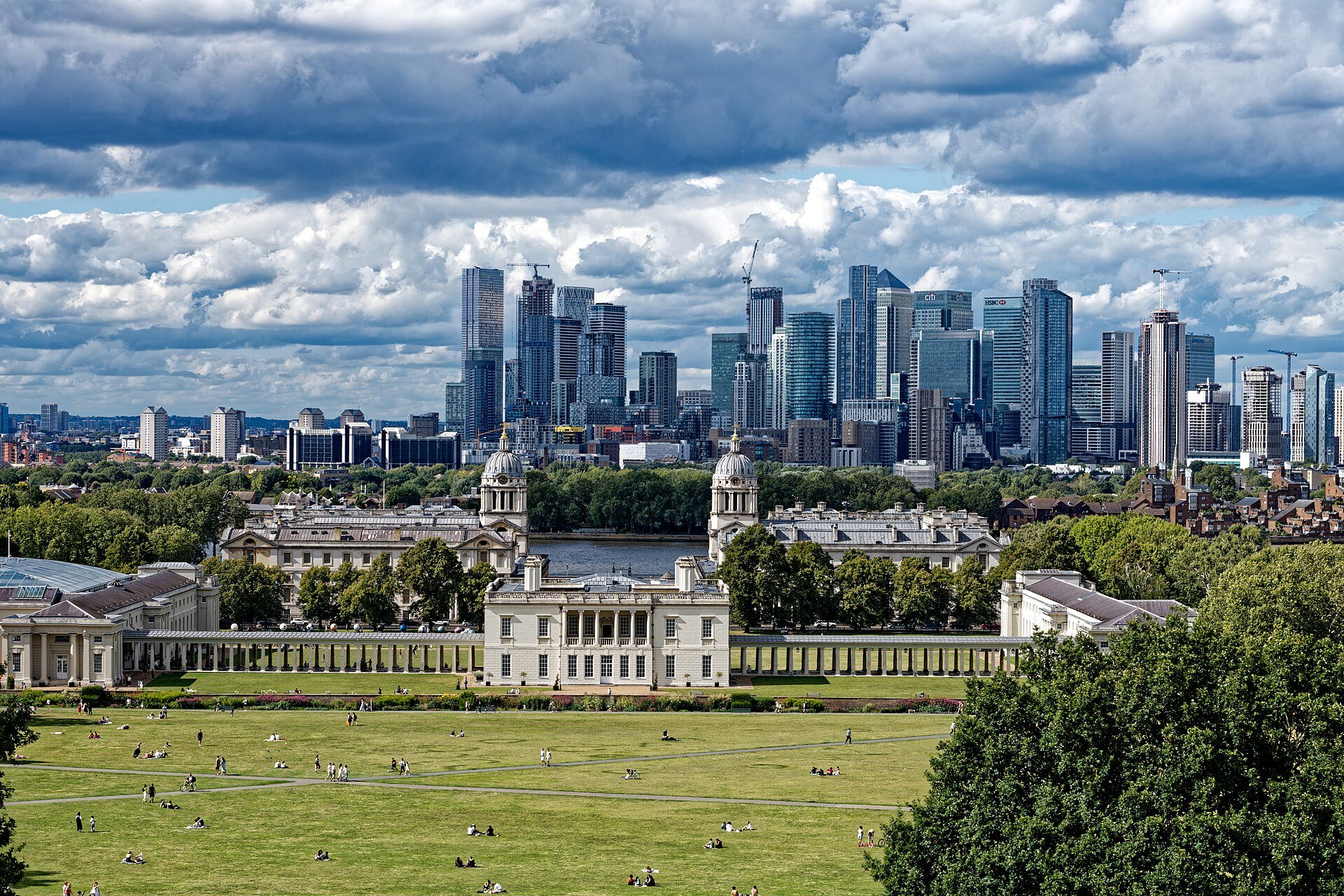
Greenwich
What you are looking at
Royal Borough of Greenwich · south bank
- 1The Royal ObservatoryFounded in 1675 on the hill in Greenwich Park, with the Prime Meridian line in its courtyard.
- 2The Cutty SarkA tea clipper of 1869, one of the fastest of her age, preserved in dry dock beside the river.
- 3The Old Royal Naval CollegeWren's baroque hospital for seamen, with the Painted Hall and the chapel.
- 4The Queen's HouseInigo Jones's villa of 1616 to 1635, the first consciously classical building in England.
- 5The National Maritime MuseumThe great museum of Britain's seafaring, in the old school buildings.
- 6Greenwich ParkA Royal Park on a hill, with the best view over the river and the City.
Reading the place
The sight in full
What it is
Greenwich is an area of south-east London on the south bank of the Thames, about five miles downriver from Charing Cross. It is famous for its astronomical and maritime history and gives its name to the Greenwich Meridian, the line of 0 degrees longitude, and to Greenwich Mean Time. A group of buildings and a park here make up the UNESCO World Heritage Site of Maritime Greenwich.
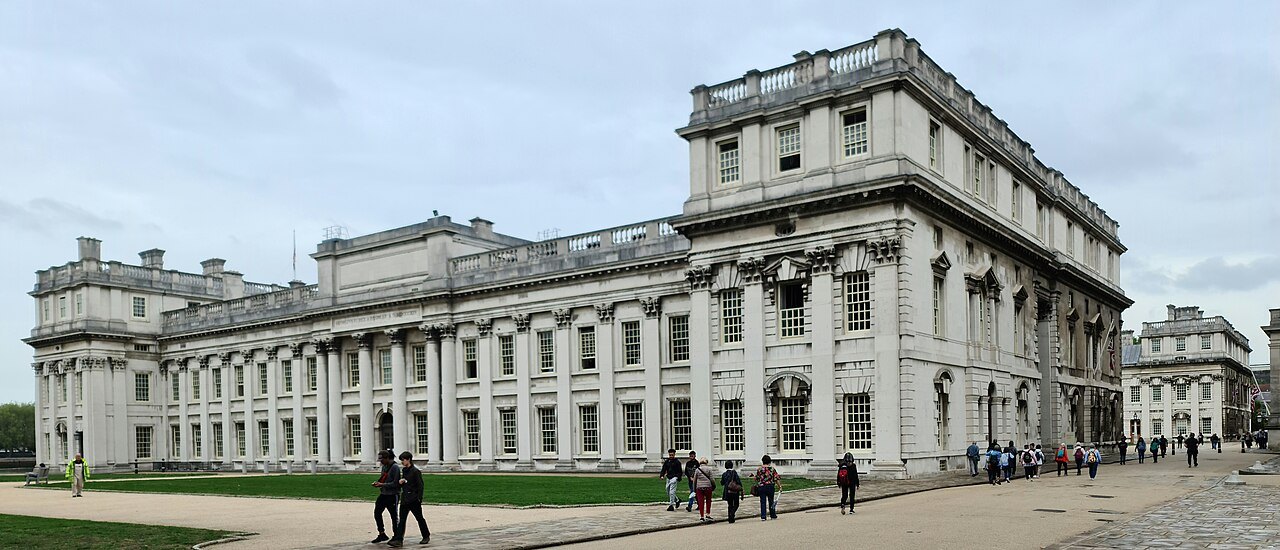
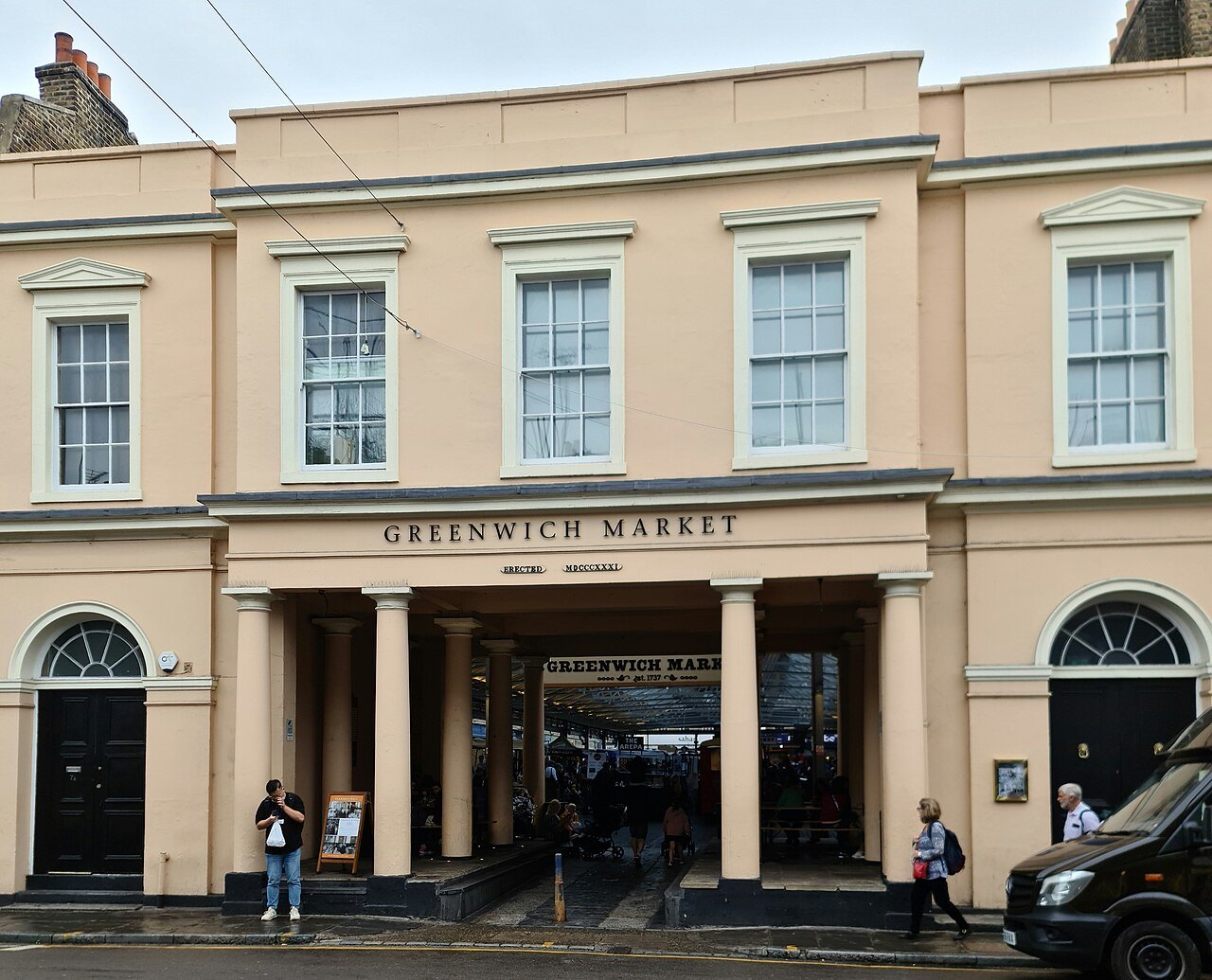
It feels like a separate town, with a market, a high street of old pubs and a village atmosphere under the hill. Visitors usually allow a full day, since the sights are clustered but each one rewards time.
A royal town
The name is Anglo-Saxon, first recorded in a charter of 918 as Gronewic, the green trading place. From the fifteenth century the town held a royal palace, the Palace of Placentia, usually called Greenwich Palace, where Henry VIII, Mary I and Elizabeth I were born. Henry VIII was said to have favoured it above his other houses.
The palace decayed during the Civil War and was demolished in 1694. In its place rose a hospital for sailors, and the long axis from the river to the Queen's House was preserved by design, which is why the view from the water is one of the finest in England.
The Old Royal Naval College
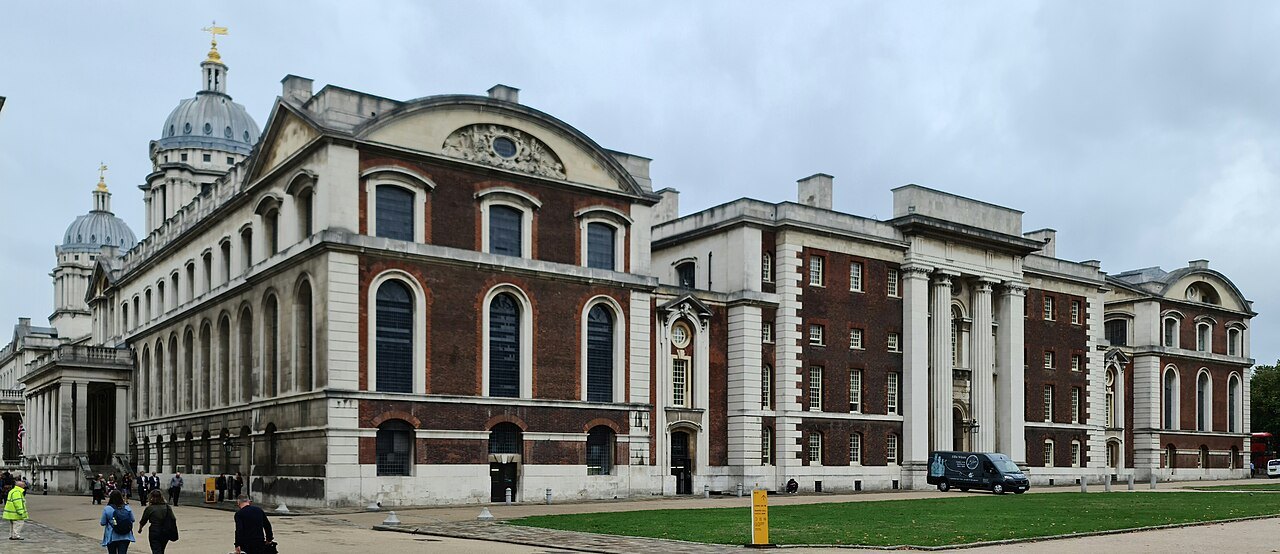
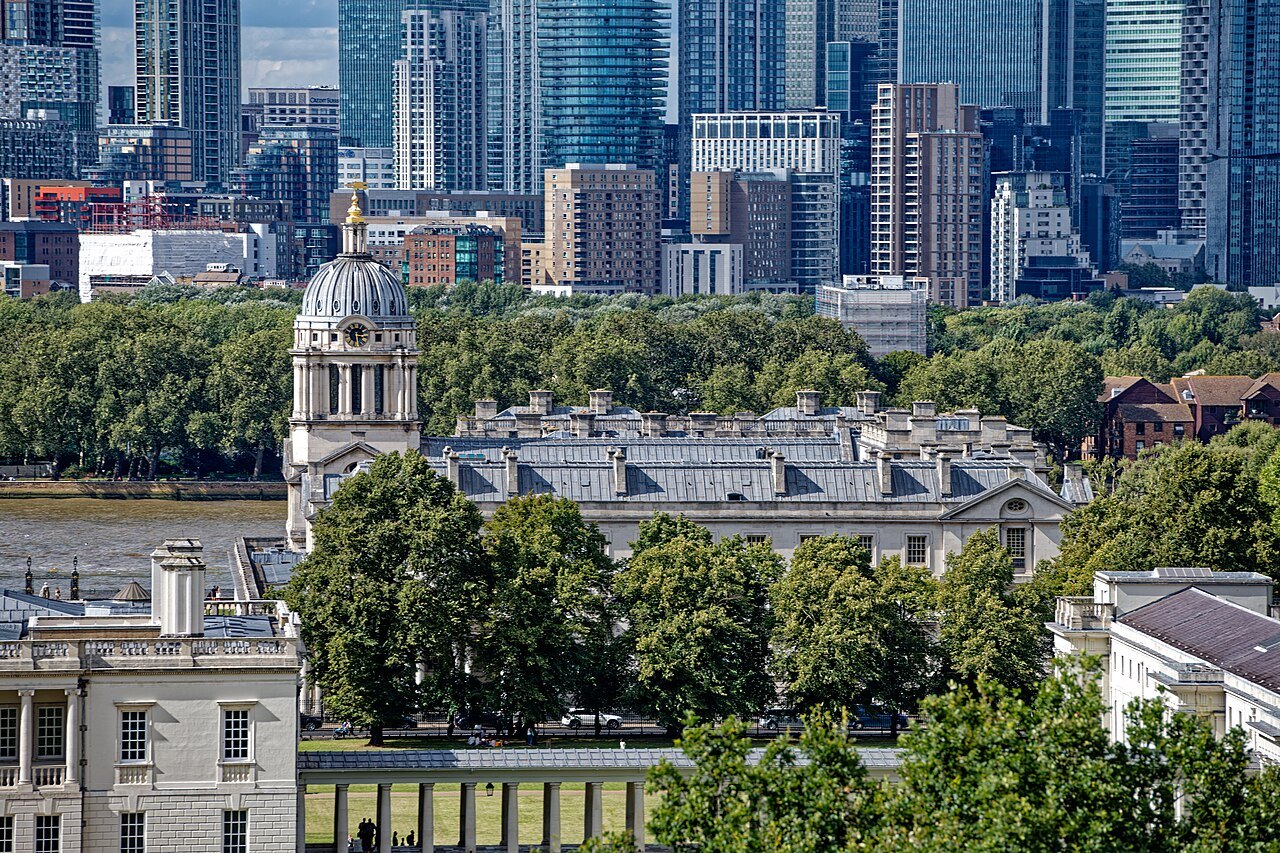
In 1692 Queen Mary II ordered a hospital for wounded seamen at Greenwich, after seeing sailors come home from the Battle of La Hogue. Christopher Wren and his assistant Nicholas Hawksmoor designed it, and it was built between 1696 and 1712 as two matching ranges with a gap between them that opens the view to the Queen's House. The hospital closed in 1869, and from 1873 until 1998 the buildings served as the Royal Naval College.
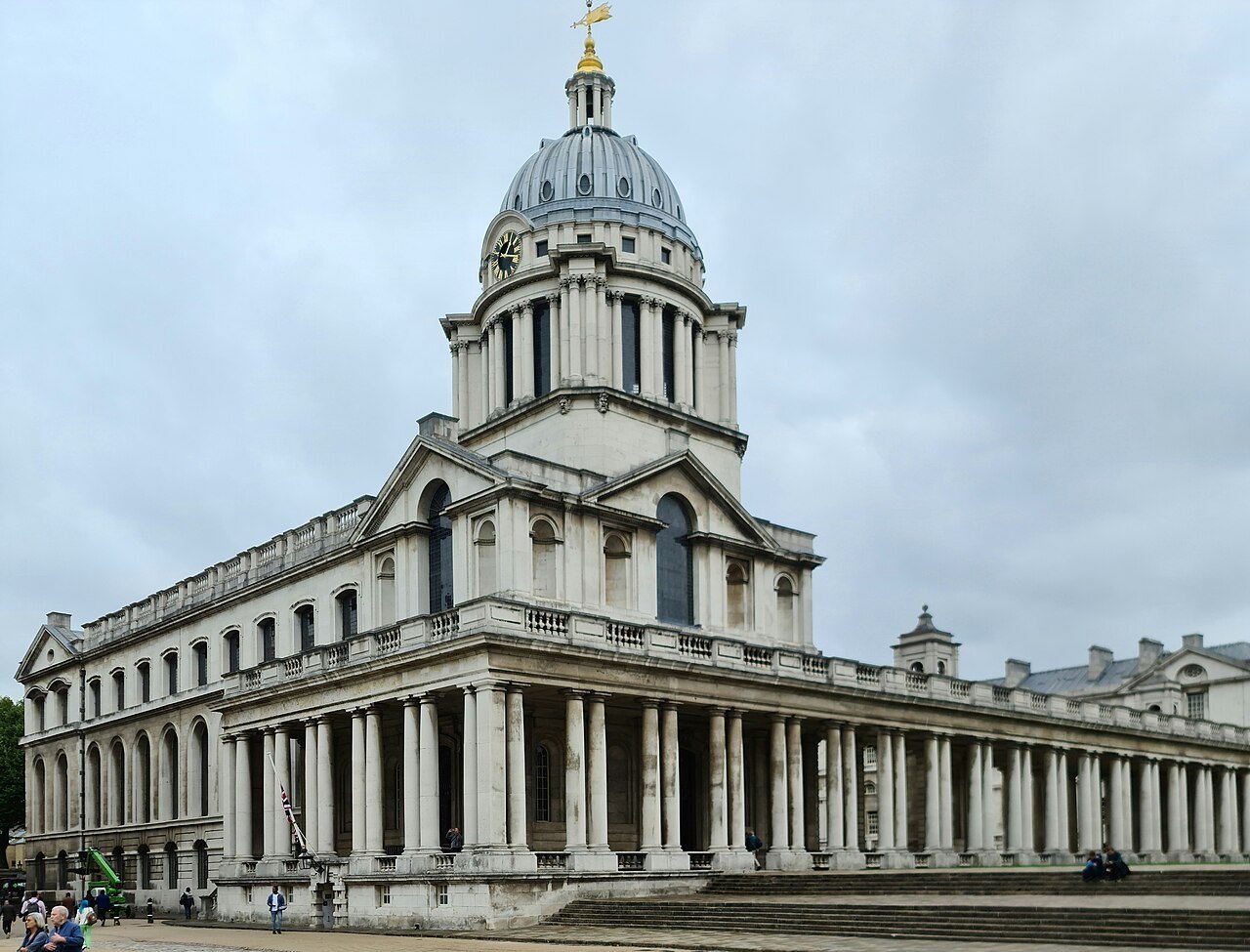
The highlights are the chapel and the Painted Hall, which was painted by Sir James Thornhill between 1707 and 1726 and is sometimes called Britain's Sistine Chapel. Today the site is managed by a foundation to conserve the buildings and open them as a cultural destination, and the grounds are free to walk through while the principal rooms can be visited, including the chapel and the Painted Hall.
The Queen's House
At the centre of the ensemble stands the Queen's House, built between 1616 and 1635 for Anne of Denmark and later Henrietta Maria, to a design by Inigo Jones. It is one of the most important buildings in British architectural history, because it was the first consciously classical building in the country. Jones had just returned from a tour of Italy, and the white villa, a simple composition of cubes and a loggia, must have looked startling next to the Tudor palace.
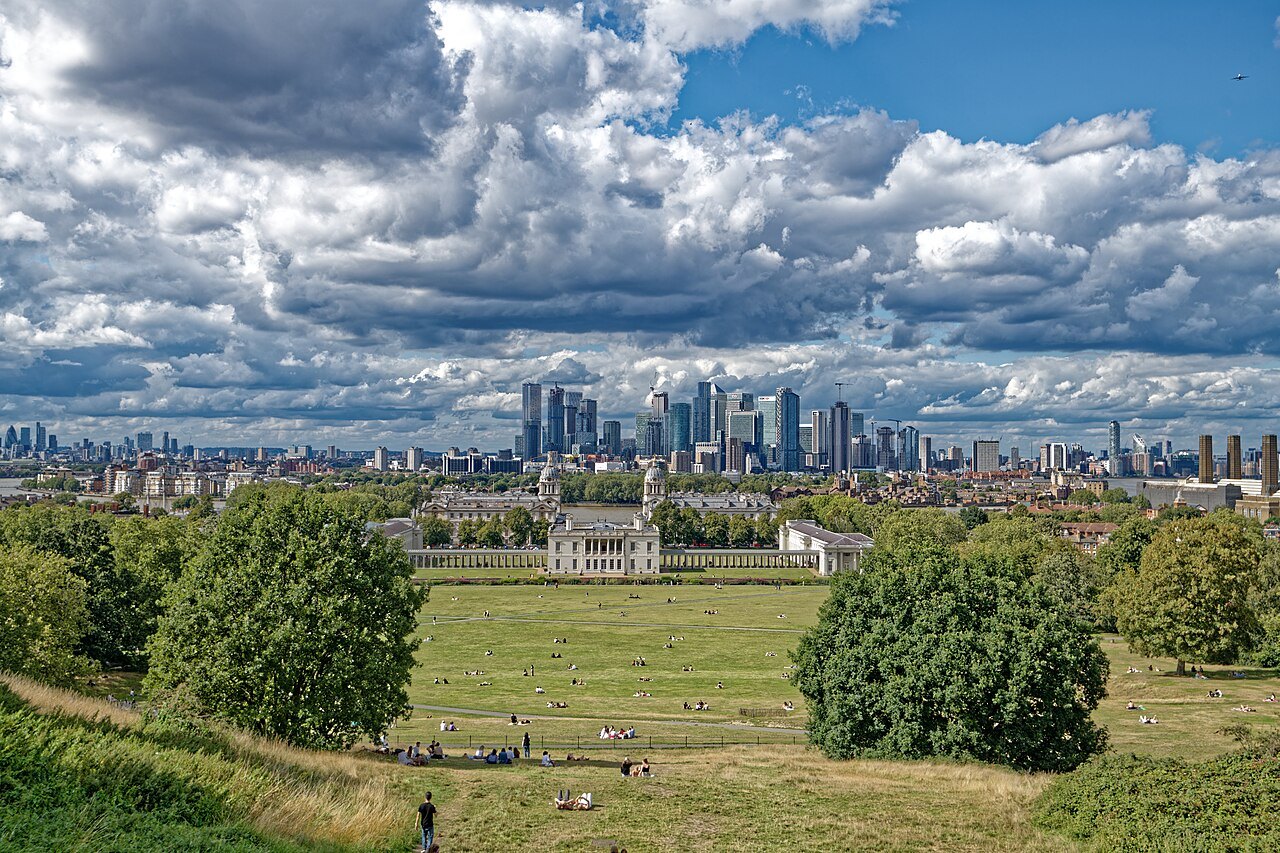
Today it is an art gallery, and its great hall and the helical Tulip Stairs are among the loveliest rooms in London.
The Observatory and the meridian
On the hill in Greenwich Park stands the Royal Observatory, commissioned in 1675 by Charles II, with the site chosen by Sir Christopher Wren. The king created the post of Astronomer Royal, and John Flamsteed was the first holder, charged with improving the tables of the stars so that sailors could find their longitude. The building was finished in 1676 and is often called Flamsteed House.
In 1884 an international conference in Washington decided that the Greenwich meridian should be the prime meridian for the whole world. A brass line in the observatory courtyard marks it, and visitors straddle it with one foot in each hemisphere. Greenwich Mean Time takes its name from the mean solar time at the observatory, and a red time ball on the roof still drops once a day. The main scientific work moved elsewhere in stages during the twentieth century, and the site is now mostly a museum, with the old instruments, clocks and chronometers on show.
The Cutty Sark and the museums
On the riverfront stands the Cutty Sark, a British clipper built in 1869 for the tea trade and named for the witch in Robert Burns's poem Tam o' Shanter. She was one of the last tea clippers and one of the fastest, but steamships and the Suez Canal soon took her trade, and she turned to wool from Australia. She has been in permanent dry dock at Greenwich since 1954. Fire struck her in 2007 during conservation, and she reopened in 2012.
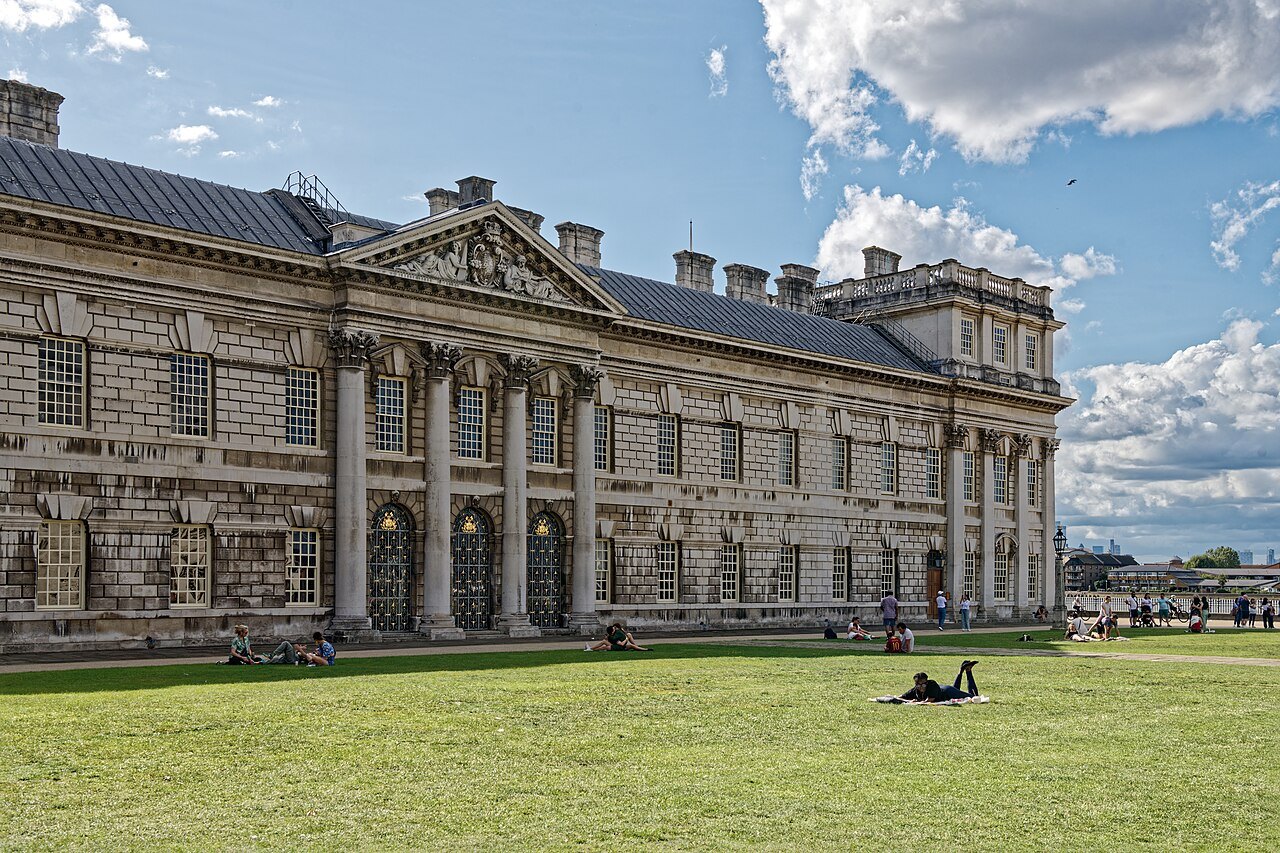
The National Maritime Museum, housed in the former Royal Hospital School, tells the story of Britain's relationship with the sea, with galleries on Nelson, exploration and trade. Admission to the museum is free.
Time, longitude and the chronometer
The reason the observatory exists is longitude. Sailors could find latitude from the sun and stars, but longitude needed an accurate clock that could keep home time at sea, which pendulum clocks could not do on a rolling ship. The Longitude Act of 1714 set up a Board of Longitude and offered rewards, and the Astronomer Royal sat on the board. The observatory's galleries hold the marine timekeepers built by John Harrison that solved the problem, and they are among the most beautiful scientific instruments in the world.
From 1833 the observatory gave out a daily time signal by dropping a time ball, and from 1852 by telegraph. Hourly time signals, the six pips, were first broadcast from here on radio in 1924. For a place that is a small hill in a park, it has had a very large effect on how the whole world tells the time, and that is part of its pull.
Getting there
The scenic way is by river boat from central London, covered in The Thames, and the Docklands Light Railway and the Overground are the alternatives, described in Getting Around. The boat passes Tower Bridge and the Tower of London on the way.
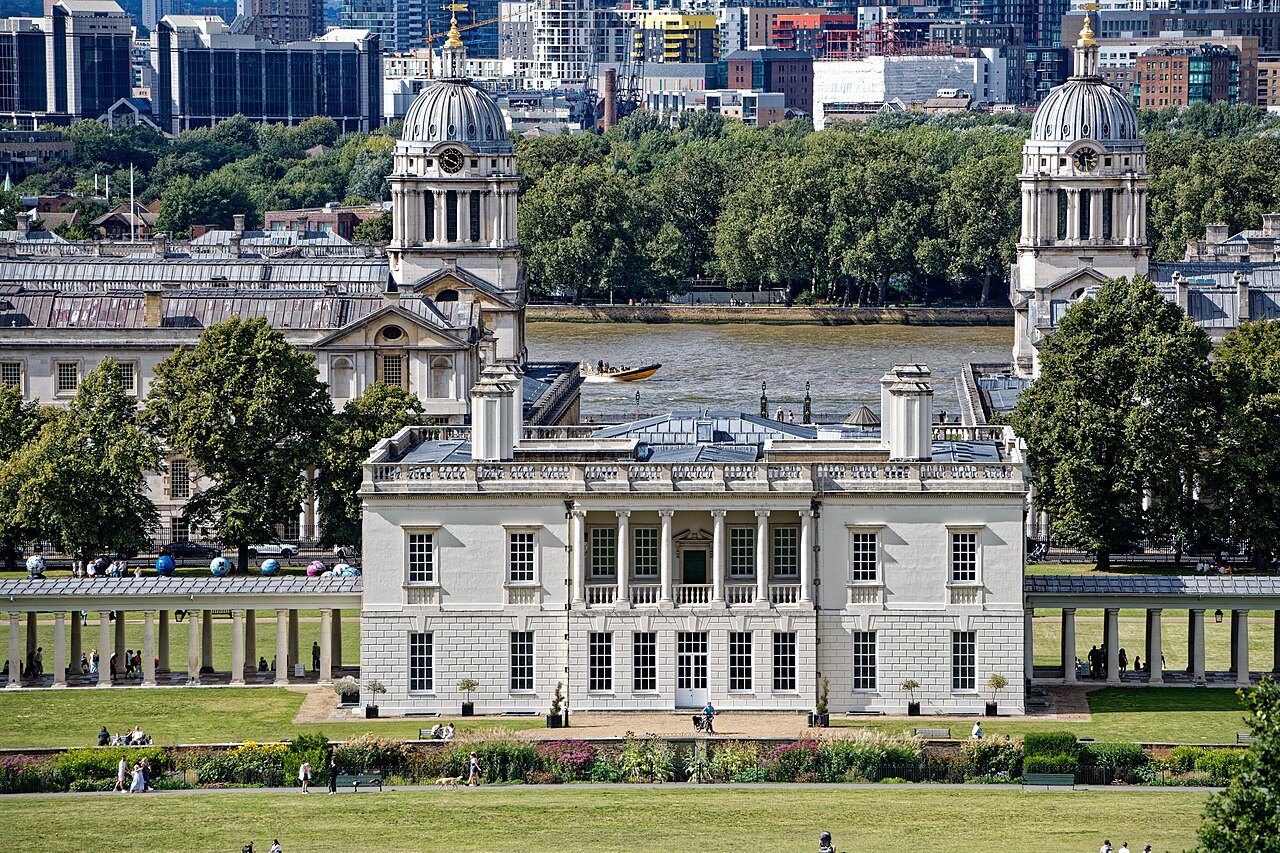
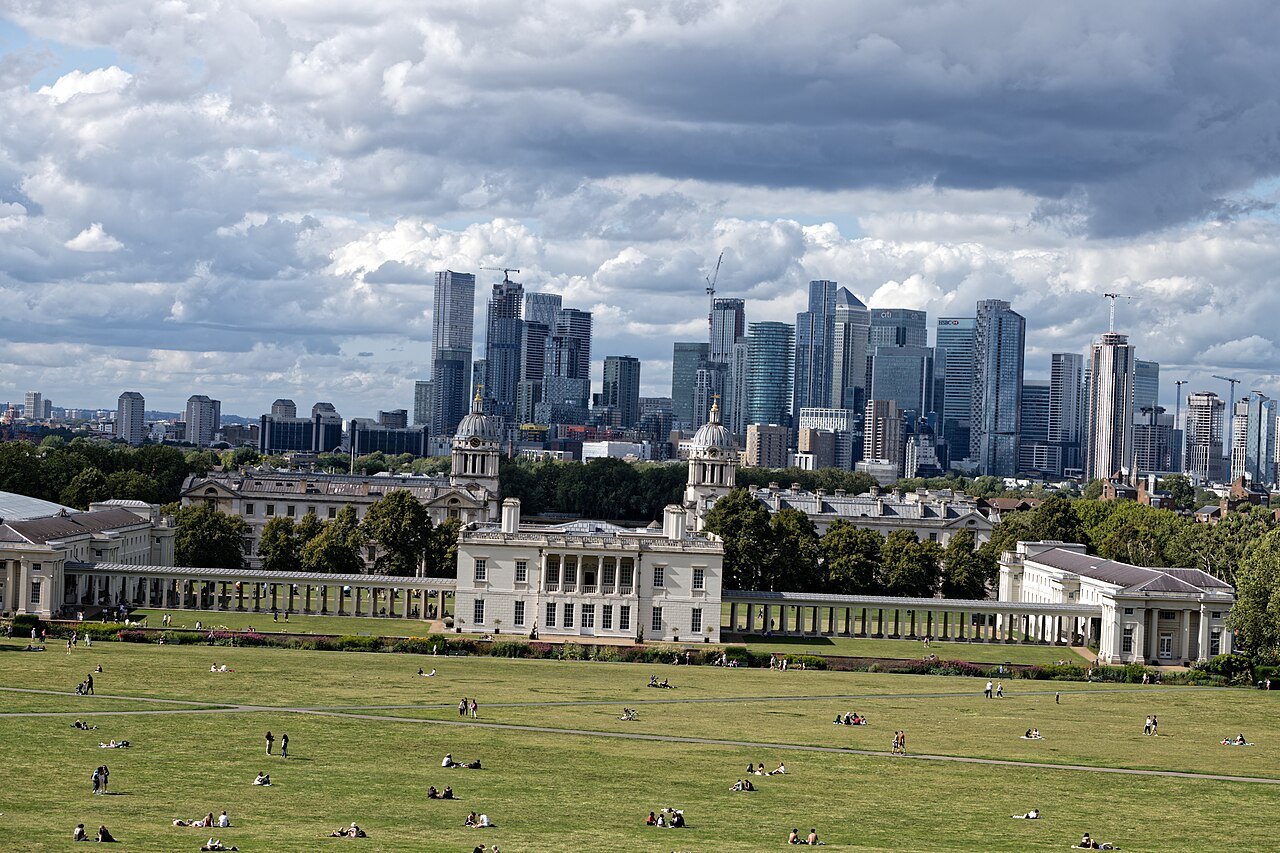
Climb Greenwich Park to the Observatory for the view, which looks across the river to the towers of Canary Wharf and, on a clear day, to the dome of St Paul's.
Nearby
Where to go next
- Nearby · Beside the TowerTower BridgeThe Victorian bascule and suspension bridge opened on 30 June 1894 beside the Tower of London, its towers joined by high walkways and its roadway able to split in two for ships.Read the page →
- Nearby · Tower Hamlets · north bankThe Tower of LondonA Norman fortress begun beside the Thames in 1066 and enlarged ring by ring, which has been a palace, an armoury, a mint, a menagerie, a prison and the home of the Crown Jewels.Read the page →
- Nearby · Southwark · south bankThe ShardA glass pyramid of 95 storeys designed by Renzo Piano, 1,016 feet high, completed in 2012 beside London Bridge station and still the tallest building in the United Kingdom.Read the page →