Home · Sights · The National Gallery
The National Gallery
What you are looking at
Trafalgar Square
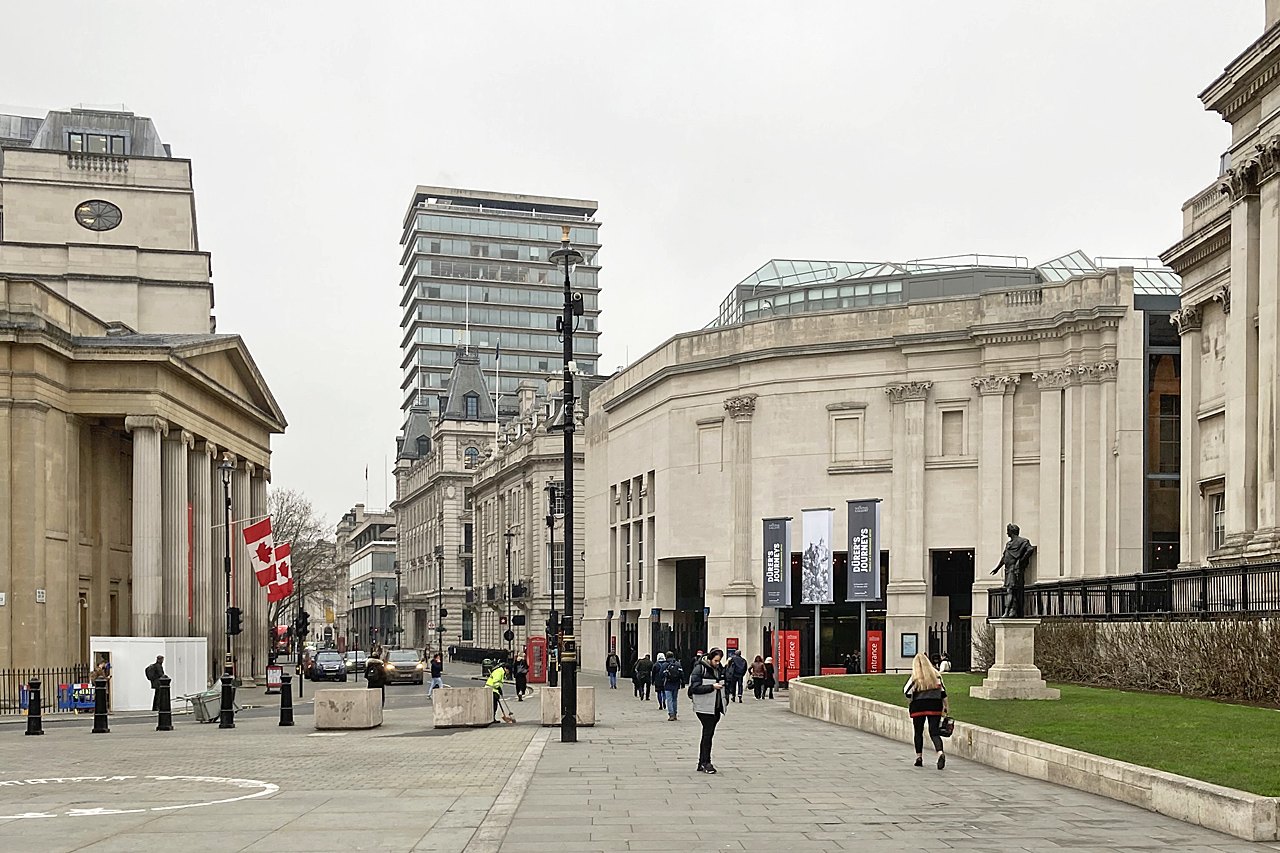
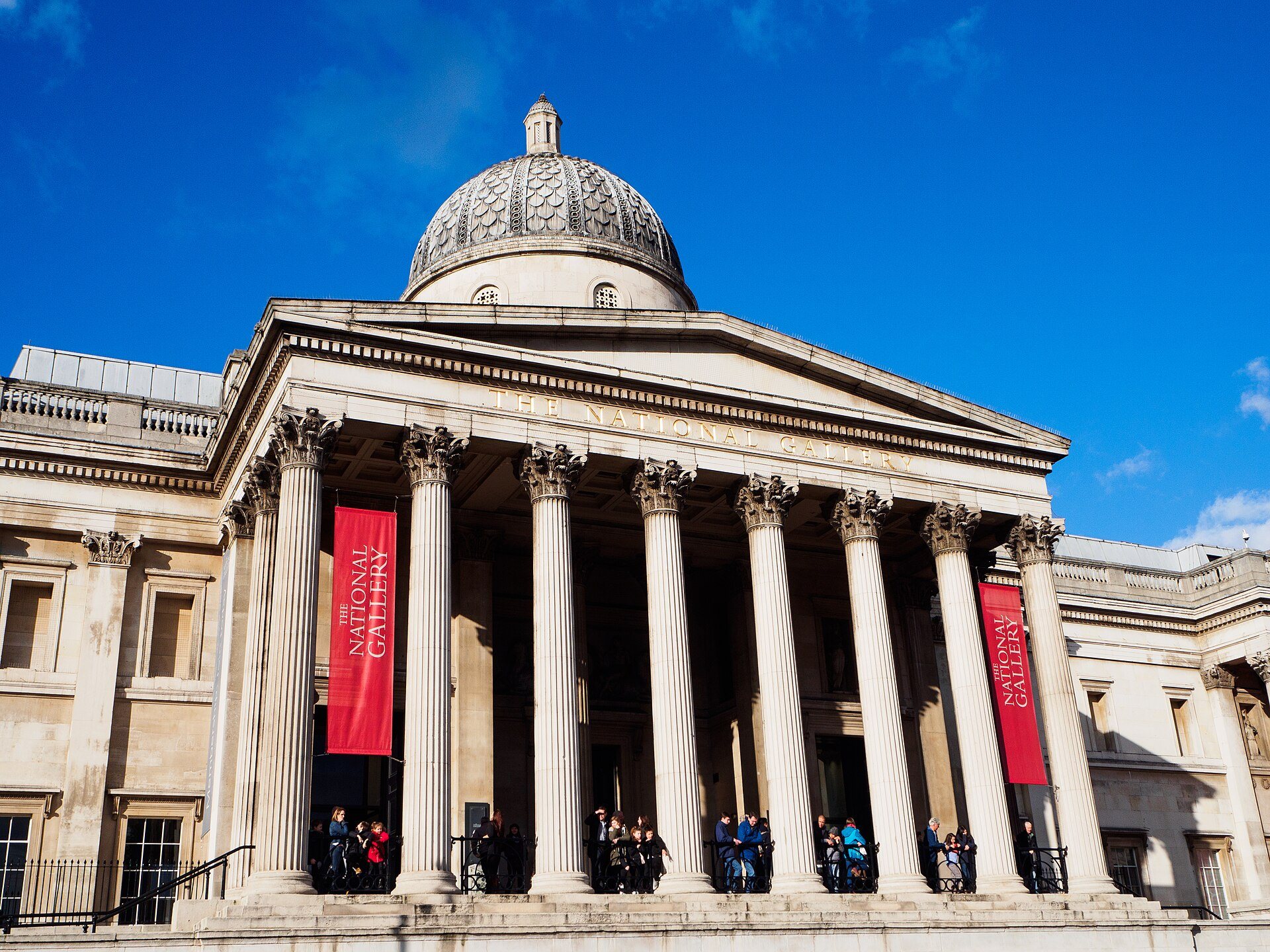
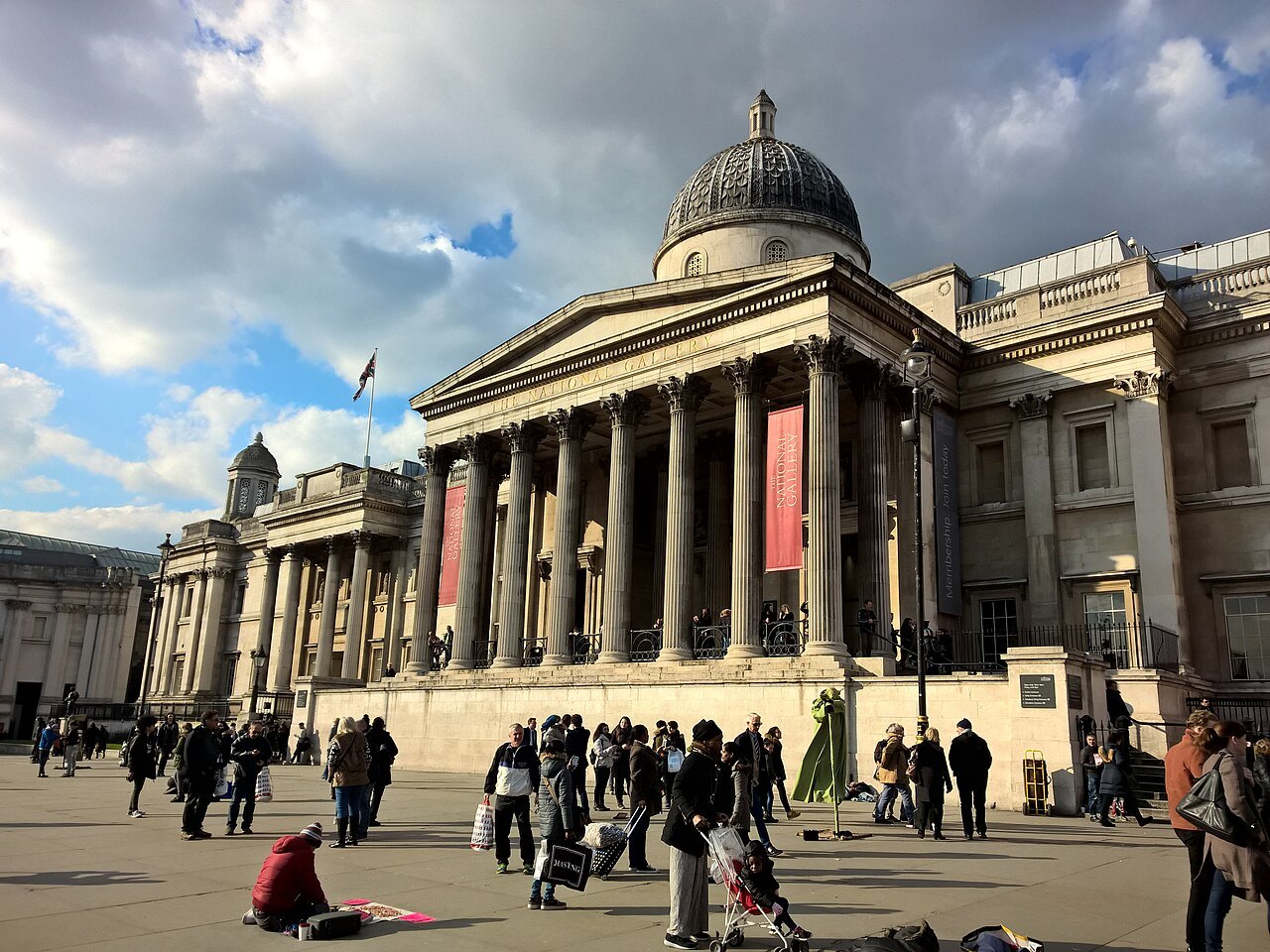
- 1The Wilkins buildingA long portico and dome on the north side of the square, built from 1832 to 1838.
- 2The Angerstein picturesThe 38 paintings bought in 1824 that began the collection.
- 3The Sainsbury WingA Postmodern extension by Robert Venturi and Denise Scott Brown, opened in 1991.
- 4Early Italian paintingAltarpieces and panels from the thirteenth century onward.
- 5ImpressionistsPaintings that run up to the year 1900 and the start of modern art.
Reading the place
The sight in full
What it is
The National Gallery is the art museum on the north side of Trafalgar Square, holding more than 2,300 paintings from the mid-thirteenth century to 1900. Most of the major developments in Western painting, from Giotto to Cézanne, are represented by important works. Entry to the main collection is free, and the collection is held in trust for the British public.
The collection stops at 1900, so modern and contemporary art is elsewhere, at Tate Modern across the river. British art has its own home at Tate Britain, which was founded in 1897 partly because the National Gallery ran short of room. The National Gallery is not to be confused with the National Portrait Gallery, which stands directly behind it and holds portraits of notable people.
A gallery that began with a purchase
Unlike the great museums of continental Europe, the National Gallery was not made by nationalising a royal or princely collection. In the later eighteenth century France, Bavaria and Tuscany opened royal collections to the public, while Britain's royal pictures remained with the sovereign. Several offers to sell large collections to Britain were declined, and one of them went to Catherine the Great and is now in the Hermitage in Saint Petersburg.
The breakthrough came in 1823, when the collection of the banker John Julius Angerstein came on the market. It had 38 paintings, including works by Raphael and Hogarth's Marriage A-la-Mode series. The government bought it, helped by the unexpected repayment of a war debt by Austria, and the gallery opened in 1824 in Angerstein's former house at 100 Pall Mall. Gifts from collectors, now two-thirds of the collection, built it from there.
The building
Pall Mall was crowded and hot, and the gallery moved in 1838 to a new building on the north side of Trafalgar Square, designed by William Wilkins. Only the facade onto the square survives largely as he left it, since the building has been enlarged piece by piece, and Wilkins was often criticised for its design and its lack of space. The shortage of room led to the foundation of the Tate Gallery for British art in 1897.
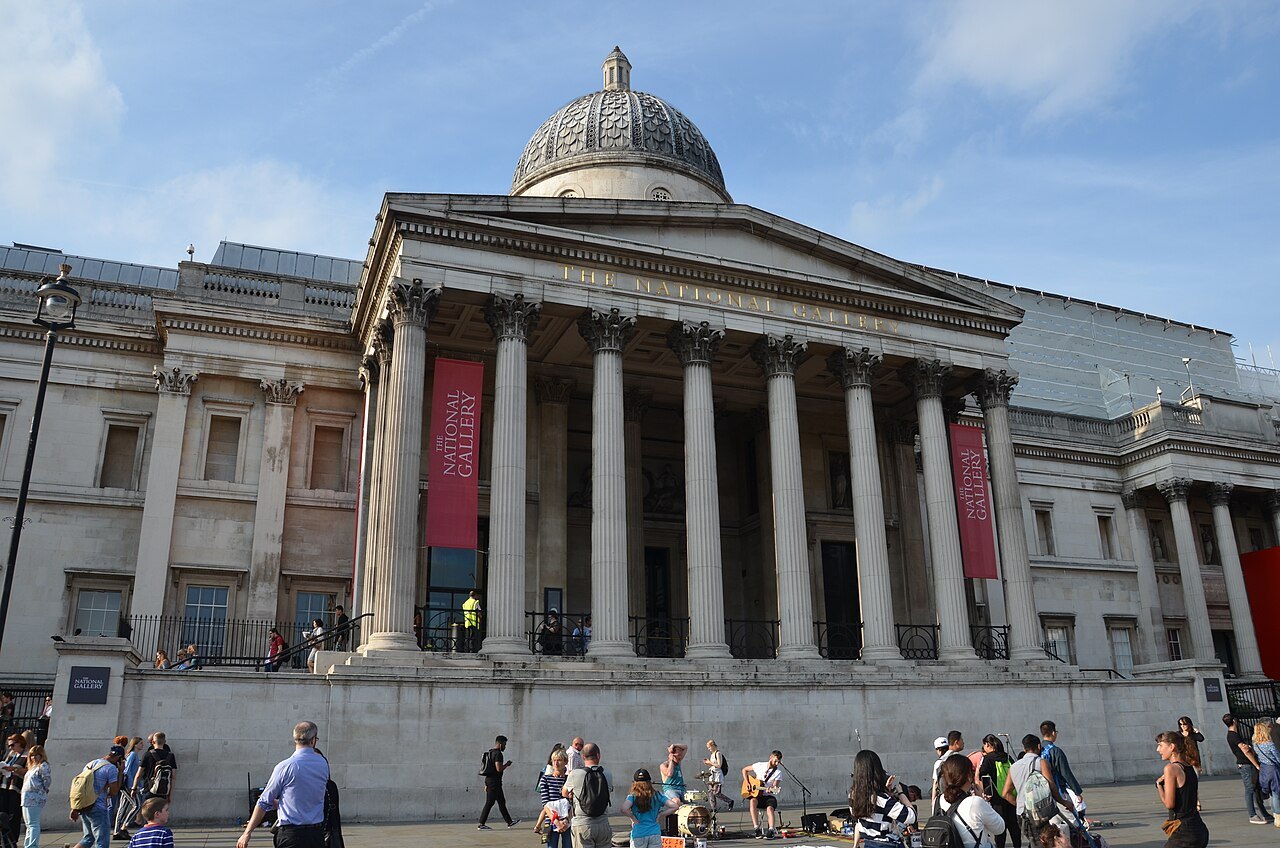
The gallery's most discussed addition is the Sainsbury Wing on its west side, designed by Robert Venturi and Denise Scott Brown and opened in 1991. It is a significant example of Postmodernist architecture in Britain, and it houses the early Renaissance rooms.
Famous rooms and pictures
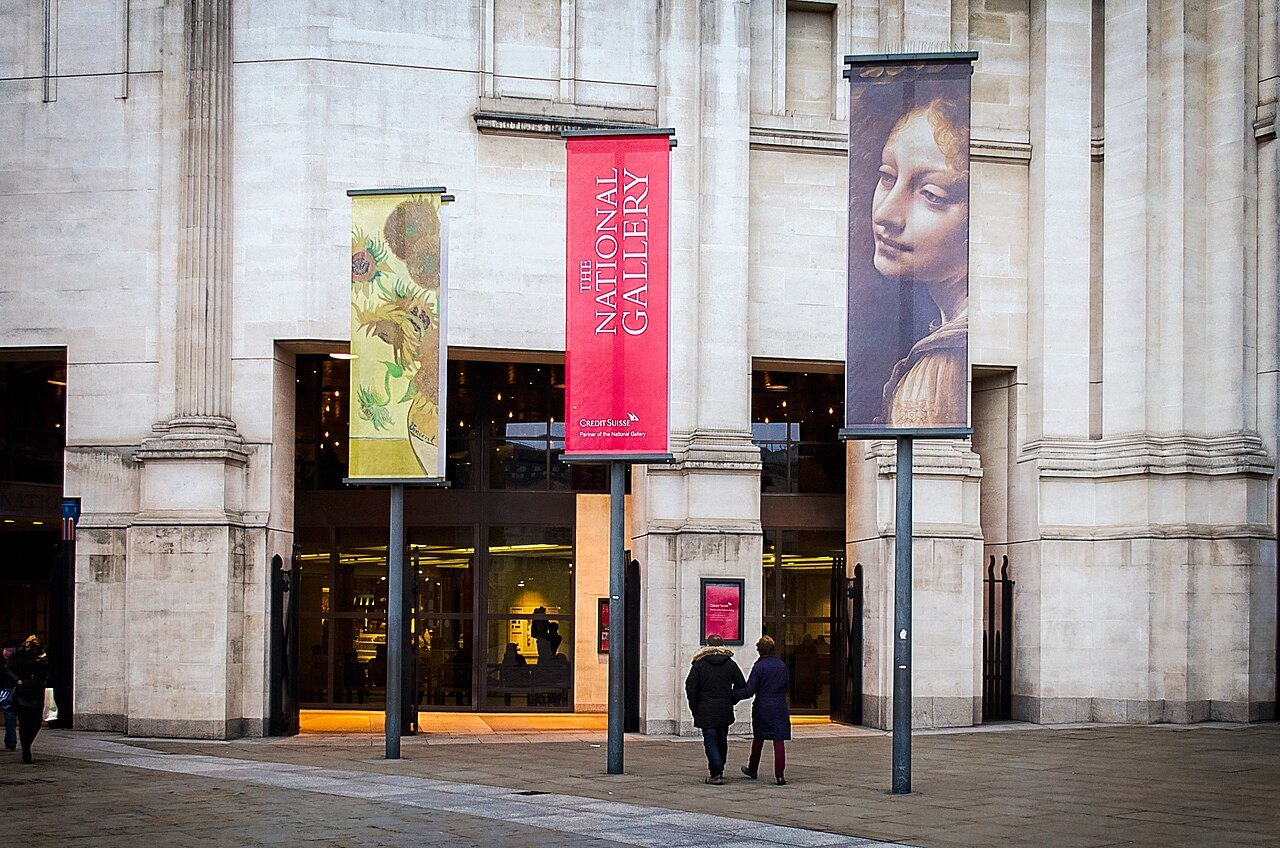
The gallery does not publish a top ten, but a few paintings reliably draw crowds. Vincent van Gogh's Sunflowers, Turner's Fighting Temeraire, Constable's Hay Wain and Holbein's Ambassadors are among the best known, and the Impressionist rooms hold works by Monet, Renoir and Seurat. Early Italian altarpieces by Giotto's successors, Leonardo's cartoon and large Dutch interiors are quieter and often more rewarding.
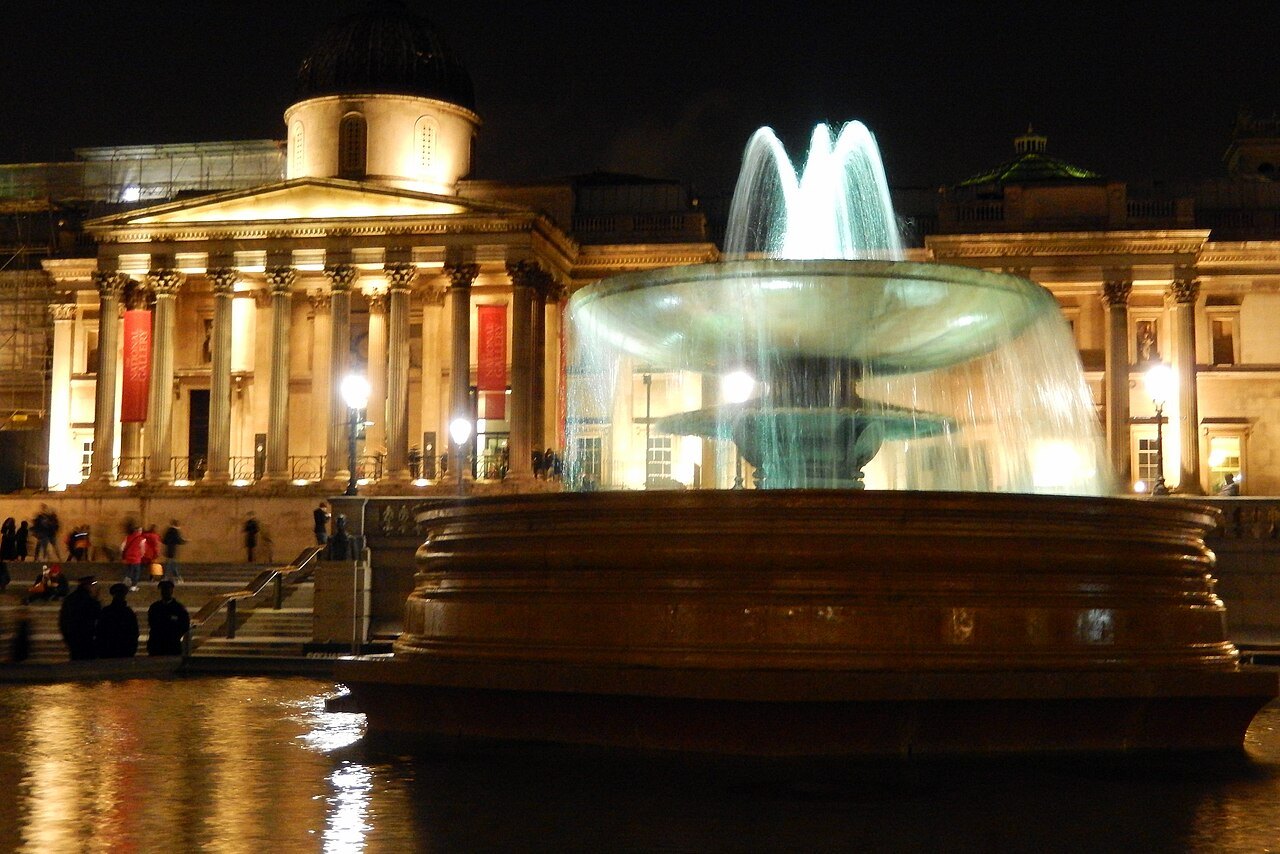
Many visitors begin with the Wilkins entrance up the steps and a left turn through the central galleries, which lead to the rooms of the sixteenth and seventeenth centuries. The collection is encyclopaedic in scope and smaller than many European national galleries, so it is possible to see a good deal in a morning. It used to be said that every picture was always on view; that is no longer the case.
How to look
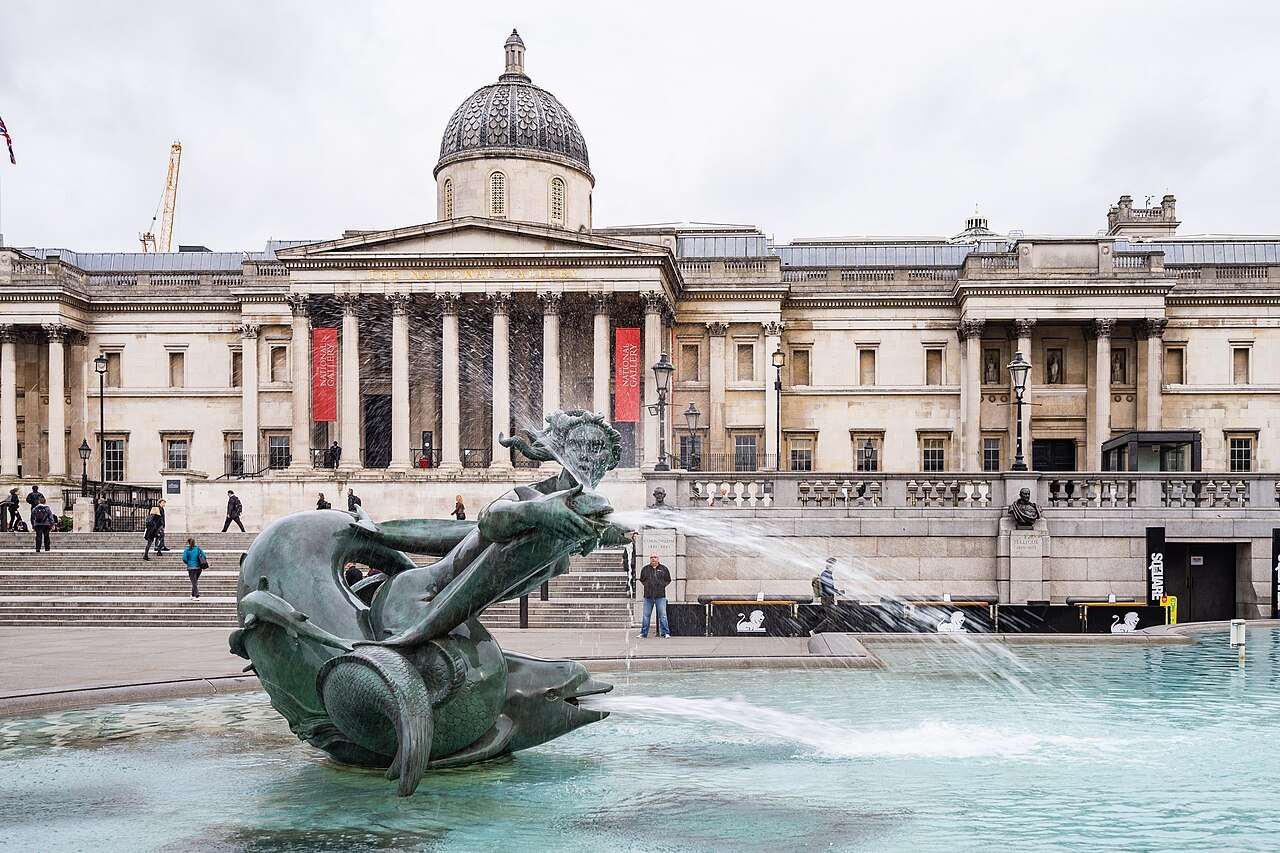
The collection runs from the early Italian altarpieces through the Dutch and Flemish masters, the Spanish, the French and British to the Impressionists. It is too much for one visit, and the sensible approach is to pick a period. If you are short of time, take one wing and linger, instead of walking every room.
The gallery is organised chronologically, so rooms follow each other in order of date. Free guides, audio commentaries and talks help you choose, and the gallery's own website sets out the current room plan and what is on show. Pictures are rotated, and a specific painting may be away on loan on the day you come.
Reading a painting room by room
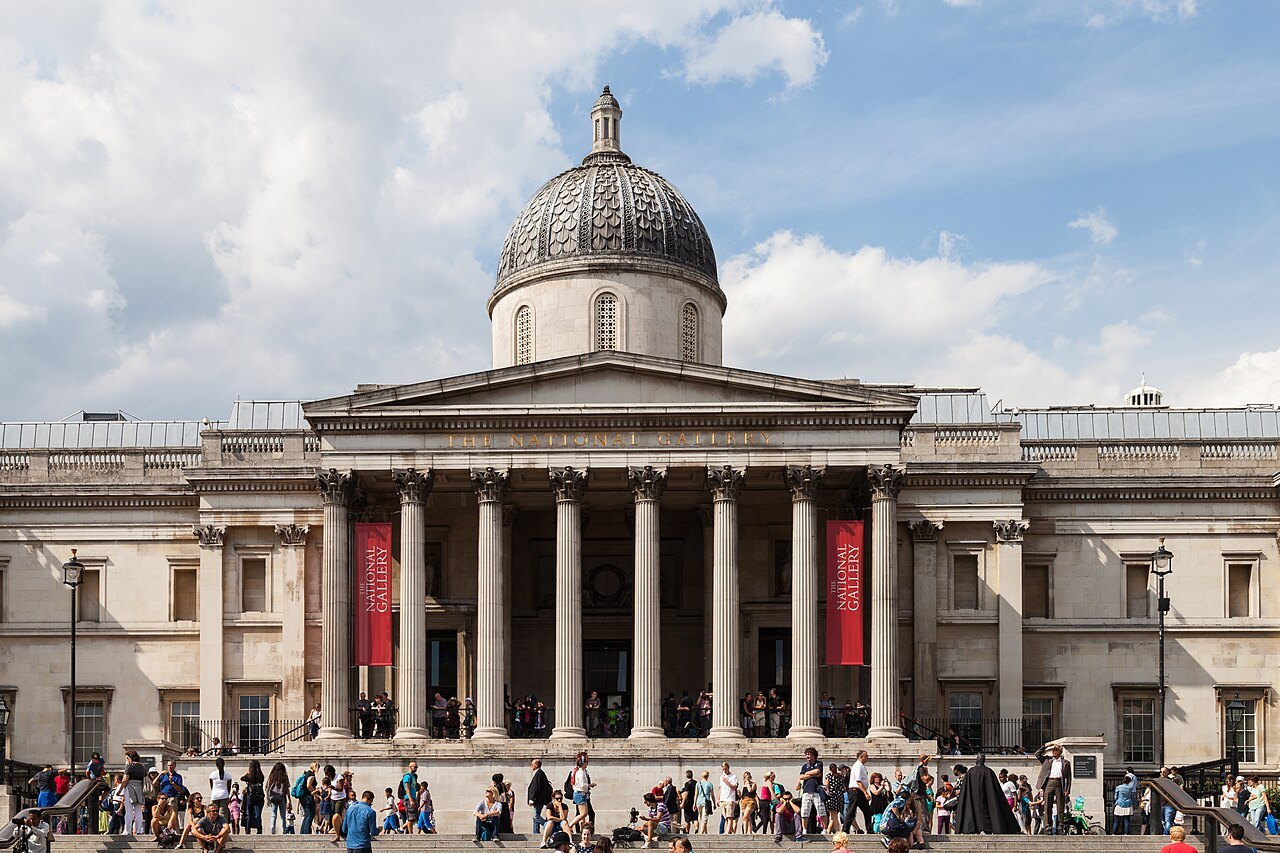
A useful way to cope with so many pictures is to take one room, choose two paintings in it and look at each for several minutes. The gallery's seating and the quiet side rooms make this easy, and the rooms are named and numbered by period. You will see more in four slow rooms than in forty fast ones, and the labels explain who commissioned each picture and why, which opens up the religious and political world the pictures came from.
The collection also shows how its own taste changed. Early directors, especially Charles Lock Eastlake, bought early Italian panels when they were out of fashion, and those purchases are now among the gallery's glories. Private donations, rather than state funds, built the greater part of what you see, which gives the walls the character of a national attic filled by generations of enthusiasts.
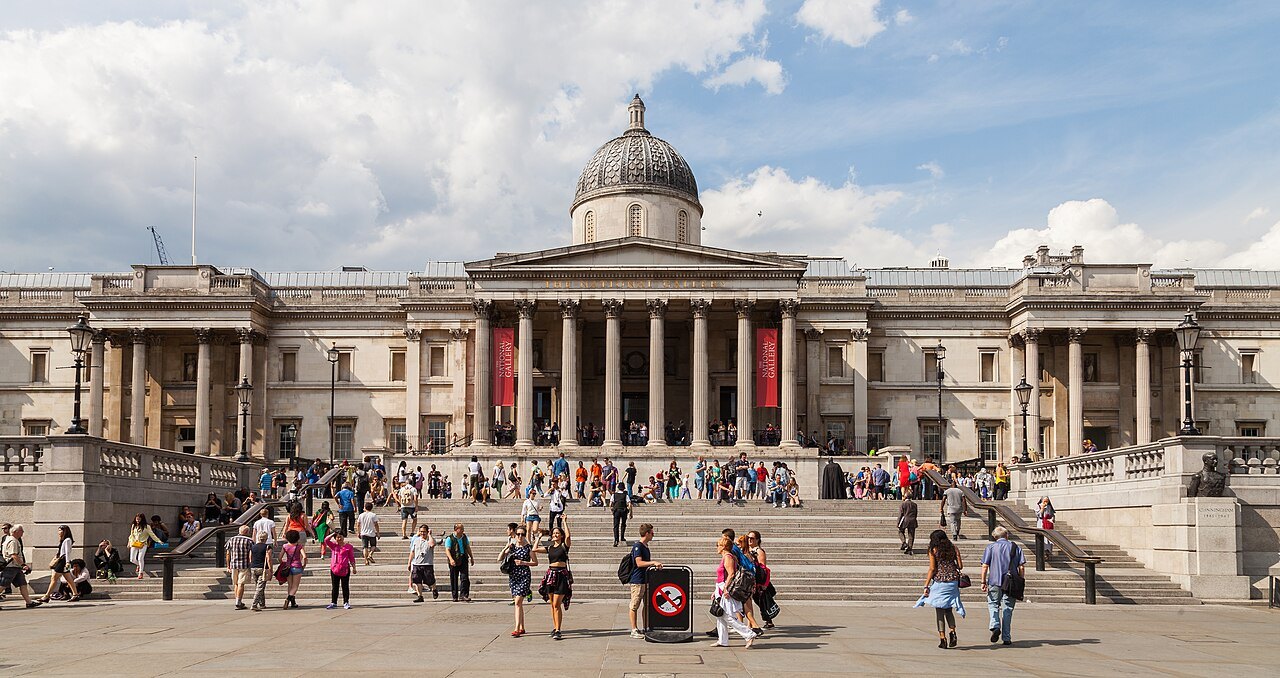
The building itself rewards a pause. The central staircase and the long enfilade of galleries beyond it are in the manner of a classical temple, and the dome over the main hall gives the facade its silhouette from across Trafalgar Square. Step out onto the portico at the top of the steps for a moment at the end of a visit: it is the best seat in the square.
Practicalities
Entry to the main collection costs nothing, though some special exhibitions do carry a charge, and the details are covered in Booking Ahead. The gallery stands beside Trafalgar Square, and the church of St Martin-in-the-Fields next door has a cafe in its crypt.
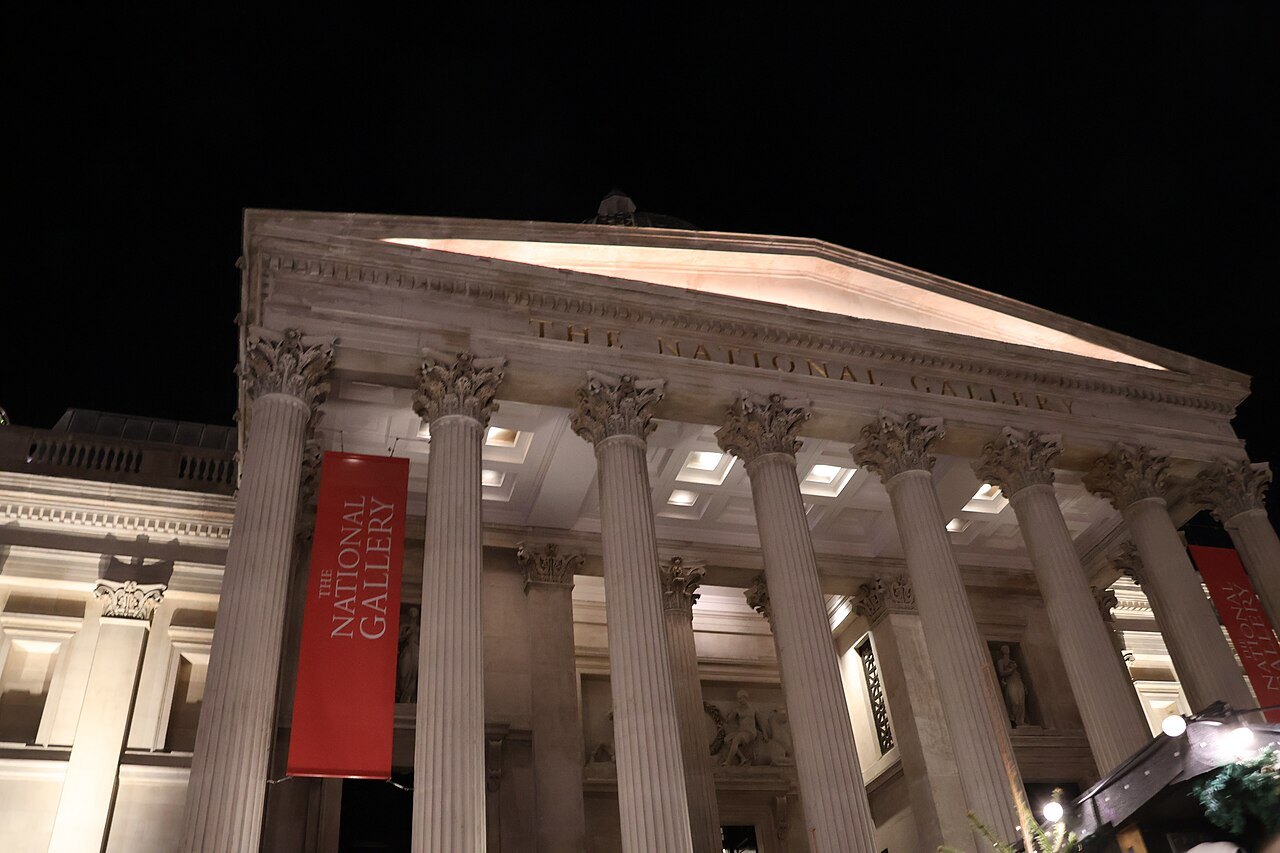
From here it is a short walk down Whitehall to the Palace of Westminster or up to Covent Garden. Combined with the British Museum, which is a short walk north, it makes a full day of the two great free collections.
Nearby
Where to go next
- Nearby · Westminster · Charing CrossTrafalgar SquareLondon's great public square, laid out in the 1830s and 1840s beside the National Gallery, centred on a column to Admiral Nelson, guarded by four bronze lions and treated in law as the centre of London.Read the page →
- Nearby · BloomsburyThe British MuseumFounded in 1753 on the collections of Sir Hans Sloane, the museum holds some eight million objects of human history and culture, from the Rosetta Stone to the Parthenon sculptures, and admission to its permanent collection is free.Read the page →
- Nearby · Bankside · south bankTate ModernThe national collection of international modern and contemporary art, housed since 2000 in the old Bankside Power Station on the south bank of the Thames, directly across the river from St Paul's.Read the page →