Home · Sights · The London Eye
The London Eye
What you are looking at
South Bank
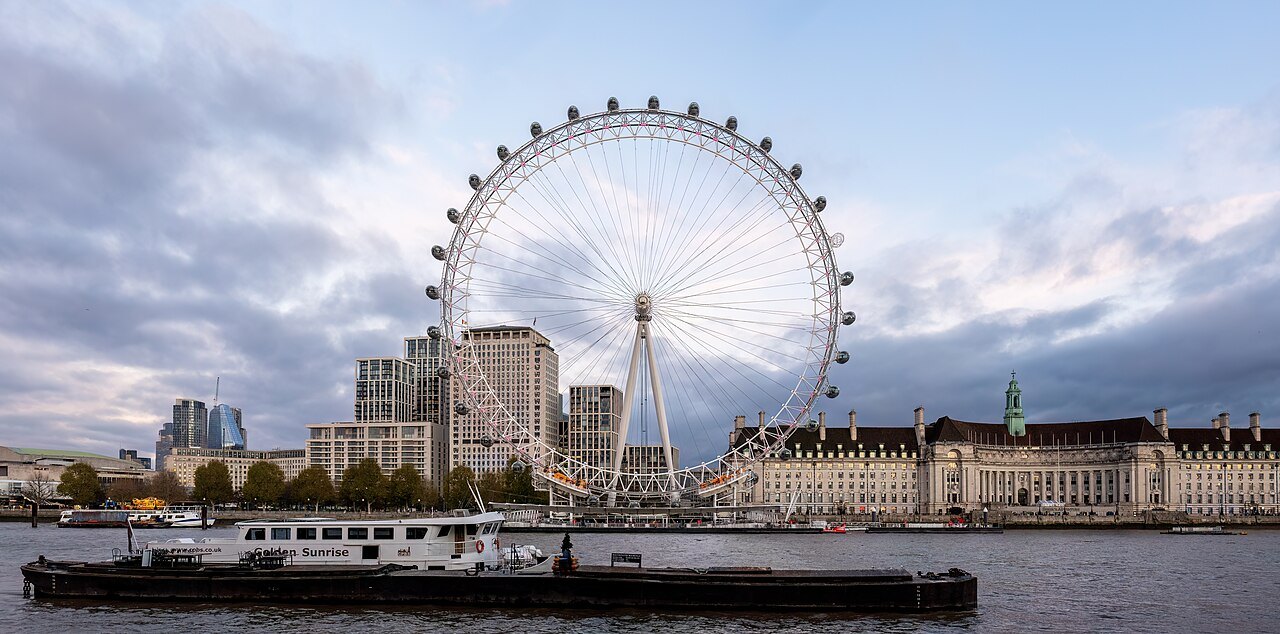
- 1The wheel443 feet high with a diameter of 394 feet, supported on one side only by an A-frame.
- 2The capsulesGlass pods that rotate slowly, giving a long view in every direction.
- 3The view of ParliamentThe wheel stands directly across the river from the Palace of Westminster.
- 4County HallThe great curved council building beside it, with the South Bank walk.
- 5The South BankJubilee Gardens, buskers, street food and the riverside promenade.
Reading the place
The sight in full
What it is
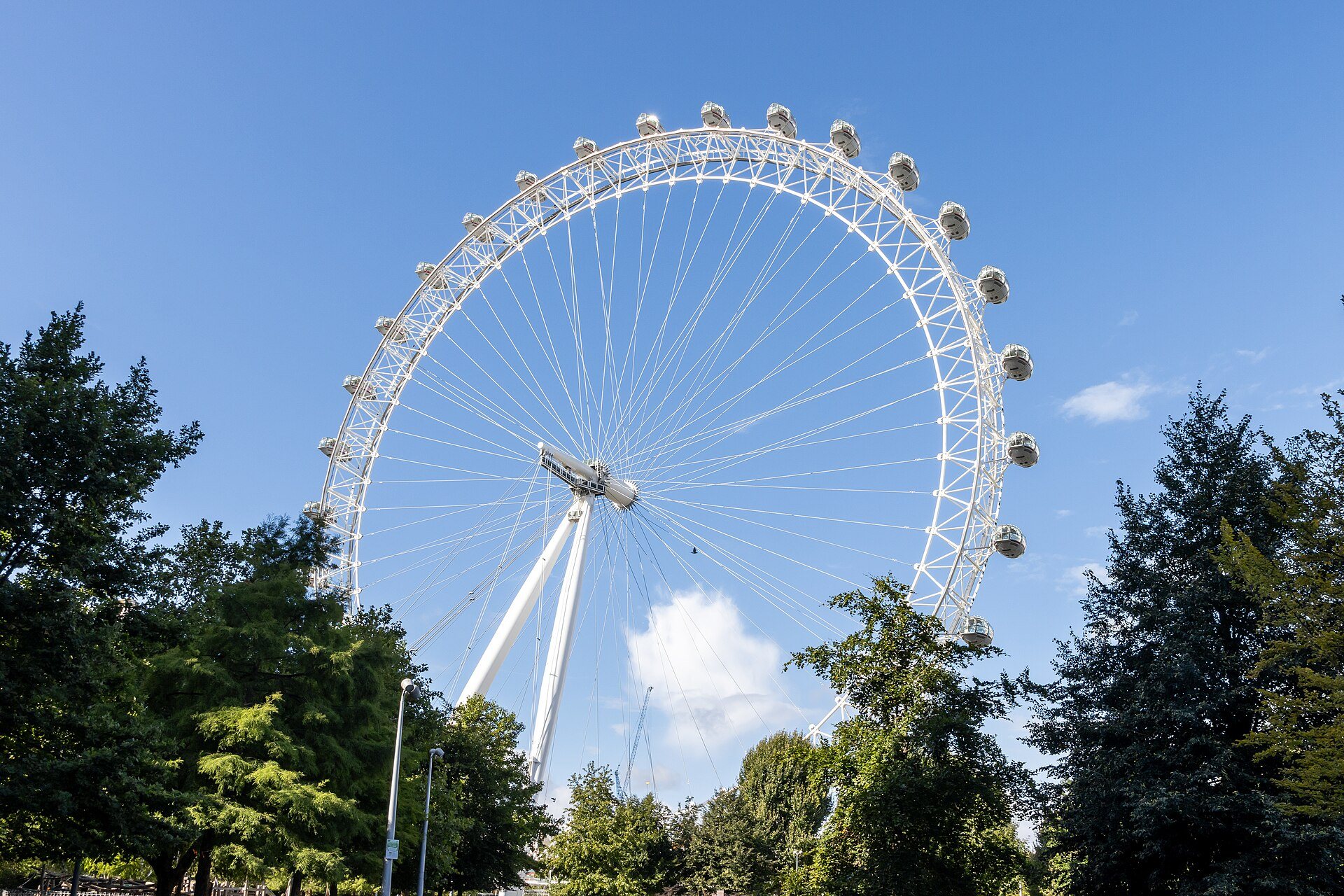
The London Eye is a cantilevered observation wheel on the South Bank of the Thames, between Westminster Bridge and Hungerford Bridge, beside County Hall in the borough of Lambeth. It was originally called the Millennium Wheel. It is 443 feet tall with a wheel diameter of 394 feet, and it is the world's tallest cantilevered observation wheel. It is also the most popular paid attraction in the UK, with more than three million visitors a year.
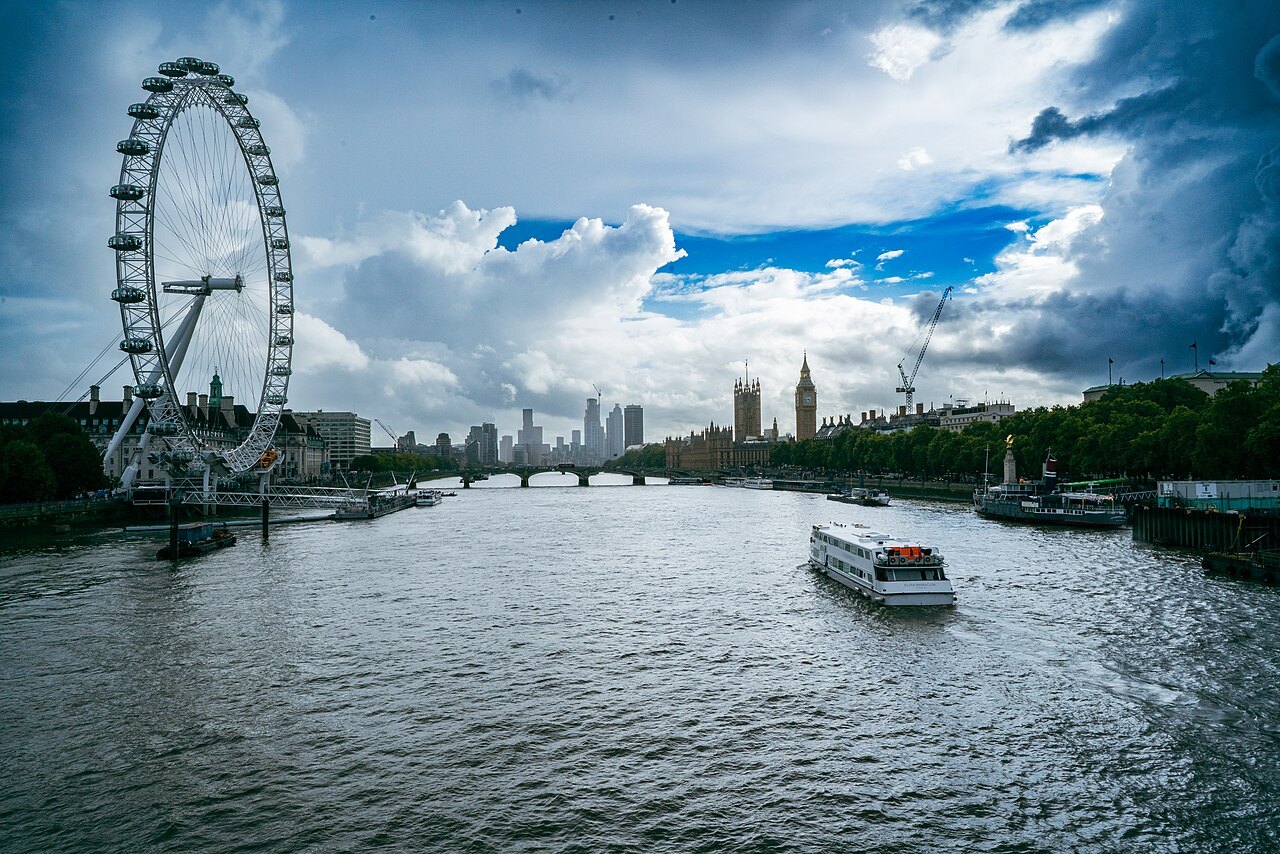
A ride takes about half an hour for a single slow revolution, in a glass capsule that turns so smoothly that you hardly feel it. From the top you see the Palace of Westminster and Big Ben almost straight across the river, and on a clear day the view reaches far past the edge of the city.
An idea that was nearly lost
The wheel was conceived by the architects David Marks and Julia Barfield, a married couple, who entered a competition in 1993 to design a landmark for the new millennium. The competition ended without a winner, since the judges thought none of the entries imaginative enough. Marks and Barfield believed in the idea and went on, remortgaging their home to apply for planning permission.
A newspaper campaign called Back the Wheel gained public support, and British Airways, whose chief executive lived near them, put up early funding in 1994. Planning permission was granted in 1996, and when British banks would not lend, finance came from a German bank and a Japanese company. The wheel opened to the public in 2000.
How it is built
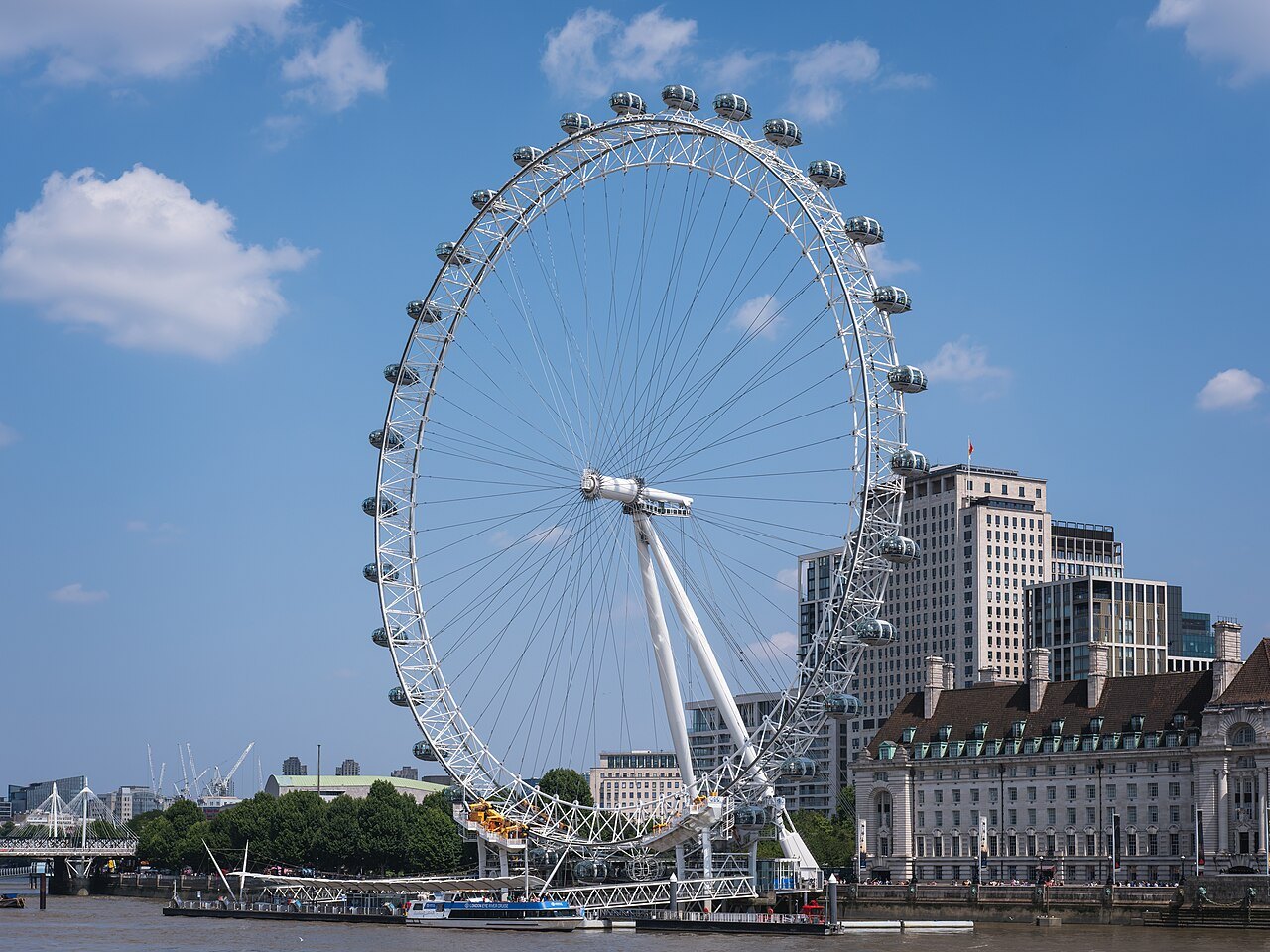
The rim is held by tensioned steel cables, like a huge spoked bicycle wheel. Unlike taller wheels it is cantilevered, supported only by an A-frame on one side, so the capsules are fixed on the outside of the rim facing the river and nothing blocks the view. The wheel was lifted into place from barges on the Thames, flat on the river and then raised to the upright position in stages.
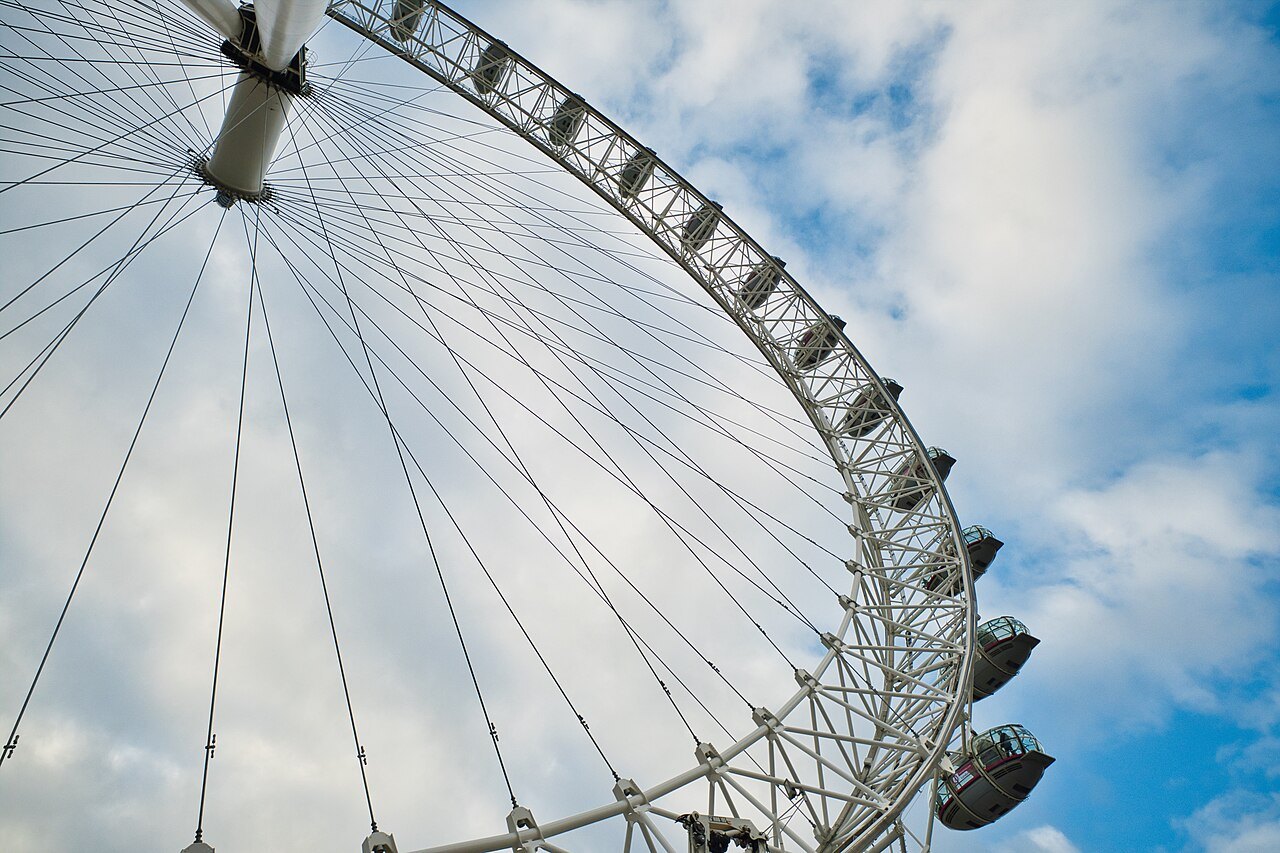
The capsules are fully enclosed and air-conditioned, and each holds a good number of passengers who can walk around. They are mounted on the outside of the rim and rotate on their own mountings to stay level.
Which view?
The Eye was the highest public viewing point in London until the View from the Shard opened in 2013, which rose well above it. The two give different views, since the Eye is nearer the river and puts you at eye level with Parliament and the bridges, while the Shard looks down on the whole city from further east.
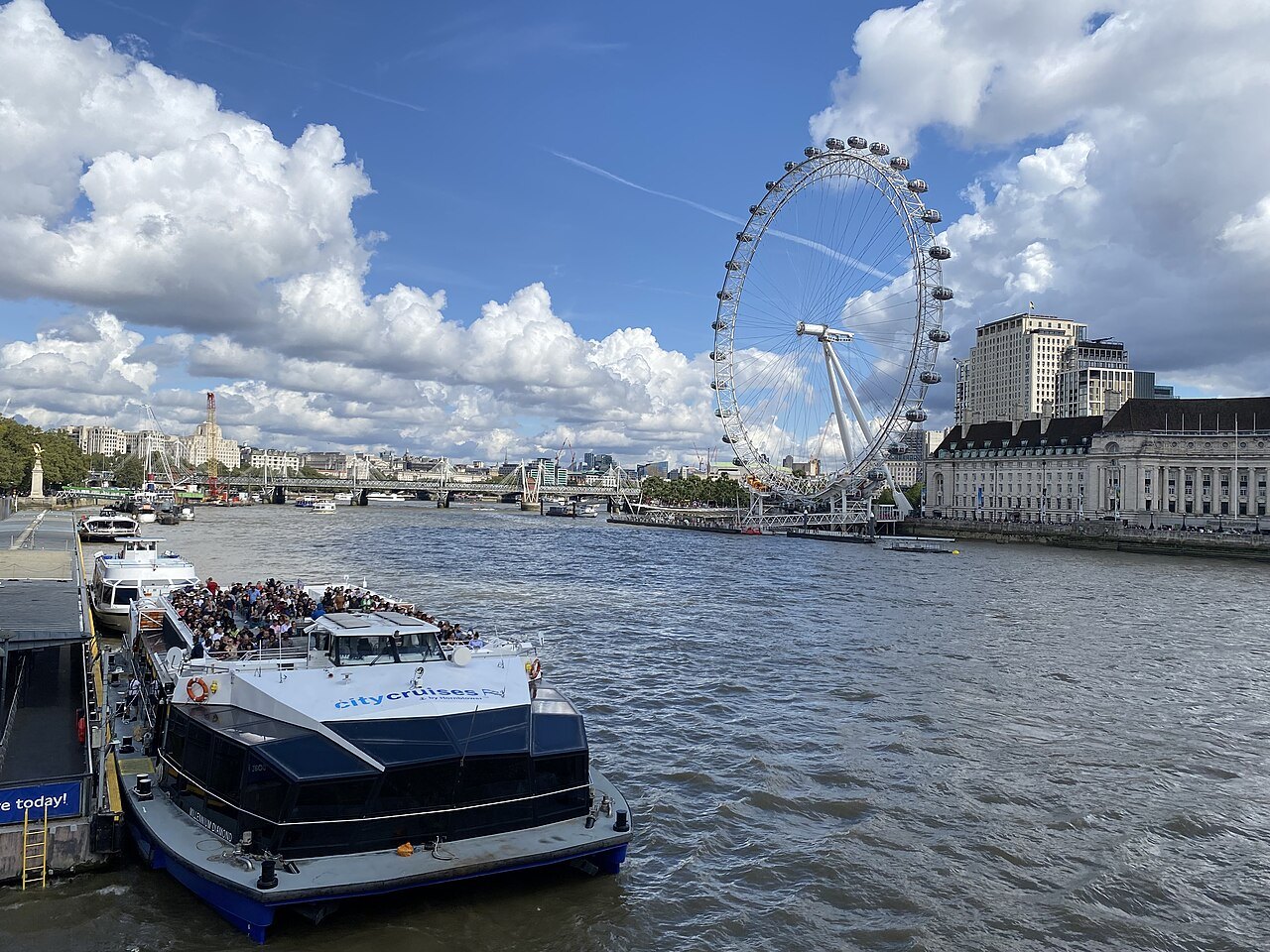
Time of day matters. A clear morning gives the best visibility, and dusk gives the changing lights of the city, but the capsules are glass and reflect inside lights at night.
What's around it
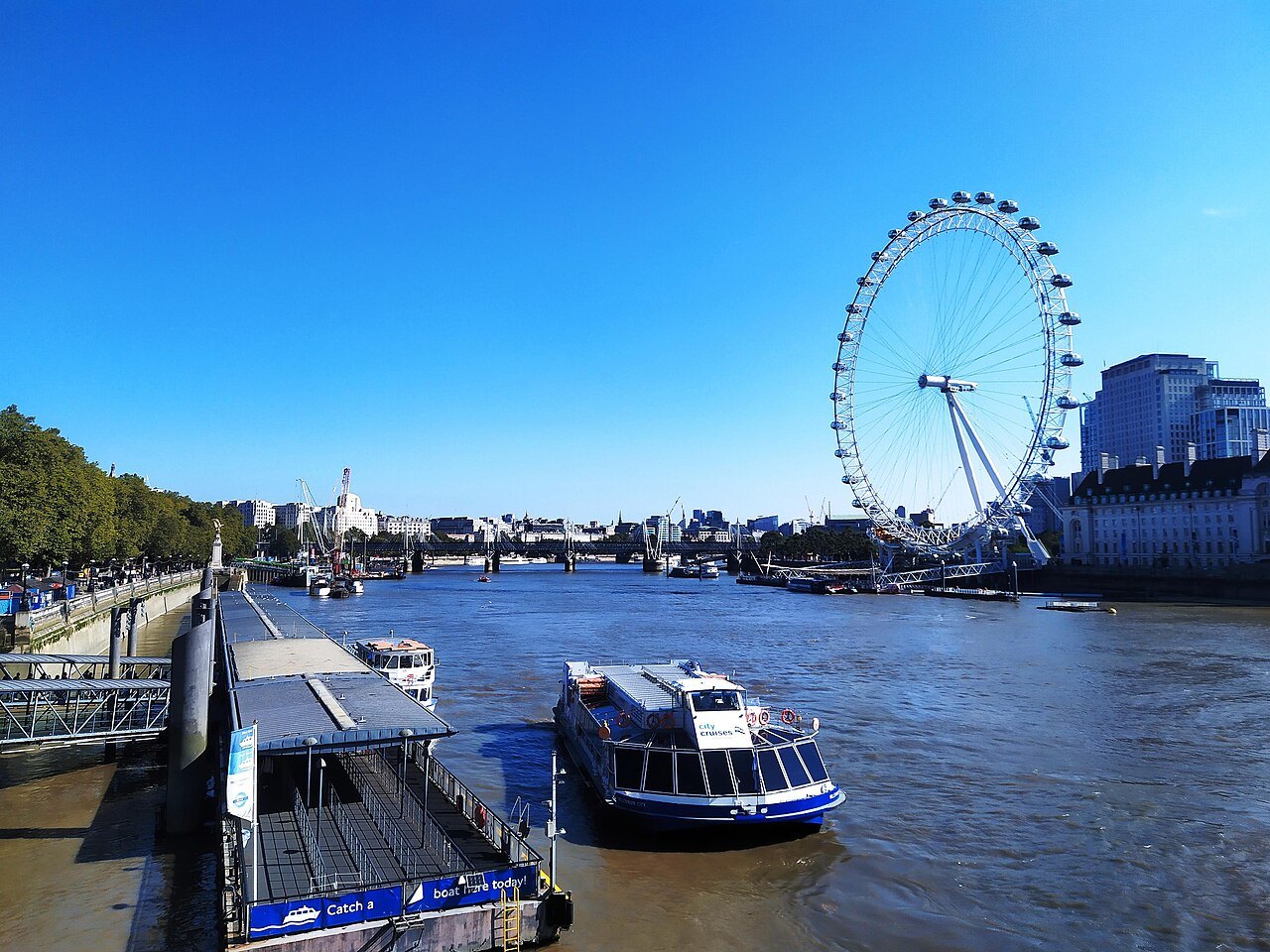
The wheel stands at the edge of Jubilee Gardens, which was once the site of the Dome of Discovery of the 1951 Festival of Britain. County Hall, the great curved building beside it, was the home of London's county council. The South Bank walk runs from here east past the Southbank Centre and the National Theatre toward Tate Modern and Shakespeare's Globe.
Across Westminster Bridge are the Palace of Westminster and Westminster Abbey, so the wheel is easily combined with a morning in Westminster. Waterloo station is the nearest Underground stop.
Sixty seconds of engineering
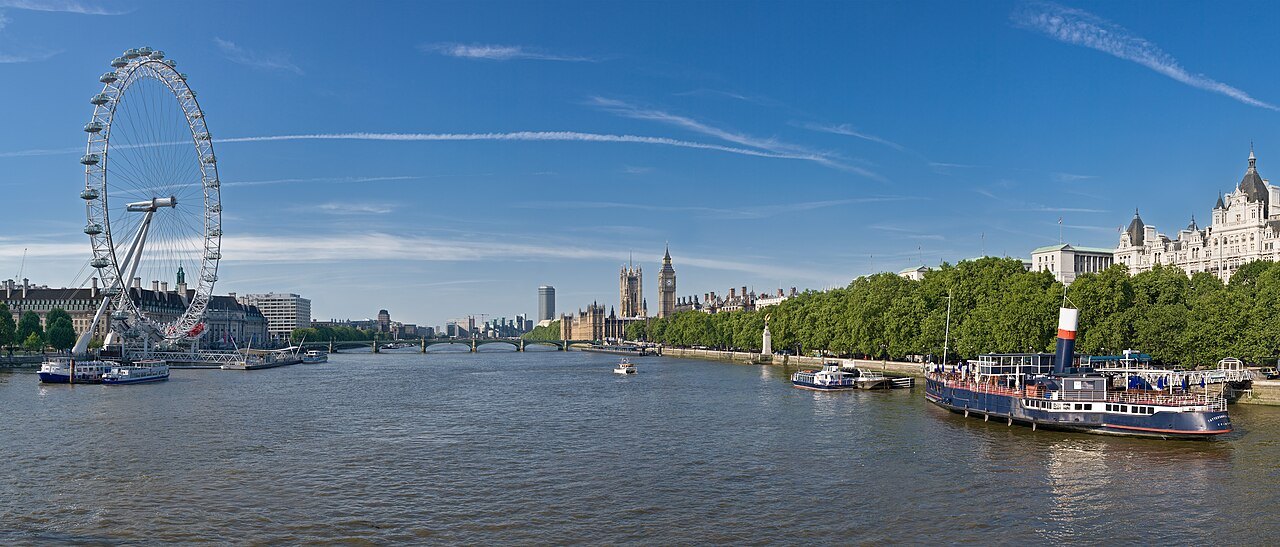
The Eye is a surprisingly delicate piece of engineering. The A-frame leans back over the river and is held by cables anchored to the bank, which counteract the weight of the wheel. The hub and the spindle, the central axle on which the whole wheel turns, were cast in the Czech Republic, and the steel rim was made in the Netherlands, so the wheel is a European assembly delivered to the riverside piece by piece. The wheel never stops completely: it turns slowly all the time, and passengers step on and off while it moves.
The slow rotation matters. A wheel that stops each time would be slower and rougher, and the continuous motion keeps the queue flowing. At the top you pass the highest point, and the view of Westminster, with the Abbey, the clock tower and the Thames below, makes the ride worth the wait for most visitors. Bring a light jacket on a cool day, because the capsules have no heating to speak of, and take a moment before boarding to look at the wheel itself from the foot, where its scale is hardest to take in. Look south as well, where the wide bend of the river runs toward Vauxhall and the new towers of Nine Elms.
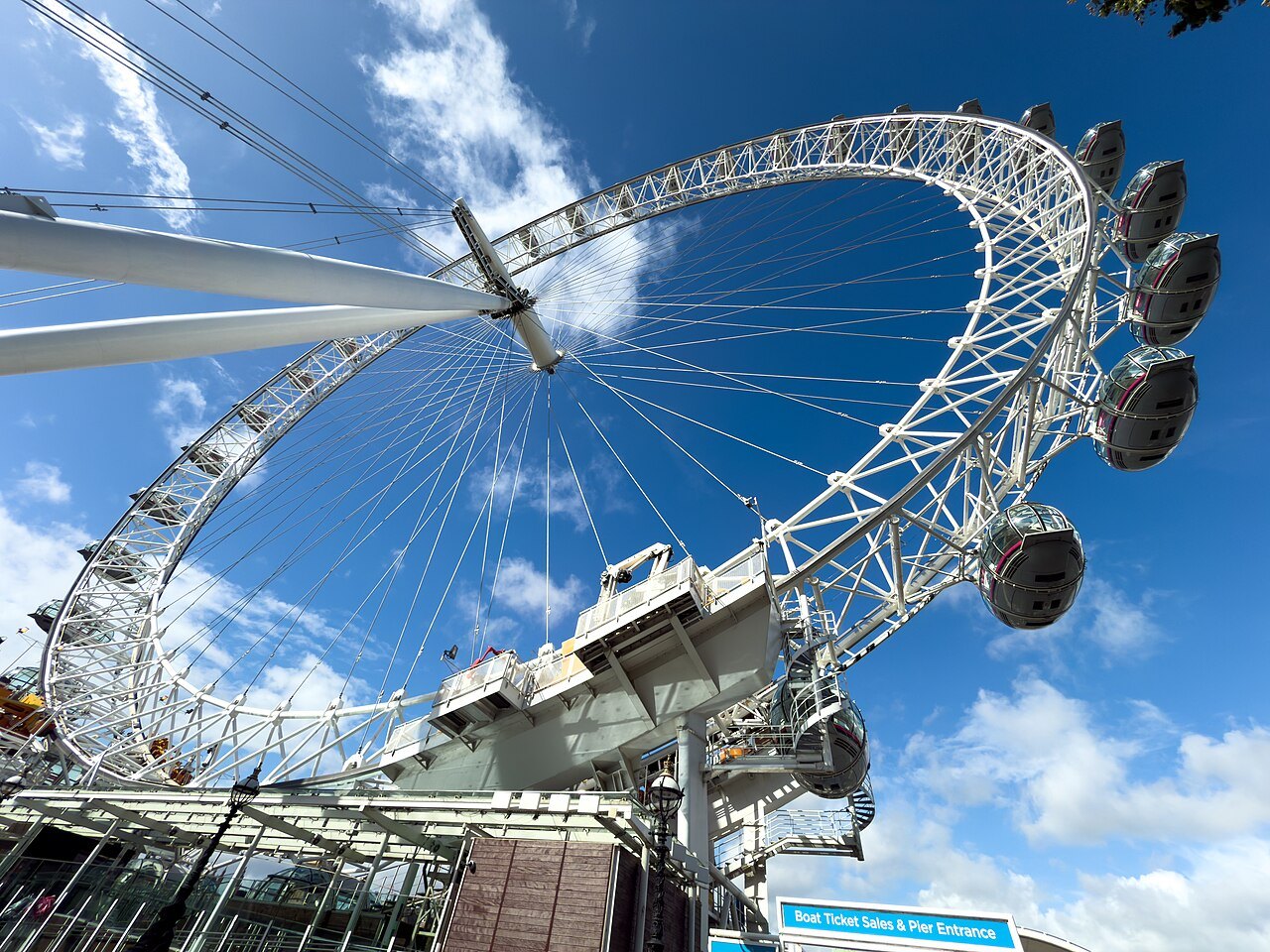
If you like photography, the capsules are best at the start of the ride, when you can frame the Palace of Westminster without reflections, and on the way down, when the angle changes and the bridges appear below you.
Tickets and queues
Because the wheel is so popular, queues can build at busy times, and booking a timed ticket in advance is sensible. How that works is explained in Booking Ahead. The official site gives the current choices.
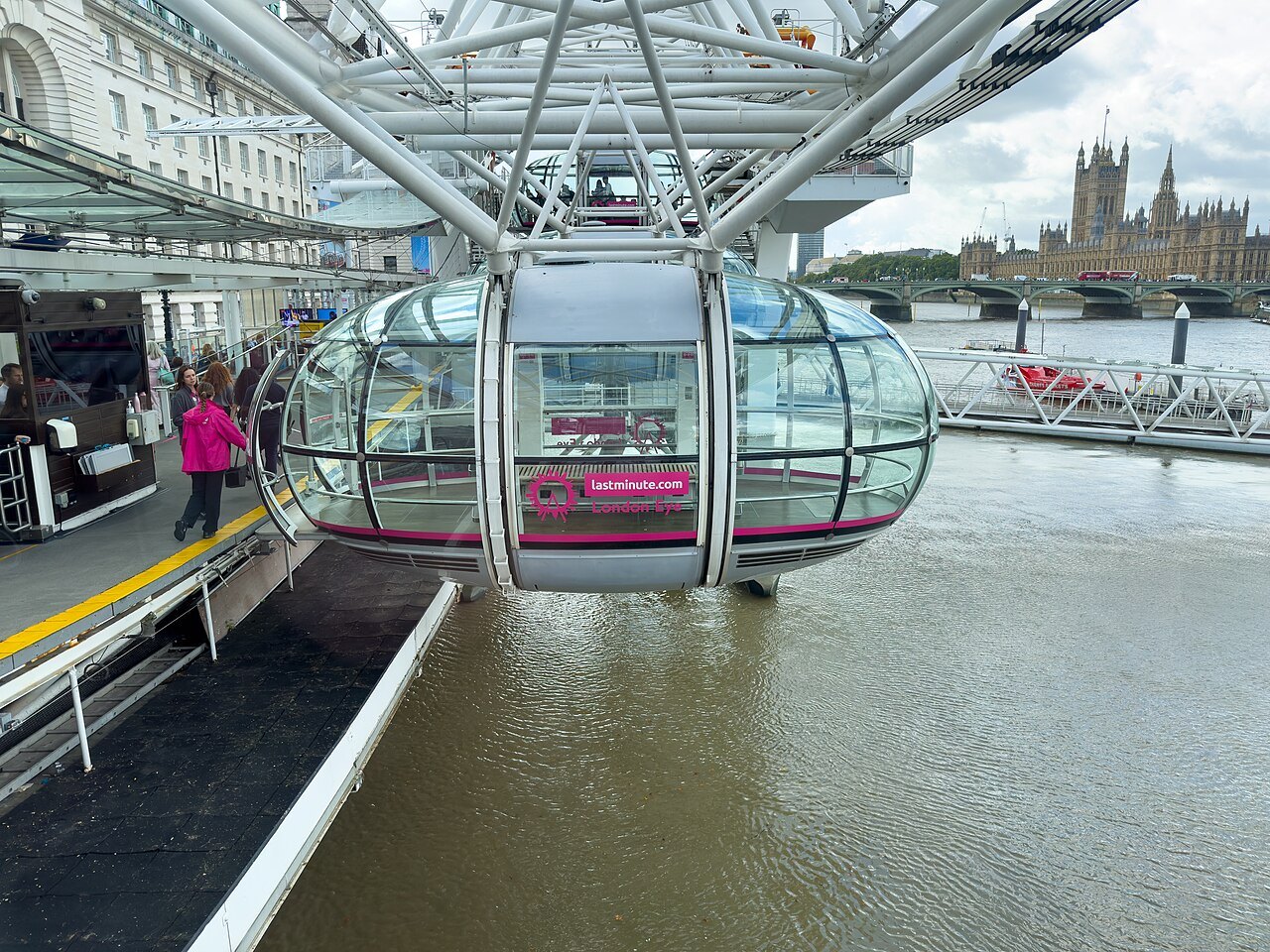
The ride suits families and first-time visitors especially, since it gives an overview of the city that makes the rest of a trip easier to plan: you see how the river bends, where the parks lie and how far the centre extends. If you only want the view of the wheel, you can enjoy that for free from the Westminster Bridge side or from the embankment, where the wheel and the tower of Parliament sit together in one frame.
Nearby
Where to go next
- Nearby · Westminster · north bankThe Palace of Westminster and Big BenThe Gothic Revival palace where the UK Parliament meets, rebuilt after the fire of 1834, with the Elizabeth Tower at its north end holding the bell nicknamed Big Ben.Read the page →
- Nearby · WestminsterWestminster AbbeyThe Gothic church beside Parliament where monarchs have been crowned since 1066 and more than 3,300 people are buried or commemorated, from kings to poets to the Unknown Warrior.Read the page →
- Nearby · Bankside · south bankTate ModernThe national collection of international modern and contemporary art, housed since 2000 in the old Bankside Power Station on the south bank of the Thames, directly across the river from St Paul's.Read the page →