Home · Sights · Trafalgar Square
Trafalgar Square
What you are looking at
Westminster · Charing Cross
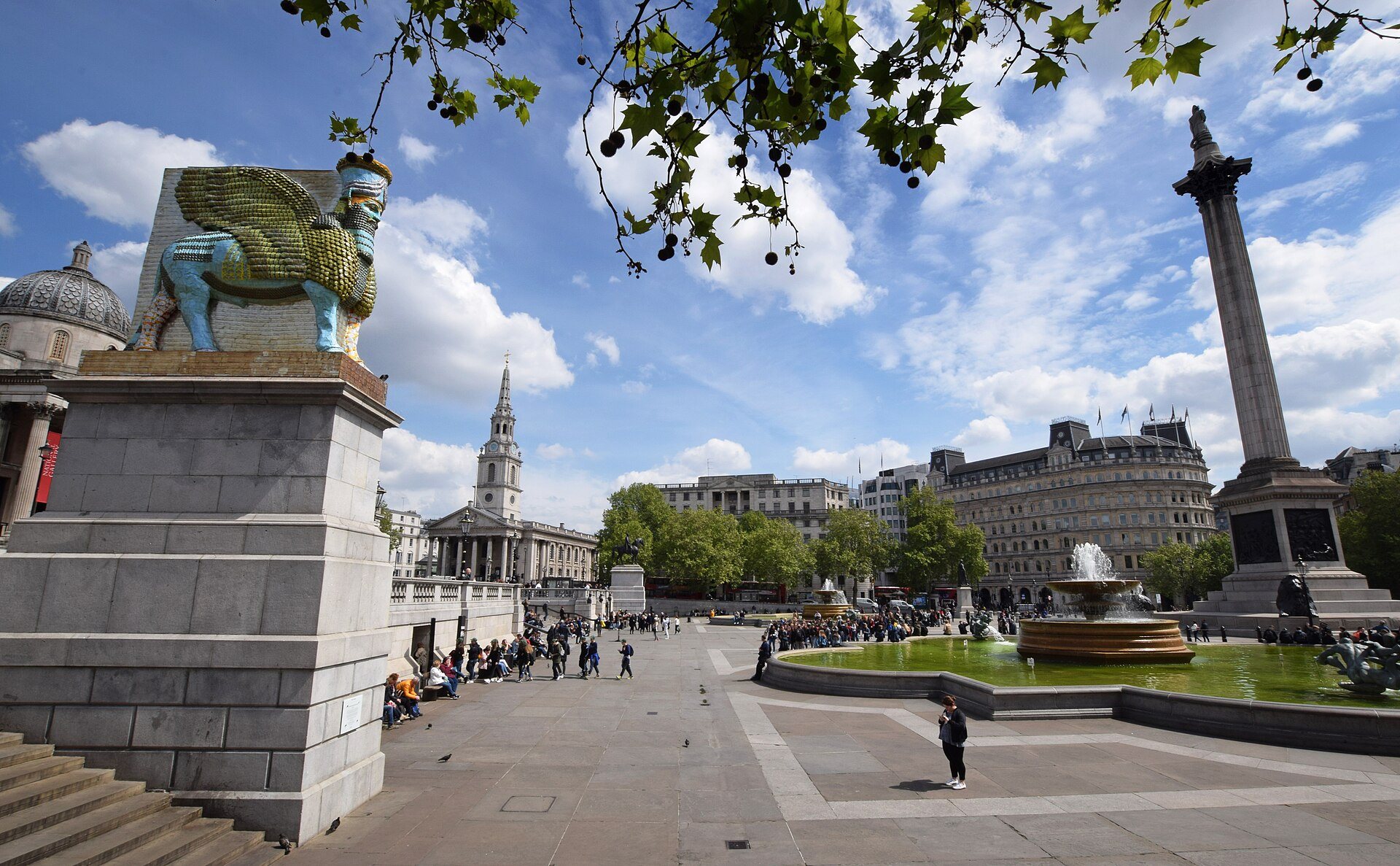
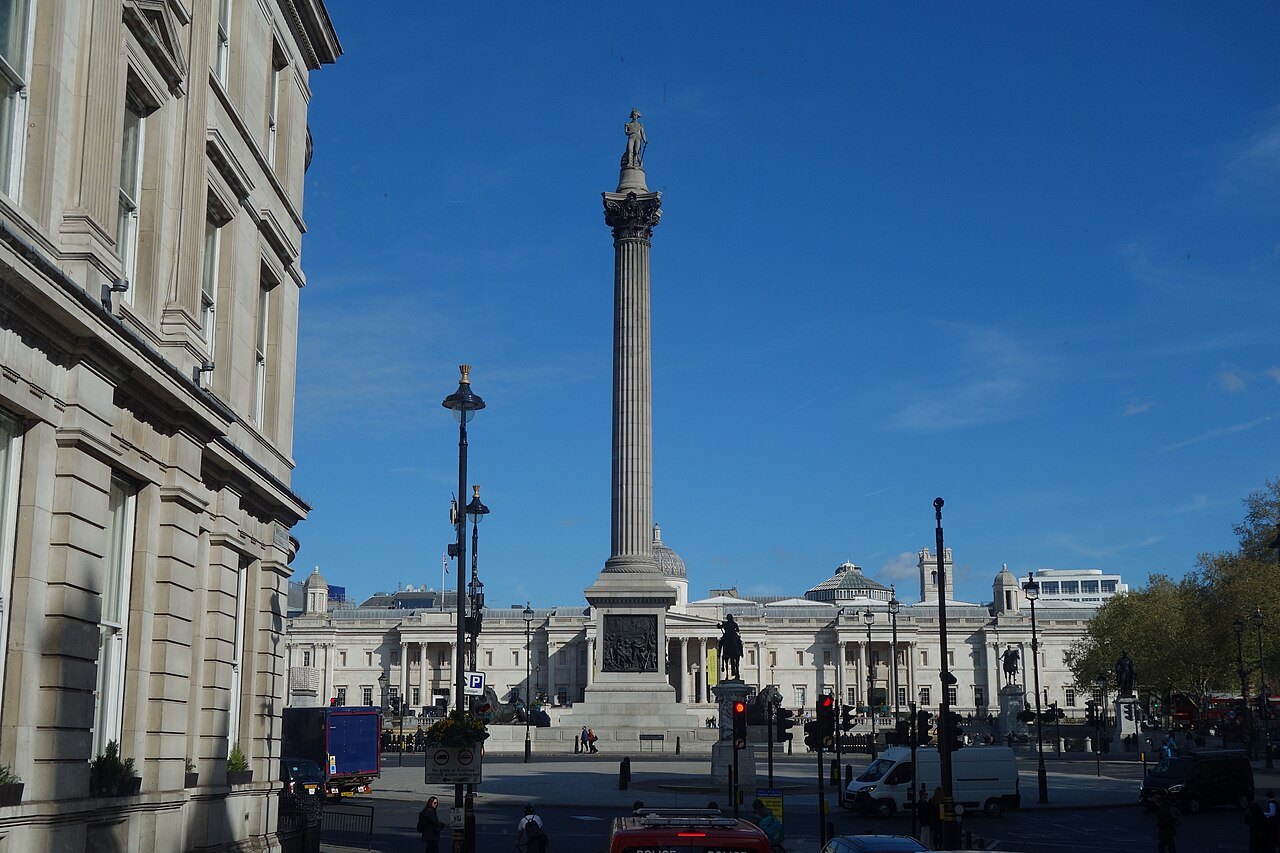
- 1Nelson's ColumnA Corinthian column of Dartmoor granite 169 feet tall, built between 1840 and 1843.
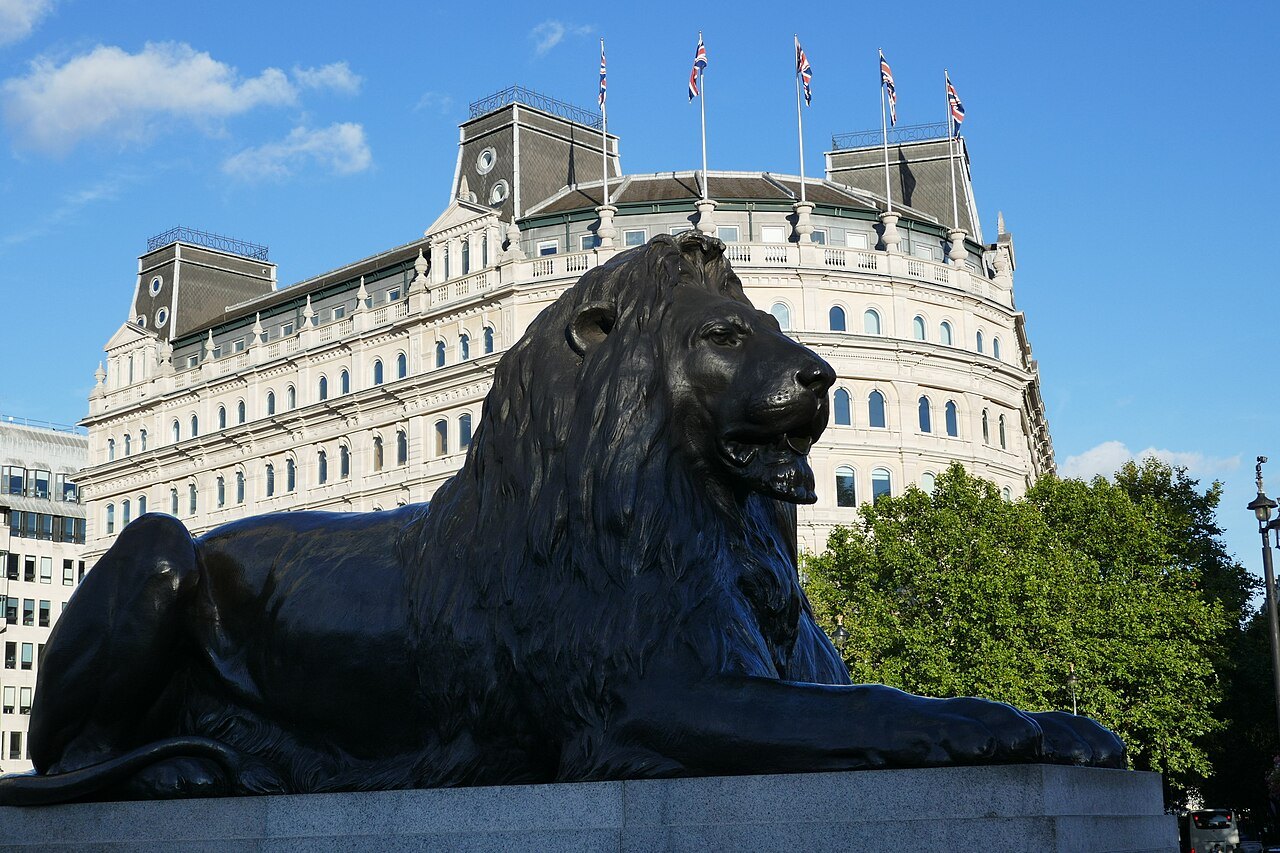
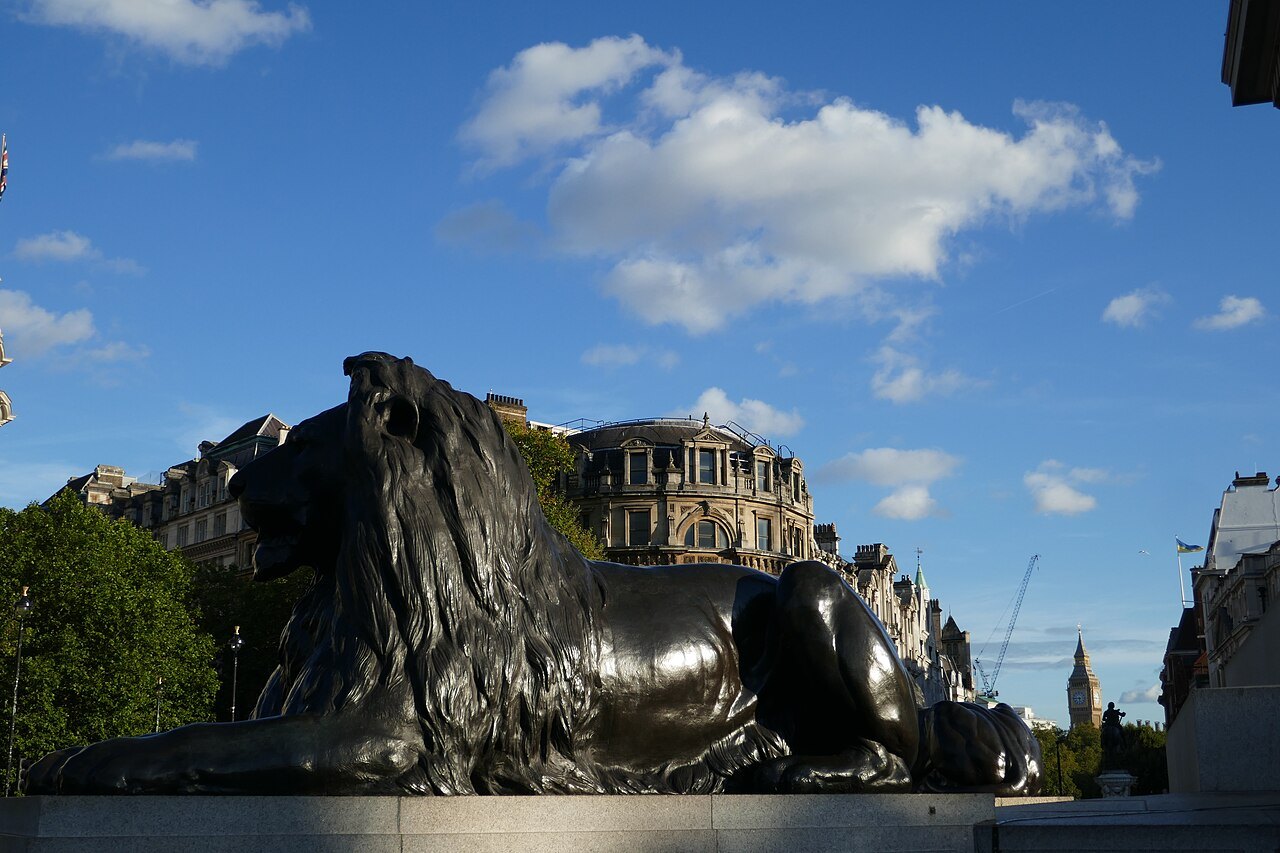
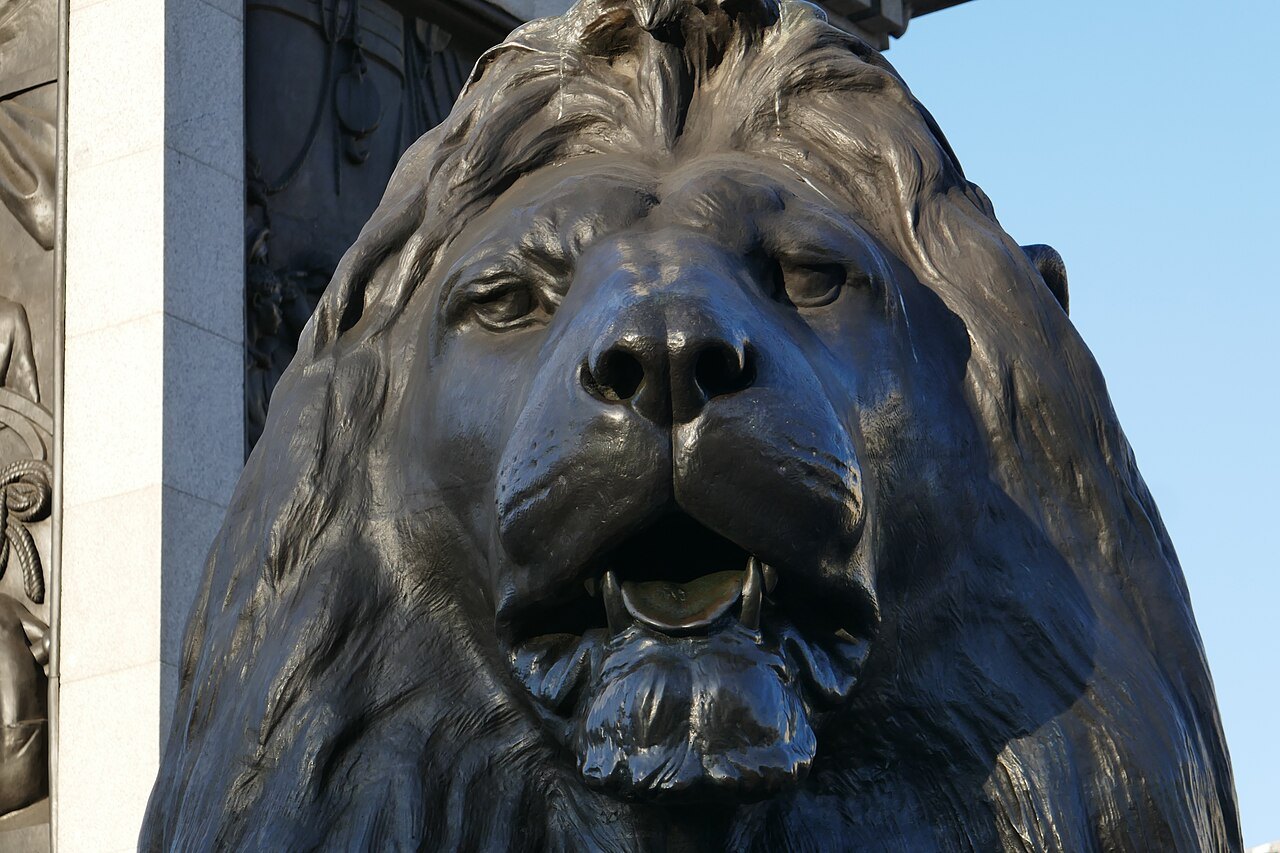
- 2The four lionsEdwin Landseer's bronze lions, added to the base in 1867.
- 3The fountainsTwo basins designed by Edwin Lutyens, built between 1937 and 1939.
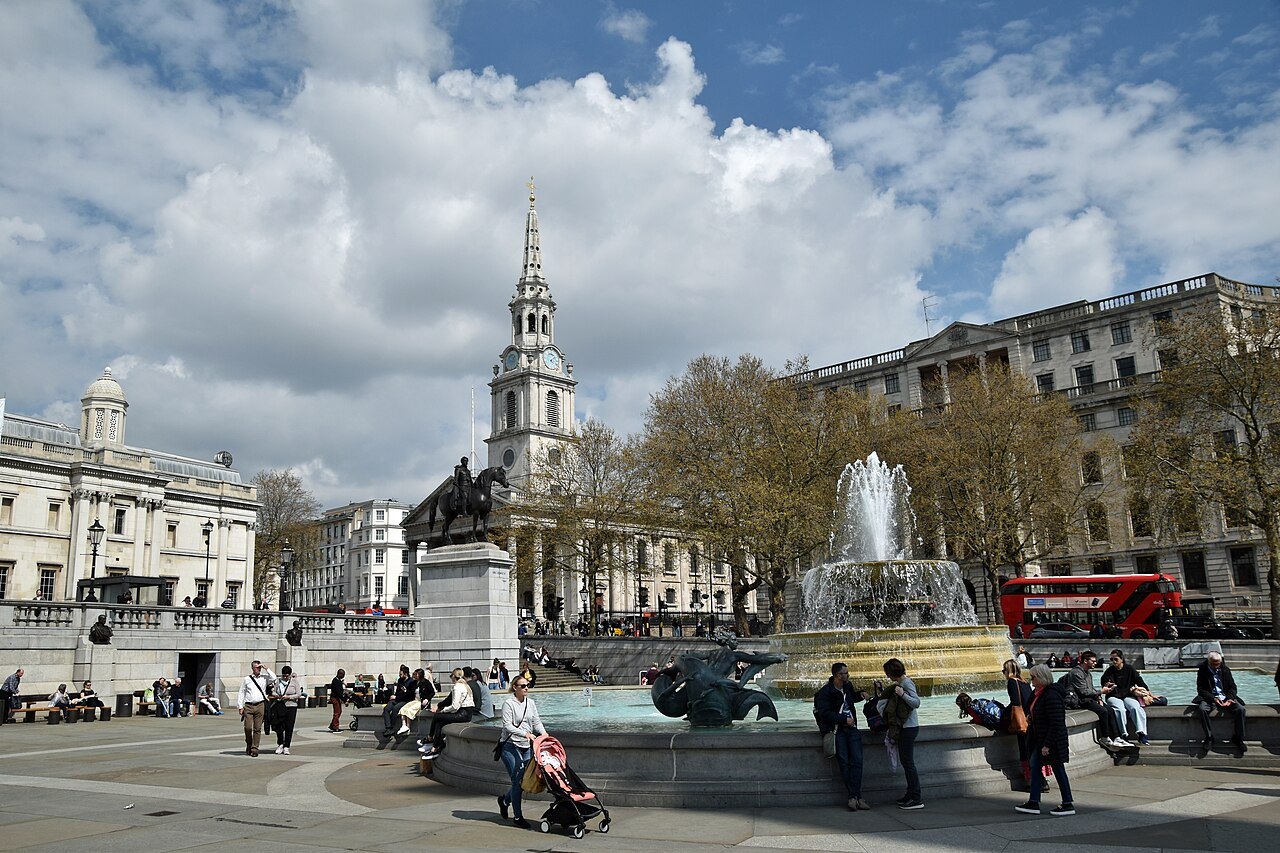
- 4St Martin-in-the-FieldsThe church on the east side, with a crypt cafe and concerts.
- 5The National GalleryWilliam Wilkins's long portico across the north side.
- 6The centre of LondonA point in the square is the official centre for measuring distances from the capital.
Reading the place
The sight in full
Why it matters
Trafalgar Square is a public square in the City of Westminster, established in the early nineteenth century around the area of Charing Cross. Its name recalls the Battle of Trafalgar, the British naval victory over France and Spain off the coast of southwest Spain on 21 October 1805. It is faced by the National Gallery, the church of St Martin-in-the-Fields, Canada House and South Africa House, and it has been London's main gathering place for celebration and protest.
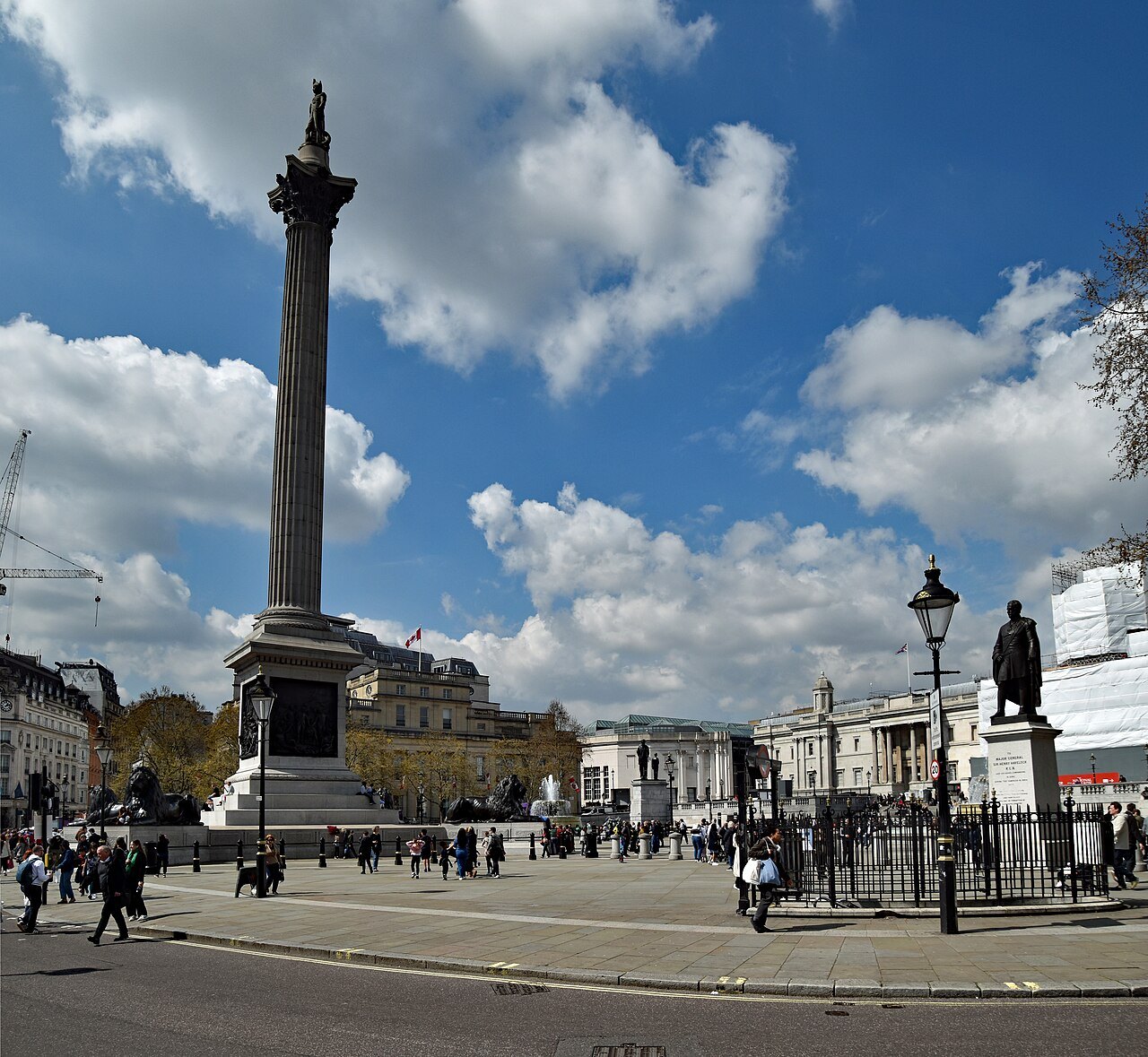
A point in the square is treated as the official centre of London in legislation, and distances from the capital are measured from nearby Charing Cross. The square is owned by the Crown and managed by the Greater London Authority. Pedestrians have the north terrace in front of the gallery, and the traffic now runs on three sides.
Before the square
Since the 1200s the site has been associated with the King's Mews, where the king's hawks were kept while they moulted, which is the origin of the word mews. After a fire in 1534 the buildings were rebuilt as stables, and they stayed until George IV moved the royal horses to Buckingham Palace, leaving the land free.
John Nash was asked in 1826 to draw up plans for clearing the area, but he died in 1835 and the work slowed. Around that year it was decided to name the square after Trafalgar, and the architect George Ledwell Taylor is credited with the suggestion. The National Gallery was built between 1832 and 1838, and the square was laid out under Charles Barry and finally opened in 1844. Building work in the 1950s turned up the bones of cave lions, rhinoceroses and elephants from an interglacial period more than a hundred thousand years ago.
Nelson's Column
The centrepiece is Nelson's Column, built between 1840 and 1843 to a design by William Railton and funded by public subscription. It is a Corinthian column of Dartmoor granite, topped with a statue of Horatio Nelson carved from sandstone by Edward Hodges Baily. The whole monument is 169 feet tall, and the statue of Nelson, 17 feet high, is about three times his real height.
Around the base are four bronze relief panels cast from captured French guns, showing his victories at Cape St Vincent, the Nile and Copenhagen and his death at Trafalgar, where he was killed by a French sniper. The four bronze lions were added in 1867, after years of delay, and are among the most climbed-on statues in London.
The fourth plinth
The square had four corner plinths and only three were used for statues. The fourth, in the northwest corner, stood empty for more than 150 years, and since 1999 it has hosted a rotating series of contemporary artworks. The commissions change every year or two, and they have ranged from a giant blue cockerel to a sculpture of a woman born with no arms. The plinth gives the square a changing exhibition at no charge, and what stands there depends on when you visit.
The square is also known for its Christmas tree, which has been a gift from the people of Norway since 1947 and is lit in early December, and for its New Year's Eve crowds. Pigeons that once made the square famous were removed in the early twenty-first century.
The lions, the fountains and the view
The lions were meant to be in place from the start, and they took far longer than the column itself. Landseer modelled them, they were cast in bronze, and they arrived in 1867, nearly twenty-five years after the column was finished. They are larger than life and each is posed slightly differently, which is why people climb on them for photographs.
The fountains, with their pools, were redesigned by Edwin Lutyens between 1937 and 1939, replacing earlier basins. The original granite from the first pair went to Canada. From the steps of the National Gallery you can see the whole composition, with the column on its axis and Big Ben at the far end of Whitehall behind it, which is the view that gave the square its fame.
Gatherings and protest
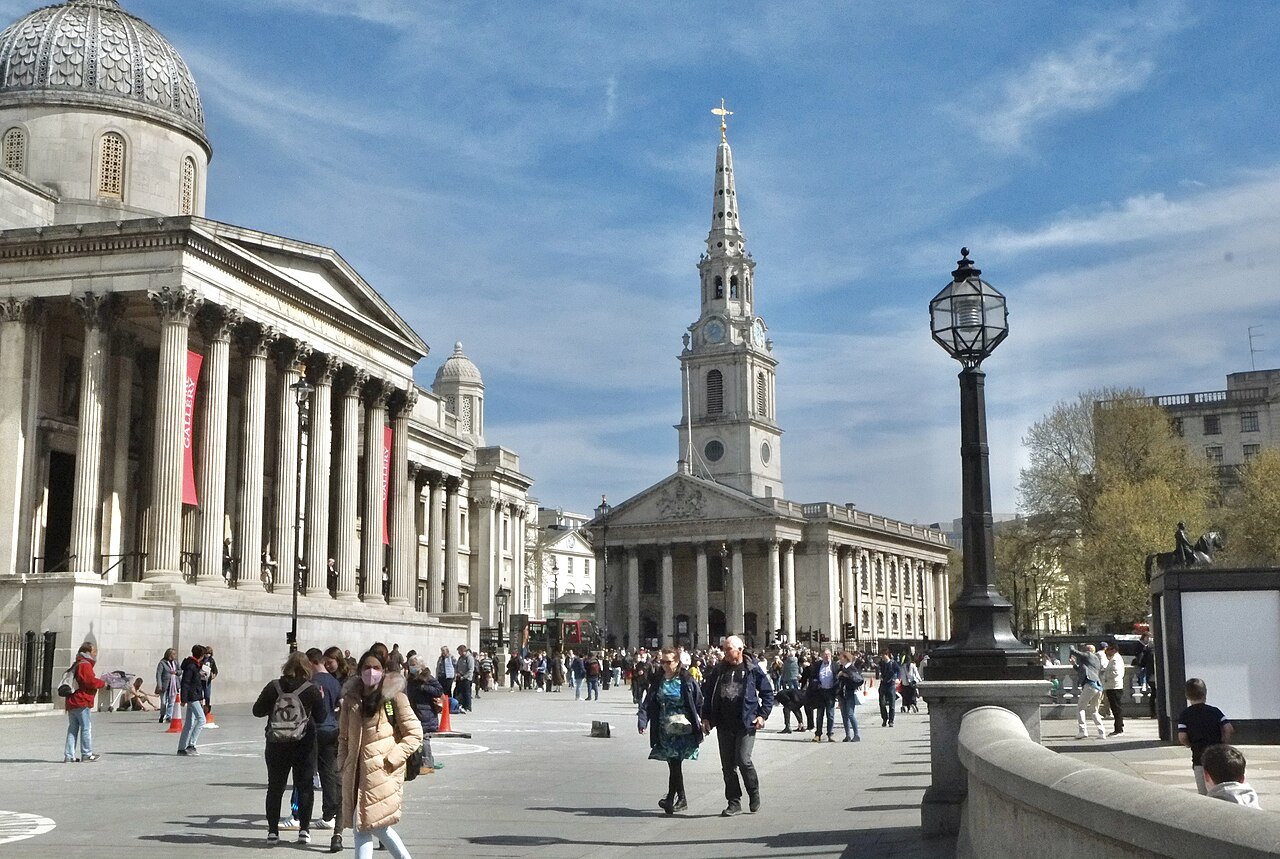
Trafalgar Square has been the stage for political demonstrations since the nineteenth century, among them Bloody Sunday in 1887, the end of the first Aldermaston march and many protests against war and in favour of action on climate. It is now managed with permits, but the habit of gathering here to be heard is old. At the end of a great sporting win, a royal event or a national moment of grief, it is the place Londoners head for.
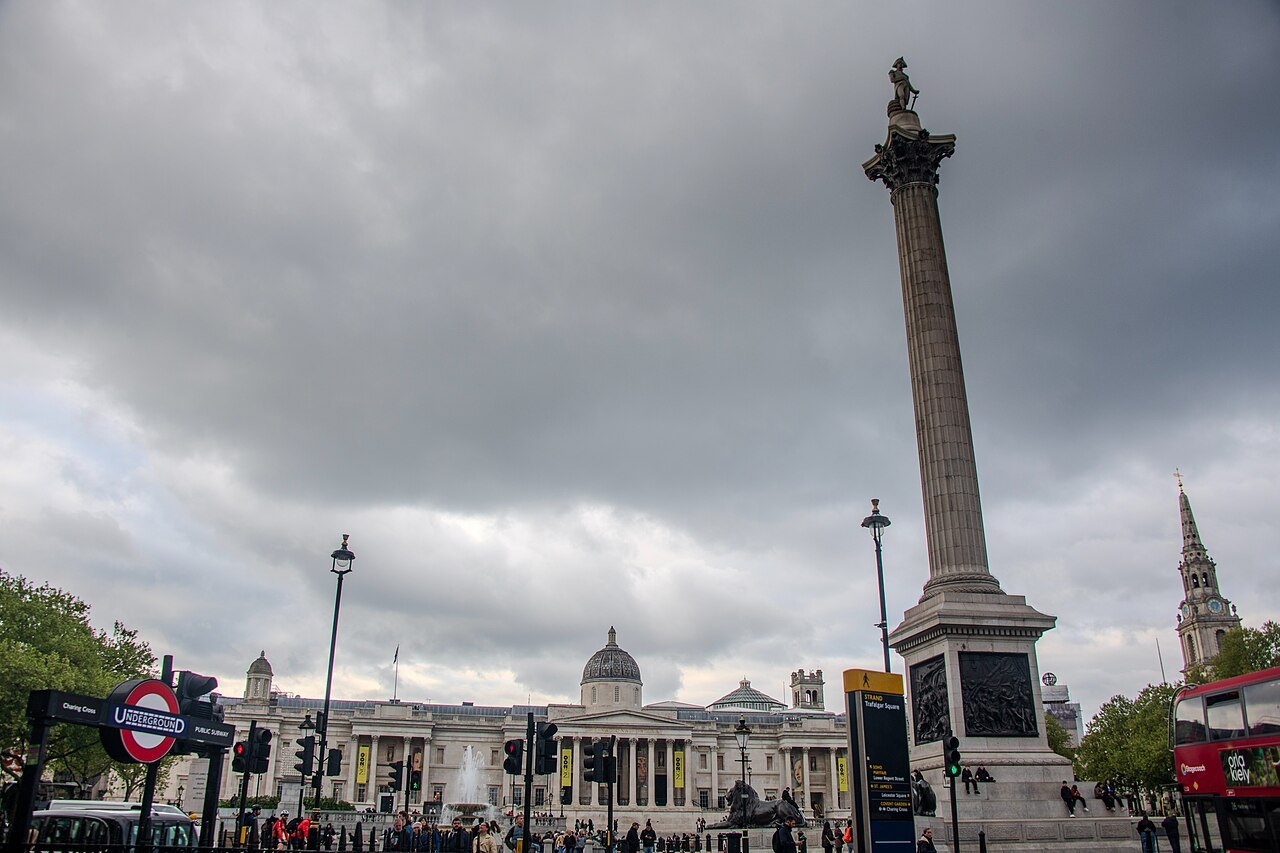
The northern edge is calmer than the rest. The terrace in front of the National Gallery has benches and a view over the whole square and down Whitehall to the clock of the Elizabeth Tower, a good place to get your bearings.
Getting around from here
Admiralty Arch, on the southwest corner, leads onto the Mall and then to Buckingham Palace, a straight walk of about a mile. Whitehall runs south to the Palace of Westminster, the Strand runs east, and Charing Cross Road leads north to Leicester Square and Soho. The National Gallery is on the north side and admission is free.
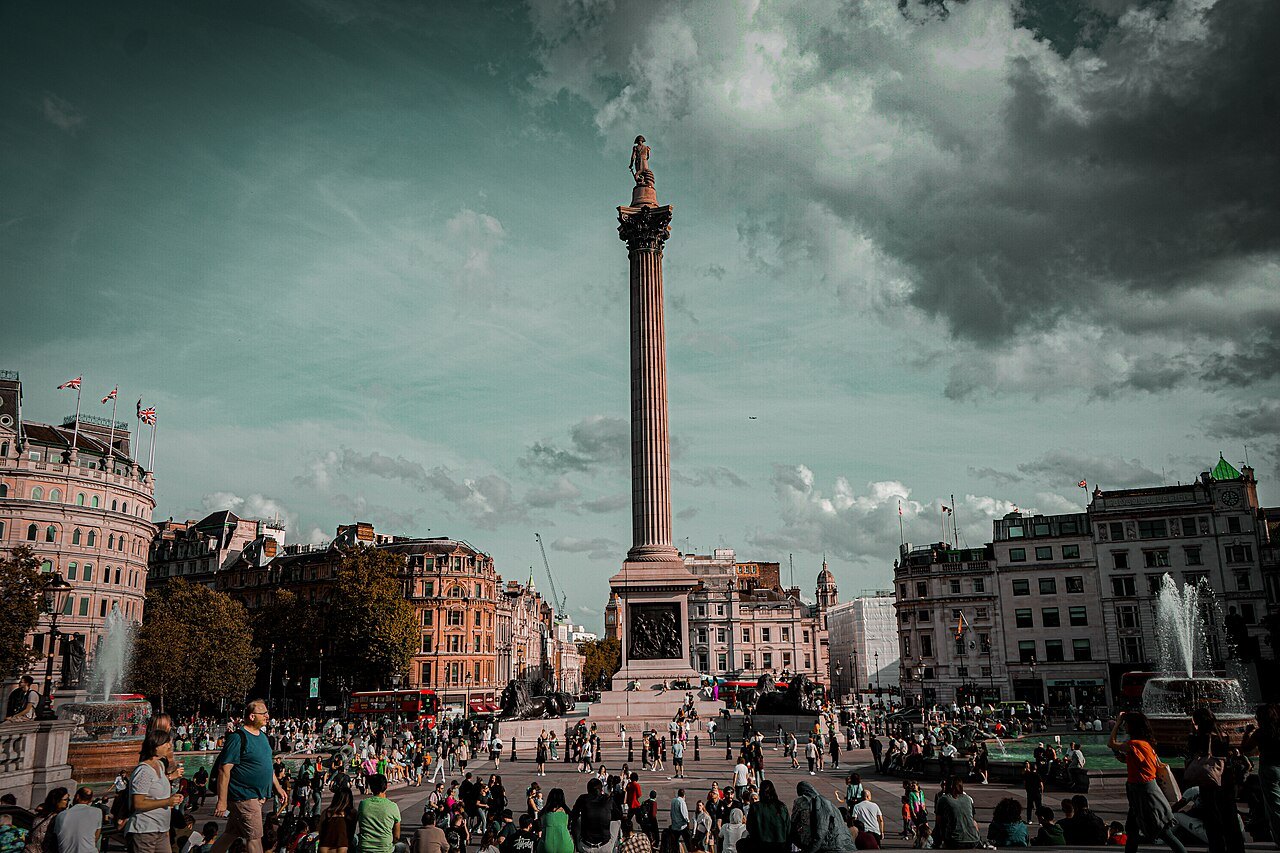
Charing Cross station has an exit in the square, with the Northern and Bakerloo lines, and Embankment is a short walk down toward the river. The square is the most convenient place in the city to meet someone, which is the main reason it is crowded.
Nearby
Where to go next
- Nearby · Trafalgar SquareThe National GalleryThe national collection of more than 2,300 paintings from the thirteenth century to 1900, on the north side of Trafalgar Square, with free entry to the main collection.Read the page →
- Nearby · WestminsterBuckingham PalaceThe King's London residence and administrative headquarters, a Georgian townhouse enlarged into a palace in the 1820s, with a balcony that has framed national celebrations ever since.Read the page →
- Nearby · West EndCovent GardenAn Italianate square laid out by Inigo Jones in the 1630s, a fruit-and-vegetable market for three centuries, and now a district of street performers, shops, theatres and the Royal Opera House.Read the page →