Home · Itineraries
From one day to five
A stay at a time
One day: Westminster and the south bank
The Abbey and Parliament in the morning, then the south bank walk past the Eye, Tate Modern and the Globe, ending with food at Borough Market.
Two days: add the Tower and the City
The Tower and Tower Bridge in the morning, St Paul's in the afternoon, and the Millennium Bridge back to the south bank.
Three days: add the museums and the parks
The British Museum and Covent Garden in the morning, the National Gallery and Trafalgar Square after lunch, then the Mall to the palace.
Five days: add South Kensington, Greenwich and Kew
A museum day in South Kensington with Hyde Park, a boat to Greenwich for the Prime Meridian, and Kew's glasshouses on the fifth.
Itineraries
In full
How these routes are built
London rewards a plan that keeps each day inside one part of the city. The routes below are built in layers: the one-day route covers the essentials, and each longer stay adds a cluster without repeating the earlier days. They avoid clock times and fixed opening hours, because those change, and they leave room for the long lunch and the rain.
Each route walks more than a visitor from a car-based city might expect, so comfortable shoes matter more than any ticket. The Underground and the river boats connect the clusters, as described in Getting Around.
One day: the river and the monarchy
Begin at Westminster Abbey in the morning, when the crowds are thinner, and walk past the Palace of Westminster and Westminster Bridge to the south bank. From there the river path runs east past the London Eye, along a continuous promenade of buskers, bookstalls and food, to Tate Modern and Shakespeare's Globe.
Lunch at Borough Market makes a natural break, and if you have energy left, cross the Millennium Bridge to St Paul's. The whole route is about four miles and almost entirely flat, and it shows the government, the river and the modern city in a single day.
Two days: the Tower and the City
The second day heads downstream. The Tower of London deserves a morning, especially with a timed ticket, since the Crown Jewels and the walls take time. Next door, Tower Bridge offers a walk across the river and a view back at the fortress.
In the afternoon, walk or ride into the City to St Paul's Cathedral and climb the dome if the day is clear. Take the Millennium Bridge back to the south bank, for a view of the dome behind you. This pairing is the best introduction to the oldest part of London.
Three days: the museums and the West End
The third day moves to the center of the city. The British Museum in the morning, with its Egyptian and Greek galleries, then a walk south to Covent Garden for lunch. The National Gallery and Trafalgar Square follow, and both are free.
Finish with the long walk down the Mall to Buckingham Palace through St James's Park, with the pelicans and the lake on the way. An evening at a West End theatre, booked in advance, makes a fitting end.
Five days: South Kensington, Greenwich and Kew
The fourth day belongs to South Kensington, where the Natural History Museum and the V&A face each other across a few streets. A walk through Hyde Park and Kensington Gardens afterwards makes a restful end to a museum day.
The fifth day can go east or west. Greenwich, reached by boat from Westminster, offers the Observatory, the Cutty Sark and a park with the best view of the river. Kew Gardens is a day of glasshouses and lawns in the west, particularly good in spring. Both suit a day when the weather is good.
Four-day and half-day variations
A four-day stay can drop the fifth-day excursion and use the extra time for a second museum or a theatre evening. Add the river to a day by taking a boat one way: Westminster to the Tower is the classic trip, and it replaces a stretch of walking with a view from the water.
If you have only a half day, the best single choice depends on what you value. For history, the Tower; for art, the National Gallery; for views, a walk across the Millennium Bridge and along the south bank; for the monarchy, a walk from the Abbey to the palace through the park. Each fills a morning and leaves time for lunch.
Morning, afternoon and evening
The rhythm of a good London day is early start, long lunch, evening treat. Visit the ticketed sights in the morning, when queues are short, take a leisurely lunch at a market or a pub, and spend the afternoon on free sights such as the museums or the parks. In the evening, a theatre, a concert or a river walk at sunset rewards the day.
Leave margins. Underground delays, security queues and wrong turns are part of any day, and a plan that leaves an hour free each day, for a coffee in a square or a wander down an unplanned street, is much easier to enjoy than one packed from start to finish. Remember that many museums close in the late afternoon, while parks and markets run later. A reliable rule is to put the one fixed booking of the day first, work outward from it, and treat everything else as optional.
Walking distances to expect
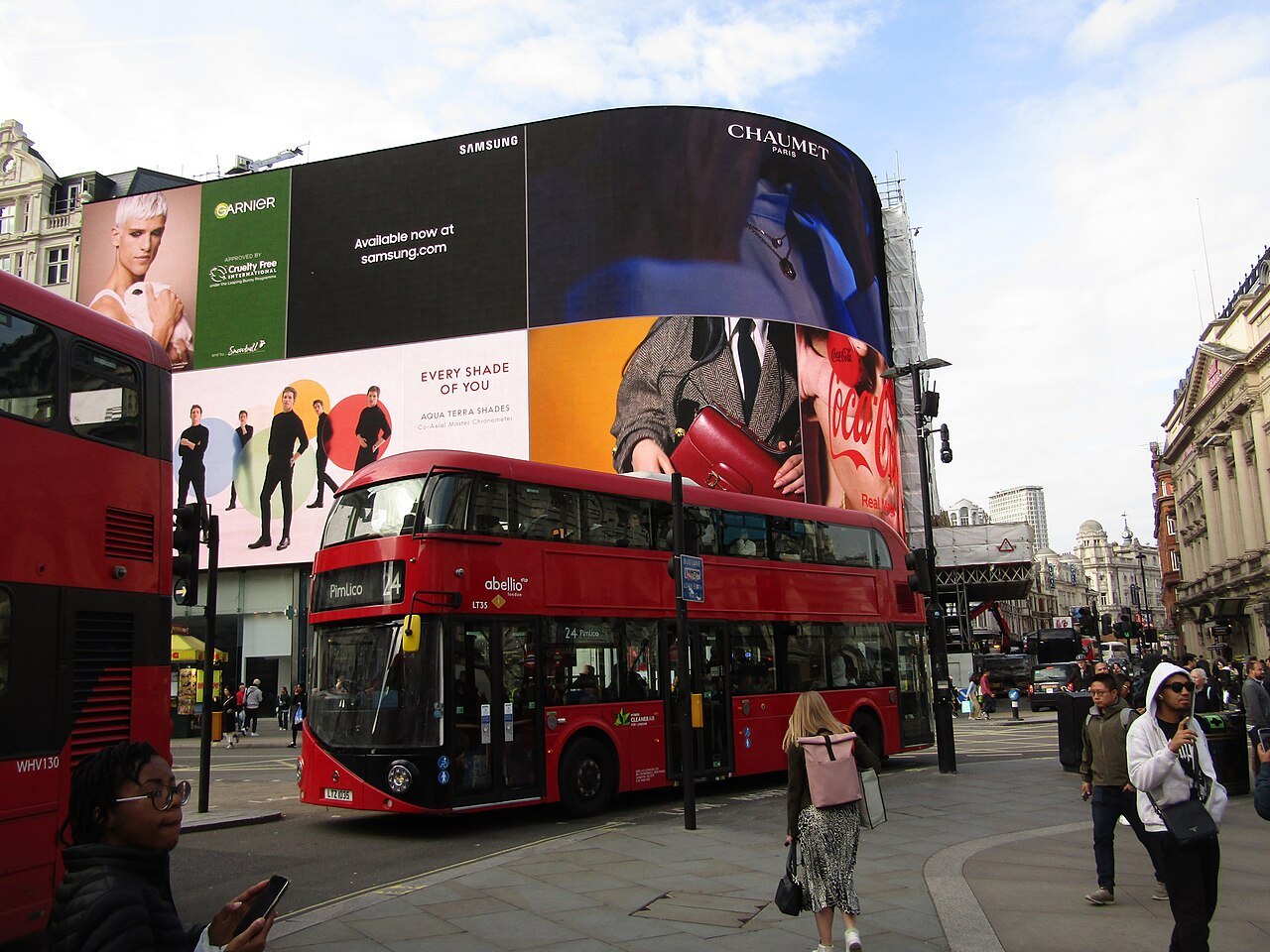
Distances are easy to underestimate on a map. Westminster Abbey to the Eye is about a quarter of an hour on foot, the Eye to Tate Modern about half an hour along the river, and Tate Modern to the Tower about three quarters of an hour. The Mall from Trafalgar Square to Buckingham Palace is just under a mile.
Museums are large inside, and a morning in the British Museum can cover a mile or two of galleries without leaving the building. Count the walking inside and between sights when you decide how many to include, and take a bus or the Underground when your feet say stop.
A useful trick is to split a day into a walking half and a sitting half, putting the river path or the park in one and a museum in the other, so that tired legs have a rest while the sightseeing goes on, and to carry water and a snack in a small bag.
Rain, children and a slower pace
On a wet day, swap the outdoor stops for the museums, which are free and large: the British Museum, the V&A and the Natural History Museum can each fill a morning. With children, the Tower, the Natural History Museum and the Eye are the best bets, and the parks provide the breaks.
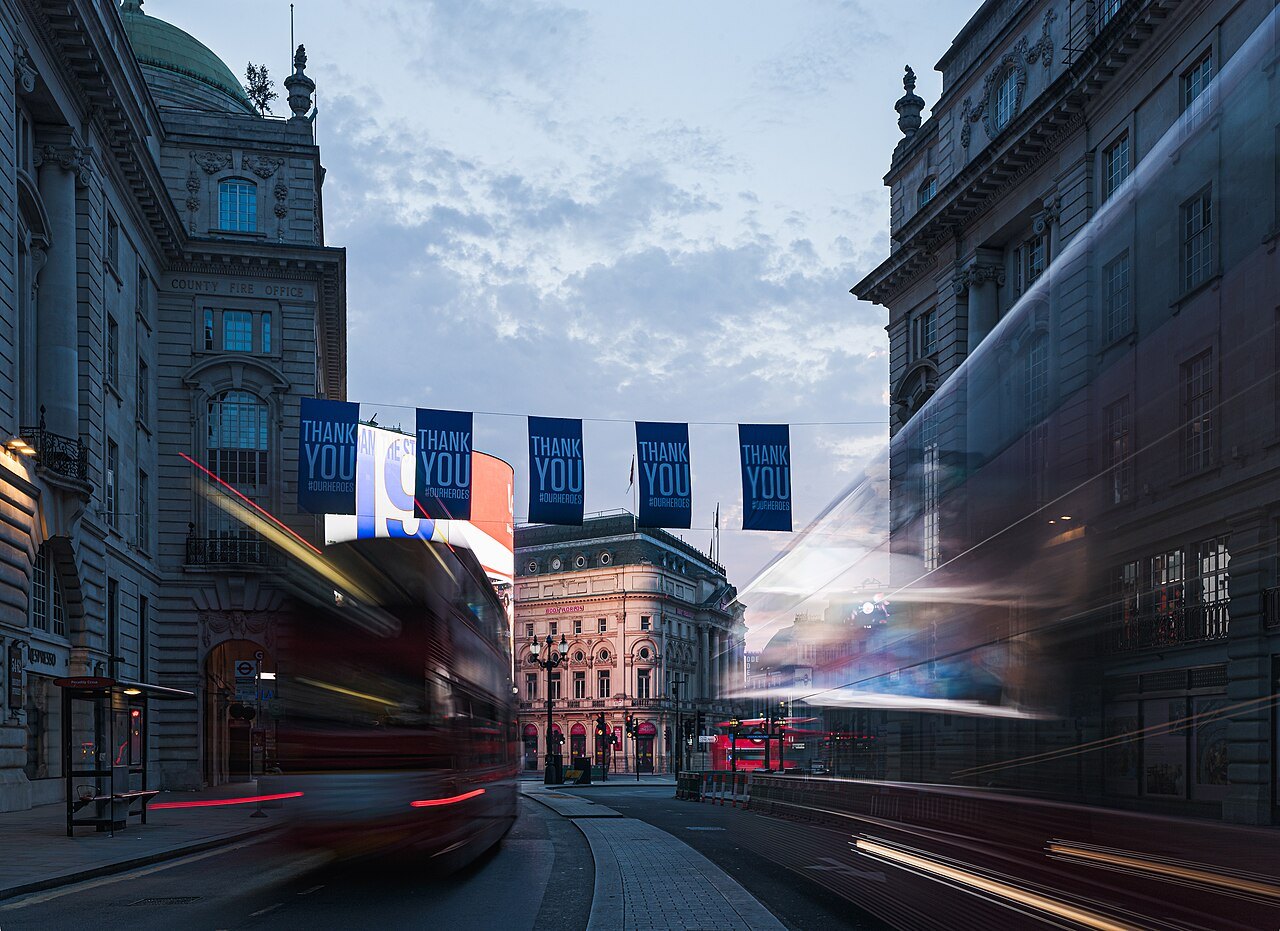
A slower pace works as well. Choose one cluster per day and leave an afternoon empty. London pays back wandering, and the best moments are often in a side street or a pub. Check Booking Ahead for the sights that need a ticket, and When to Come for the season.
More photographs
Seen on the way
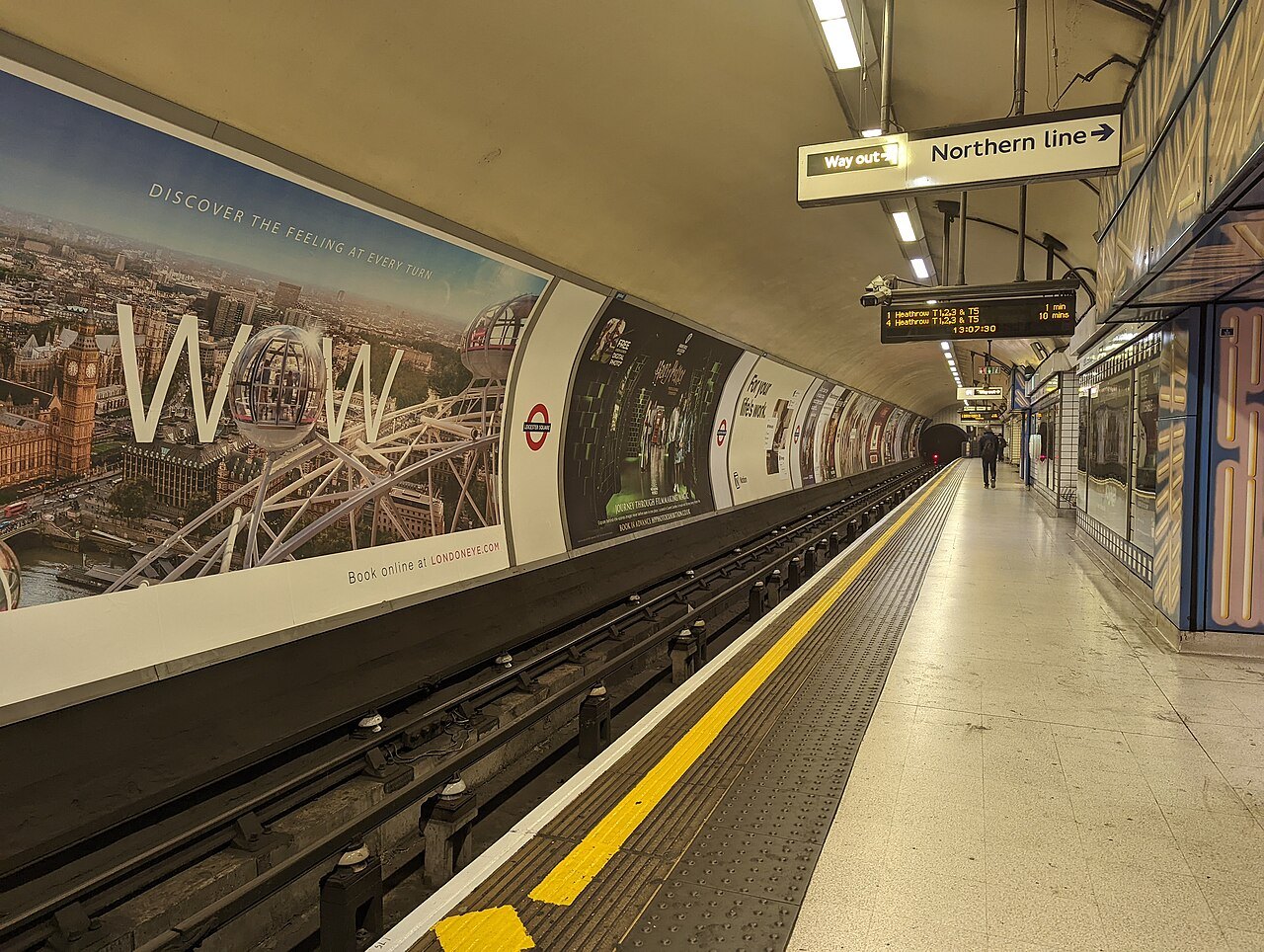
A Northern line platform at Leicester Square, the tiled curve of the tunnel ahead of the yellow edgeDaniel from Glasgow, United Kingdom, Wikimedia Commons, CC BY 2.0 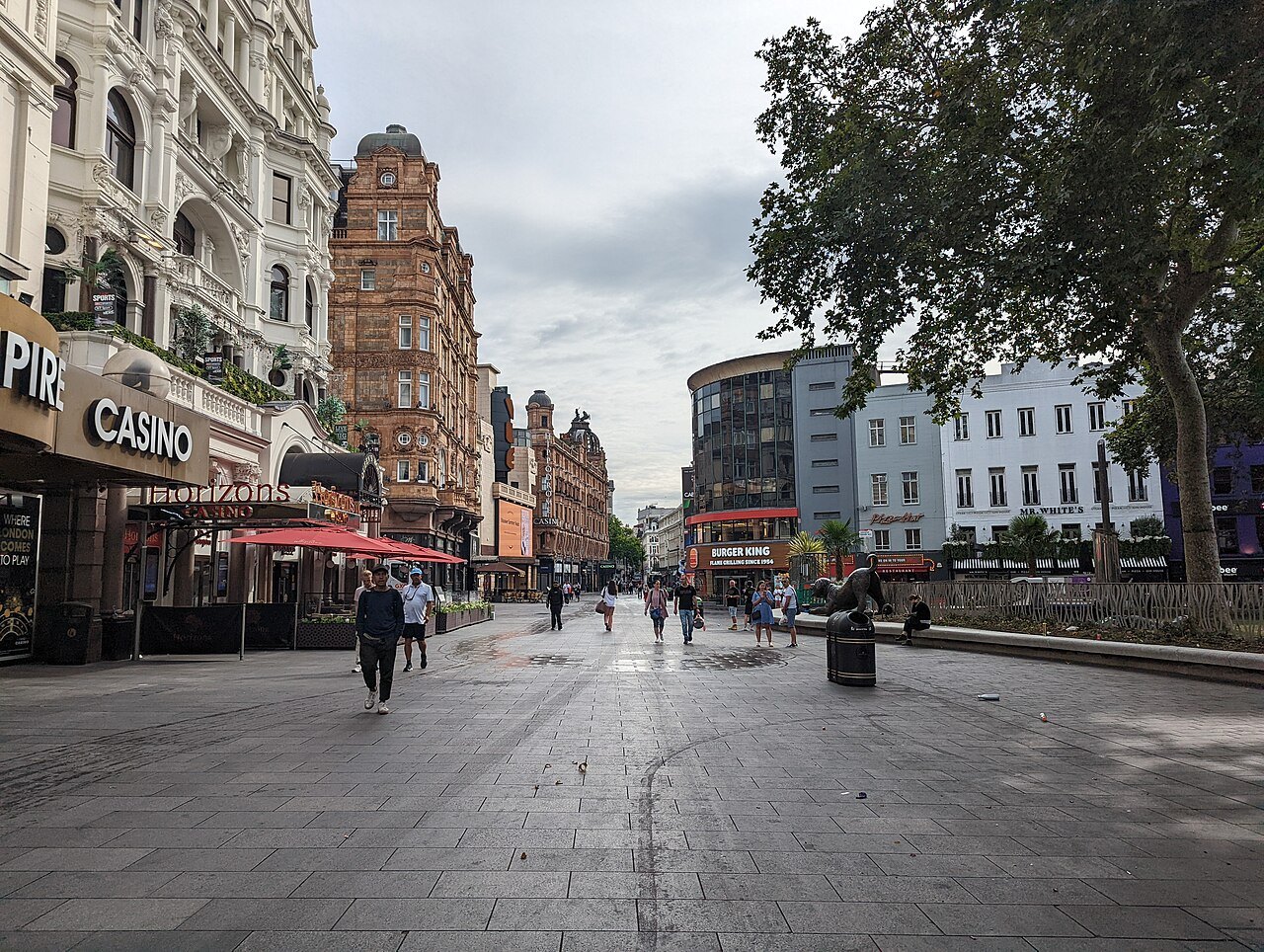
Leicester Square on a grey day, with shops and trees at one side and a long paved space aheadDaniel from Glasgow, United Kingdom, Wikimedia Commons, CC BY 2.0 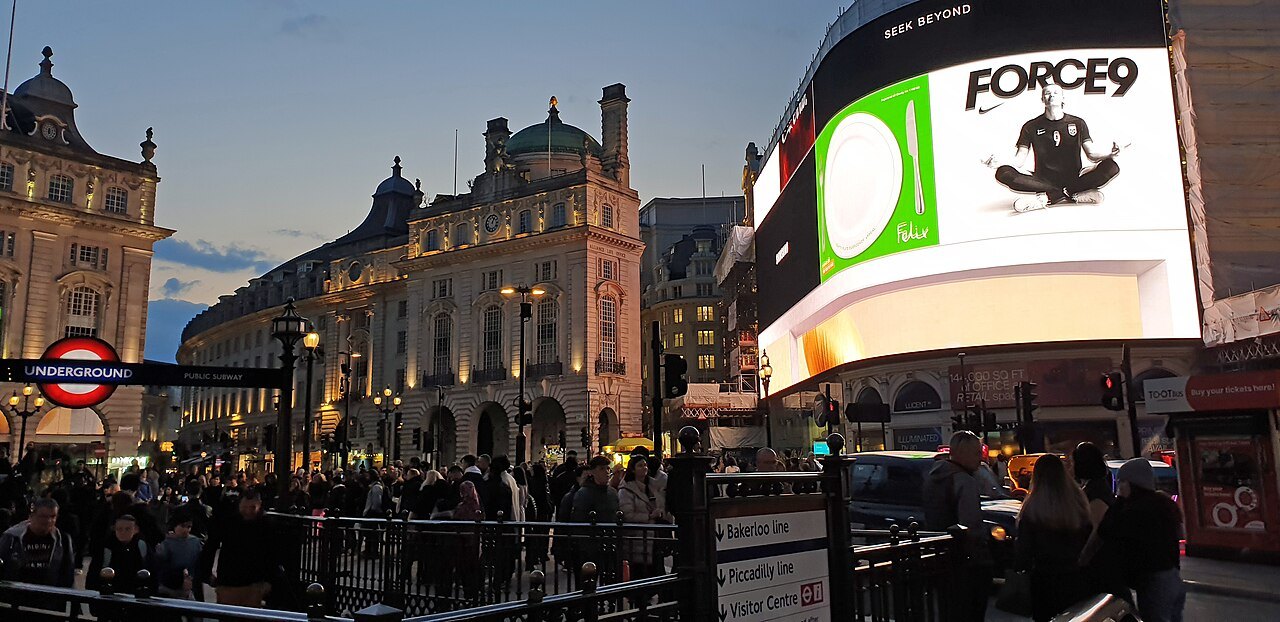
Piccadilly Circus at dusk, with the lit screens at the corner and a crowd on the pavementThomas Dahlstrøm Nielsen, Wikimedia Commons, CC BY-SA 4.0