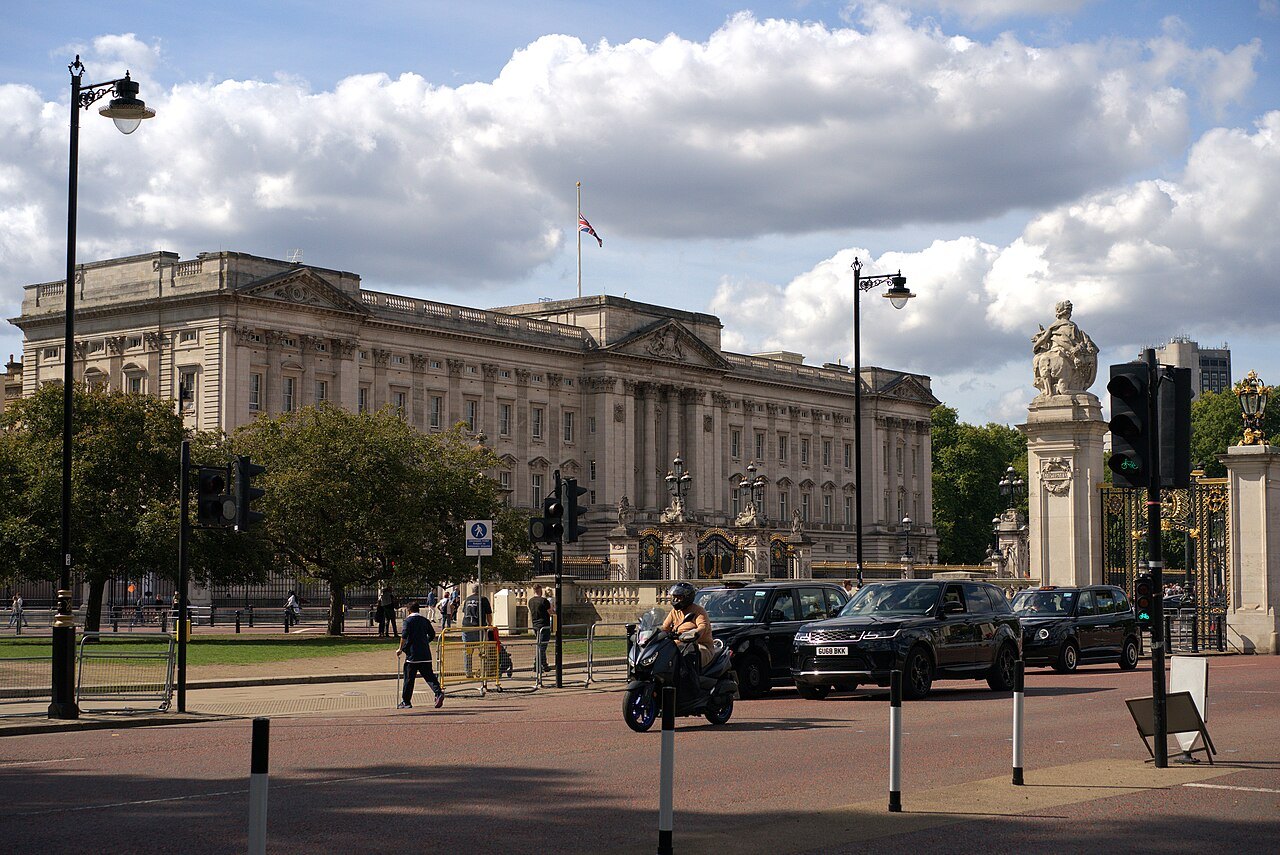
What does the flag over Buckingham Palace mean?
WHAT THE PALACE FLAG SIGNALS
A short guide to the two flags flown above Buckingham Palace and what each one tells a visitor passing by.
Read on
The answer in full
Reading the Flag Above the Gates
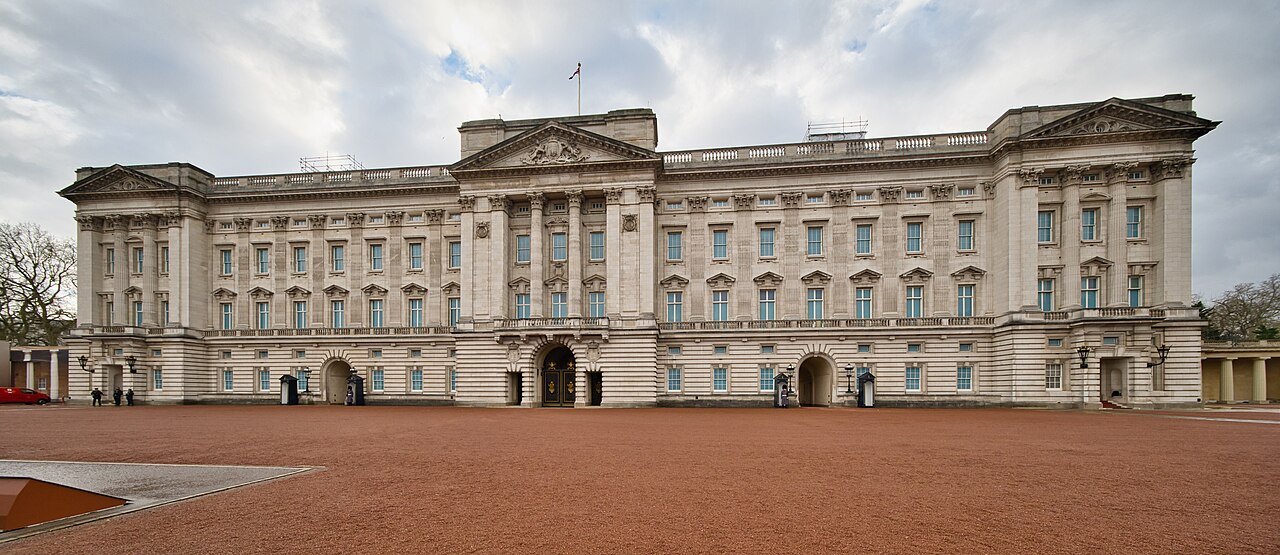
Above the long pale stone front of Buckingham Palace, a flagpole carries a flag that changes without any announcement. For a visitor standing at the railings, on the forecourt, or across the Mall, it offers a quiet, free clue to what is happening inside, long before any guide or sign confirms it. Learning to read it costs nothing and takes only a glance upward.
Two different flags take turns on that single pole, and never both at once. One is the royal standard, the personal flag of the reigning monarch. The other is the Union Flag, flown across the United Kingdom on government buildings and elsewhere. Which one is raised depends entirely on where the monarch happens to be that day.
The rule is straightforward. The royal standard flies over the palace when the monarch is in residence there. The Union Flag flies in its place when the monarch is elsewhere, whether at another residence, traveling, or attending duties away from the building. Neither flag is raised or lowered as a scheduled event for sightseers; it simply reflects the monarch's whereabouts that day.
Because Buckingham Palace is the monarch's official residence and administrative headquarters rather than a museum, the flag works as a household signal rather than a tourist timetable. It tells a passerby where the monarch is that day, not when tours, ceremonies, or other events on the public calendar take place.
Why the Standard Matters
The royal standard is one of the most recognizable personal flags in the country, representing the sovereign rather than the nation as a whole. It flies only where the monarch is actually present, whether at the palace, at Windsor, or at another residence in use that day, rather than one being visited only briefly.
King Charles III, who succeeded in 2022, lives at nearby Clarence House and conducts official duties at Buckingham Palace. That arrangement means the flag over the palace does not simply mark whether the King is staying overnight; it reflects whether he is present for the business carried out there, including state visits, investitures, and receptions.
Because the palace is a working building, with staff who carry out administrative and ceremonial duties daily, many Londoners read the flagpole as a small daily bulletin on royal business. It is a separate matter from whether the State Rooms are being shown to the public that day, or whether a ceremony happens to be scheduled on the forecourt that same morning.
The flag's message has nothing to do with the separate calendar for visiting the interior, covered in Booking Ahead. A visitor might see the Union Flag flying and still find a changing of the guard underway on the forecourt, or a tour of the State Rooms booked for that same afternoon.
A Short History Behind the Flagpole
The building the flag flies over began as Buckingham House, a large townhouse built in 1703 for the Duke of Buckingham and Normanby. George III bought it in 1761 as a private home for Queen Charlotte, and it became known as the Queen's House; fourteen of their fifteen children were born there, while St James's Palace remained the official royal residence for another seventy years.
George IV, after he took the throne in 1820, first planned a small, comfortable home, then changed his mind in 1826 and decided to turn the house into a palace with the architect John Nash. Costs grew sharply, and Nash was removed from the project in 1829. William IV hired Edward Blore to finish the work but never moved in; Queen Victoria became the first monarch to live there when she acceded in June 1837.
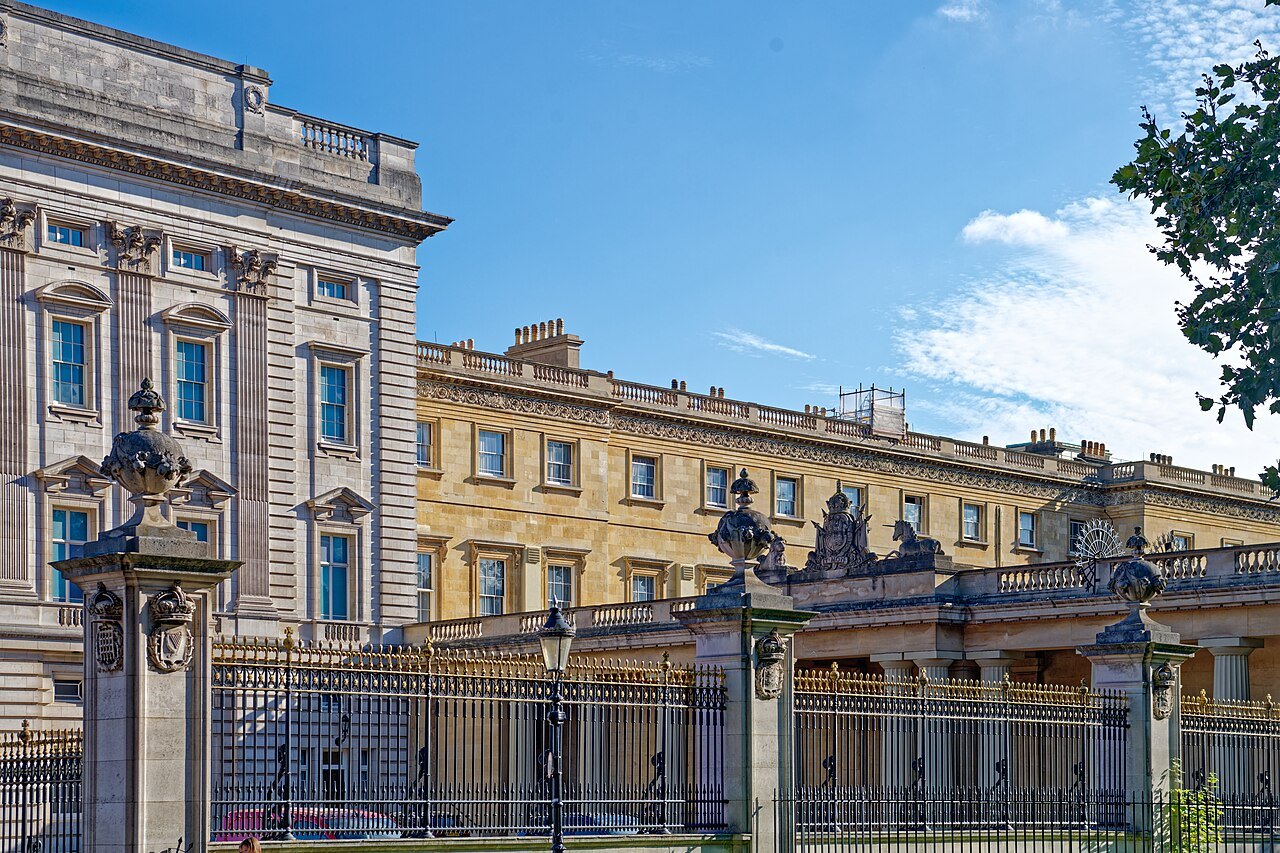
The East Front, the side facing the Mall that most visitors photograph, was not Nash's work. It was one of the last major additions, built in the late nineteenth and early twentieth centuries, and it holds the balcony where the royal family traditionally appears. The Victoria Memorial, a monument to Queen Victoria, stands in front of it, forming a roundabout before the gates.
Spotting the Flag from the Crowd
The flagpole sits above the roofline, visible from the forecourt railings, from the Mall, and from the far side of the Victoria Memorial. On a clear day the flag can be read from the edge of St James's Park without binoculars, though the colors are easier to tell apart closer to the gates.
The best vantage points for the wider scene are not always at the railings themselves. The steps of the Victoria Memorial give height over the heads of a crowd, and the long sightline down the Mall or across St James's Park lets a visitor take in the flagpole, the facade, and the forecourt together.
Because the flag is raised and lowered according to the monarch's movements rather than a public schedule, a visitor hoping to see one flag or the other should not plan a morning around it. The simplest approach is to look up on arrival and treat whichever flag is flying as a small piece of information about that day, rather than something to chase.
Ceremony on the Forecourt
The palace forecourt is the stage for the Changing of the Guard, a ceremony in which a new guard takes over from the old, accompanied by a band, drawing a large crowd along the railings. The soldiers wear the traditional scarlet tunics and bearskin caps of the Foot Guards, and the guard travels between its barracks and the palace on foot.
The exact days and times are announced by the palace and change with the season, so check an official source before planning a morning around the ceremony. The same caution applies to the flag: neither it nor the guard changes to a fixed visitor timetable, and both are best treated as something to catch if the timing lines up.
The Mall is shut to traffic for ceremonies, and the forecourt and railings fill well before the guard appears. A visitor who wants a calmer look at the palace, including a clear view of whichever flag is flying that day, will find a quieter scene outside those ceremonial windows, with the pale stone front largely to themselves.
Around the Palace
The Mall is a broad, red-surfaced road that runs northeast from the palace toward Admiralty Arch and Trafalgar Square. To the south lies the Royal Mews, which houses the state coaches, and to the west lies Green Park, the quieter of the two parks beside the palace, and a pleasant place to pause after a look at the flag overhead.
St James's Park, with its lake and pelicans, runs along the other side of the palace, and the walk across it to Horse Guards or Westminster Abbey takes about a quarter of an hour. Together the palace, the parks, and the processional route form a single stretch of ceremonial London, laid out over three centuries to present the monarchy to its subjects.
Before there was a house, the site was marshy ground beside the river Tyburn, which still runs below the courtyard and the south wing. In the early 1600s James I planted a four-acre mulberry garden here in a failed attempt to produce silk, and part of that garden survives as the north-west corner of today's grounds.
The Tyburn is a buried river, one of London's lost streams, running unseen beneath ground that has carried a royal garden, a townhouse, and finally a palace with its own flagpole. Ceremonies, visiting arrangements, and flag protocol can all change, so check the Royal Household's own pages before setting out.
More from the journal
Read next
- Buckingham PalaceWhat is the Changing of the Guard, and how does it work?How the Changing of the Guard works at Buckingham Palace, who takes part, and where to get the best view.Read the piece →
- Westminster AbbeyWhat is the Stone of Scone, and why was it stolen in 1950?How a captured Scottish relic came to sit beneath the Coronation Chair, and who took it from the abbey one Christmas.Read the piece →
- The Palace of Westminster and Big BenHow did the fire of 1834 start?How an overheated stove and an old stockpile of tally sticks destroyed the medieval Palace of Westminster in 1834.Read the piece →