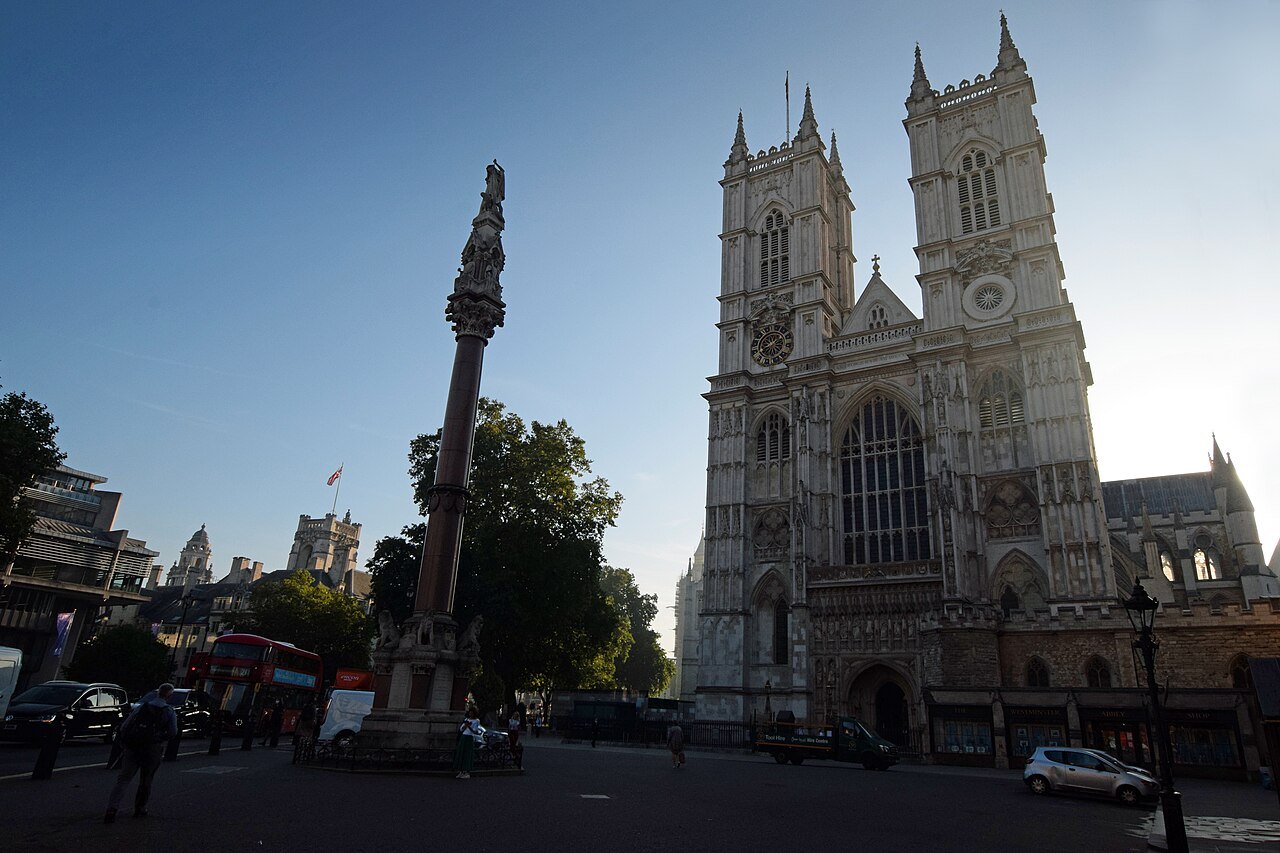
What is the Stone of Scone, and why was it stolen in 1950?
CORONATION CHAIR AND STOLEN STONE
How a captured Scottish relic came to sit beneath the Coronation Chair, and who took it from the abbey one Christmas.
Read on
The answer in full
A Chair Made to Hold a Stone
Inside Westminster Abbey stands a worn oak chair, carved in the Gothic style for one purpose: to hold a block of pale sandstone beneath its seat. The chair was commissioned by Edward I to house the Stone of Scone, the ancient coronation seat of the Scottish kings, and built between 1297 and 1300 by the carpenter Walter of Durham, who worked the oak into tall pointed arches and a high back.
The Stone itself is a plain rectangular block of sandstone, long used at Scone Abbey in Scotland to seat monarchs during their inauguration. It was brought south as a prize during the campaign waged by Edward I against the Scottish crown, and since 1308 it has sat beneath the seat of the Coronation Chair, or traveled together with it, at every coronation of an English or British monarch.
According to the abbey's own account, the Chair has left the building only twice in more than seven centuries: once for the installation of Oliver Cromwell as Lord Protector, and once for safekeeping during the Second World War. For the rest of its history it has stood inside the church, brought into use whenever a new sovereign is crowned there.
Edward I and the Seizing of the Stone
In 1296, during a campaign against the Scottish crown, the Stone of Scone was taken from Scone Abbey on the orders of Edward I and carried south to Westminster. Removing the coronation stone of the Scottish kings was a deliberate political act, one meant to strip Scotland of an object central to the making of its monarchs and place it under English control instead.
The Coronation Chair was then built on the orders of Edward I to hold the captured Stone, fixing the two objects together in a single piece of royal furniture. From 1308 onward, every coronation held at the abbey used this chair with the Stone fitted beneath its seat, a sequence repeated through forty monarchs crowned here across the centuries that followed.
For more than six hundred years, a stone taken from Scotland sat at the center of the ceremony that made English, and later British, sovereigns. That long history gave an otherwise plain block of sandstone a symbolic weight far out of proportion to its appearance, and it is that weight which explains the events of Christmas 1950.
The Christmas Raid of 1950
On Christmas Day 1950, a group of Scottish nationalists broke into the abbey and took the Stone of Scone from beneath the Coronation Chair, intending to carry it back across the border for good. In the course of the theft the ancient block was damaged, breaking into more than one piece, and it disappeared from public view for months afterward.
The raid was a protest rather than an ordinary theft. Carrying the Stone north was meant as a statement about Scottish identity and about a symbol of Scottish kingship that had been kept inside an English church since the thirteenth century. It followed long years of resentment, among some in Scotland, over Edward I's original seizure of the Stone in 1296.
Searches followed on both sides of the border through the early months of 1951, and the episode drew wide public attention at the time. What happened to the Stone between its disappearance and its eventual recovery is a story that the abbey's own records and published accounts of the period cover in more detail than space allows here.
Recovery and the 1953 Coronation
The damaged Stone eventually resurfaced and was repaired before being returned to the abbey in time for the coronation of Elizabeth II in 1953. It was placed back beneath the seat of the Coronation Chair for that ceremony, restoring the arrangement that had held, with only wartime and Cromwell's interruptions, since 1308.
The coronation of 1953 was watched by television audiences for the first time, and the sight of the ancient Chair and the recovered Stone being used again in the ceremony carried extra weight after the events of three years before. For many watching, the Stone's return settled, at least for that occasion, the question the theft had raised.
Visitors curious about exactly what happened to the Stone during its months away, and who carried out the raid, are better served by dedicated histories of the 1950 theft than by a short guide; the abbey's own information desk and published accounts of the period point toward fuller sources.
What the Theft Says About the Stone
The 1950 theft turned an item of medieval furniture into a symbol that mattered well beyond the abbey's walls. The Stone itself is unremarkable to look at, an undecorated block of sandstone, but what it represents, a piece of Scotland's royal history held for centuries in an English church, explains why its disappearance made national news at the time.
The episode sits inside a longer debate over where such symbols of nationhood belong, a debate that has continued in different forms since 1950 and that a short guide cannot settle. Visitors interested in the wider argument should look to dedicated histories of the Stone and of relations between England and Scotland rather than to a single account of one Christmas raid.
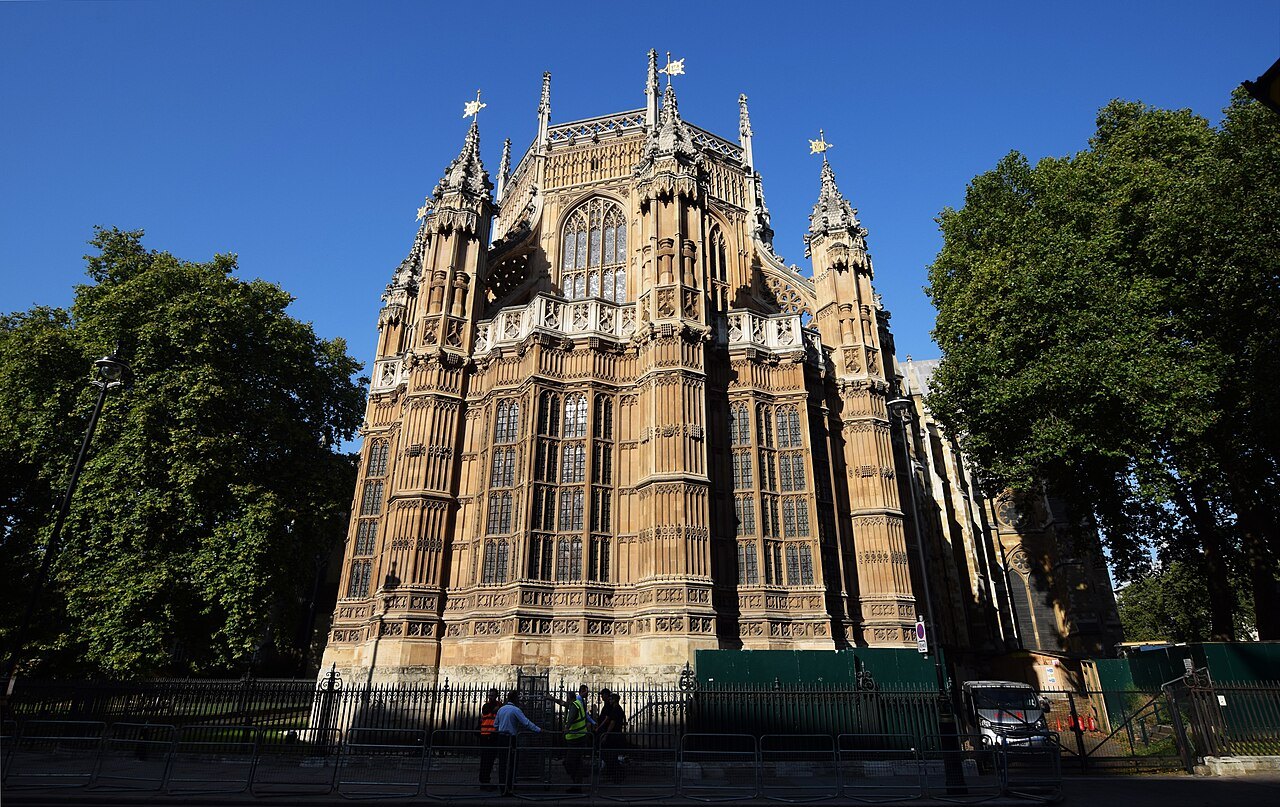
What the guide can say is that the Stone and Chair remain bound together in the abbey's own story of coronation, alongside the burials and monuments that fill the rest of the building, from the grave of the Unknown Warrior to the tombs in the Henry VII Chapel nearby. For that wider context, see the main guide to Westminster Abbey.
Seeing the Chair and Stone
Exactly where the Coronation Chair and the Stone stand within the church, and how closely visitors can approach them, is a detail best confirmed with the abbey on the day of a visit, since the building is a working church and its arrangement can shift around services and state occasions.
The abbey closes sections to visitors when a service is underway or a state occasion is being prepared, so build some flexibility into a visit built around seeing the Chair. Details on timed entry and what needs booking ahead of arrival are covered in Booking Ahead.
Allow a good half day for a visit that also takes in the cloisters and the chapter house, since the abbey rewards unhurried viewing rather than a quick pass through the nave. The nave tends to draw the largest crowds, while the cloisters and the Little Cloister garden offer quieter corners once the main circuit has been covered.
More from the journal
Read next
- Westminster AbbeyWho is buried in Poets' Corner?A guide to the writers, monarchs, and the unknown soldier buried within Westminster Abbey's south transept and beyond.Read the piece →
- The Palace of Westminster and Big BenWhat is Westminster Hall, and what has happened there?The oldest part of the Palace of Westminster, its hammerbeam roof, and the fires and bombs it survived.Read the piece →
- The Palace of Westminster and Big BenHow did the fire of 1834 start?How an overheated stove and an old stockpile of tally sticks destroyed the medieval Palace of Westminster in 1834.Read the piece →