What is Westminster Hall, and what has happened there?
NINE HUNDRED YEARS OF HALL
The oldest part of the Palace of Westminster, its hammerbeam roof, and the fires and bombs it survived.
Read on
The answer in full
The Oldest Part of the Palace
Westminster Hall is the oldest structure standing within the Palace of Westminster, built in 1097 for William Rufus, son of William the Conqueror. At the time it was the largest hall in Europe, a vast stone-walled space meant to display royal power as much as to shelter any single gathering of people inside it.
A palace had already stood on this site since the eleventh century, when Edward the Confessor built a royal residence beside the first Westminster Abbey, and the hall formed part of that complex from the start. It remained in royal use until a fire in 1512 destroyed the royal apartments, after which Henry VIII moved his household to the Palace of Whitehall.
Parliament, which had already been meeting at Westminster since the thirteenth century, stayed on in the old buildings once the king departed for Whitehall. Westminster Hall went on serving purposes well beyond its original royal role, and by the time of the great fire centuries later it had become one of the most historic interiors anywhere in England.
The Hammerbeam Roof
The hall's great roof was commissioned for Richard II in 1393 and built by the royal carpenter Hugh Herland. It remains the largest clear-span medieval roof in England, a hammerbeam design that needed no supporting columns to interrupt the long open floor below, an engineering feat rare for its date anywhere in Europe.
The oak for the roof came from woodland in the south-east of England and was assembled near Farnham before being carried to Westminster for raising over the hall. The result is a structure whose scale and carpentry visitors can still see clearly from the floor, little altered since the fourteenth century.
The roof's survival across more than six centuries, through fire, wartime bombing and the ordinary wear of state occasions, makes it one of the more remarkable pieces of medieval carpentry anywhere in London. It is usually the first feature a guide or an audio tour points out on entering the hall.
Law Court, Banqueting Hall, Place of Farewell
Westminster Hall has carried more than one role across its long life. For centuries it served as a law court, with the courts of the land sitting within its walls rather than in a separate building, making the hall for long stretches of English history a center of justice as well as of royal and parliamentary business.
It also served as a banqueting hall, used for the ceremonial and celebratory gatherings that a palace of this scale required. That dual identity, part court of law and part hall of state, gave the building a central place in English public life long before the modern Houses of Parliament took their current form.
Since the twentieth century, Westminster Hall has become the usual setting for lyings in state, when a coffin rests in the hall so the public may pass through to pay respects. Anyone hoping to attend such an occasion, or simply to confirm whether the hall is in ceremonial use at the time of a visit, should check with the official parliamentary visitor information.
Surviving Two Fires
On 16 October 1834, an overheated stove burning the Exchequer's stock of tally sticks set fire to the Lords Chamber, and the blaze destroyed both Houses and most of the rest of the palace. Westminster Hall was saved only by firefighters and a shift in the wind that kept the flames away.
The Jewel Tower and the undercroft and cloisters of St Stephen's Chapel survived the same fire, clearing the way for Charles Barry and Augustus Pugin to rebuild the palace as the Gothic Revival building seen today, with Westminster Hall kept at its heart as the oldest surviving part of the medieval palace.
The hall faced a second test during the Second World War, when bombs hit the palace on fourteen separate occasions. In the raid of 10 to 11 May 1941, the Commons Chamber was destroyed, and firefighters that night had to choose between saving the chamber and saving the medieval hall beside it.
They chose Westminster Hall over the chamber. The Commons Chamber was rebuilt afterward in a simplified style, finished in 1950, while the older hall carried on largely as Hugh Herland had left it more than five centuries earlier, its medieval timber roof still intact above the ancient stone walls around it.
Rebuilt Around It
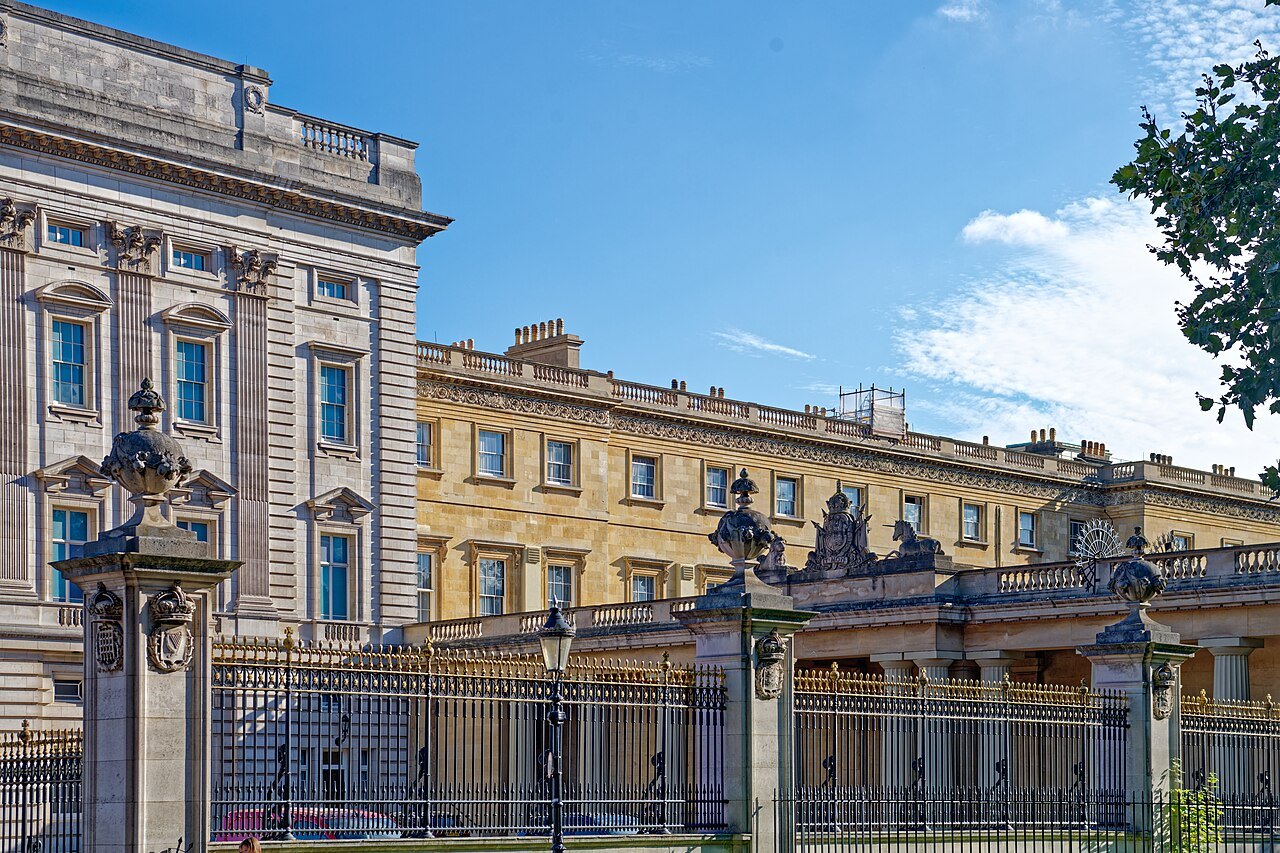
After the 1834 fire destroyed nearly everything else, a design competition chose the Perpendicular Gothic Revival scheme of Charles Barry, who worked with Augustus Pugin on the ornament; Pugin later complained that the result was all Grecian, sir, Tudor details on a classic body. The new Lords Chamber opened in 1847 and the Commons Chamber in 1852.
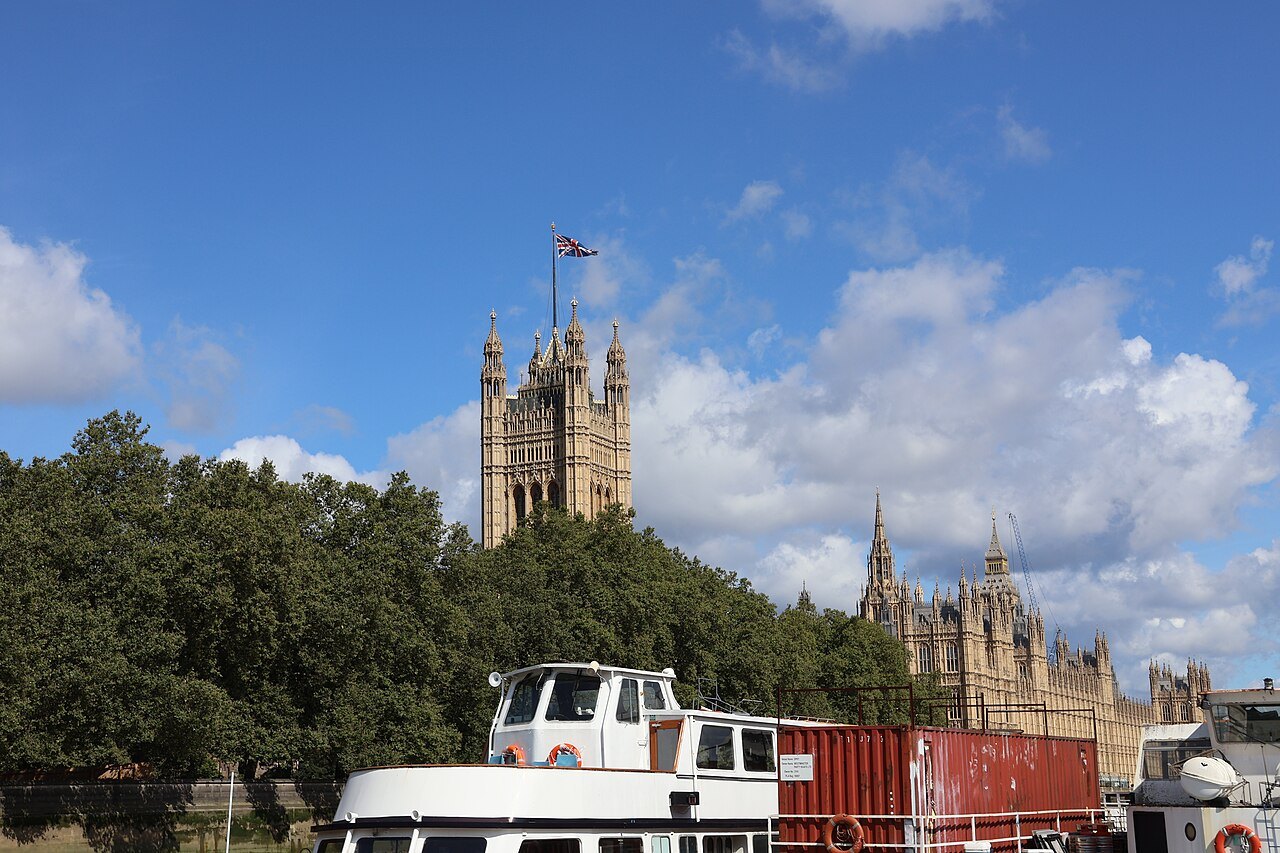
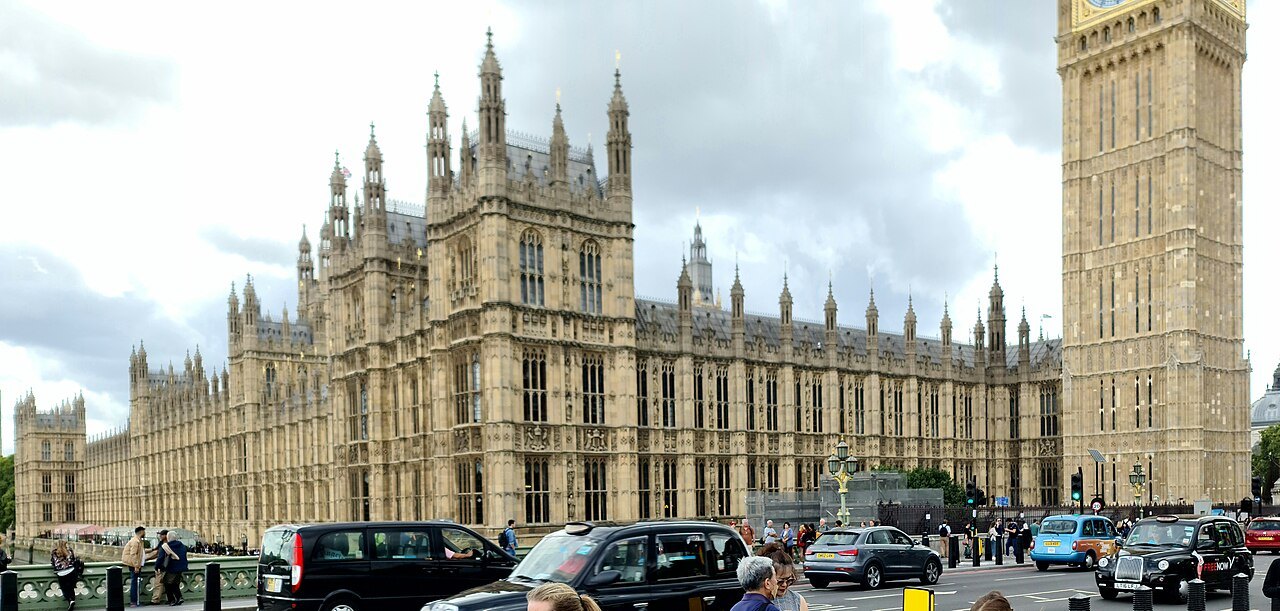
Three towers rose around the rebuilt palace. The Victoria Tower, at the south-west corner, reached 323 feet and was the tallest secular building in the world when it was finished in 1858; it holds the Sovereign's Entrance and the Parliamentary Archives, where the master copy of every Act of Parliament since 1497 is kept. The octagonal Central Tower, at 299 feet, exists chiefly to ventilate the building.
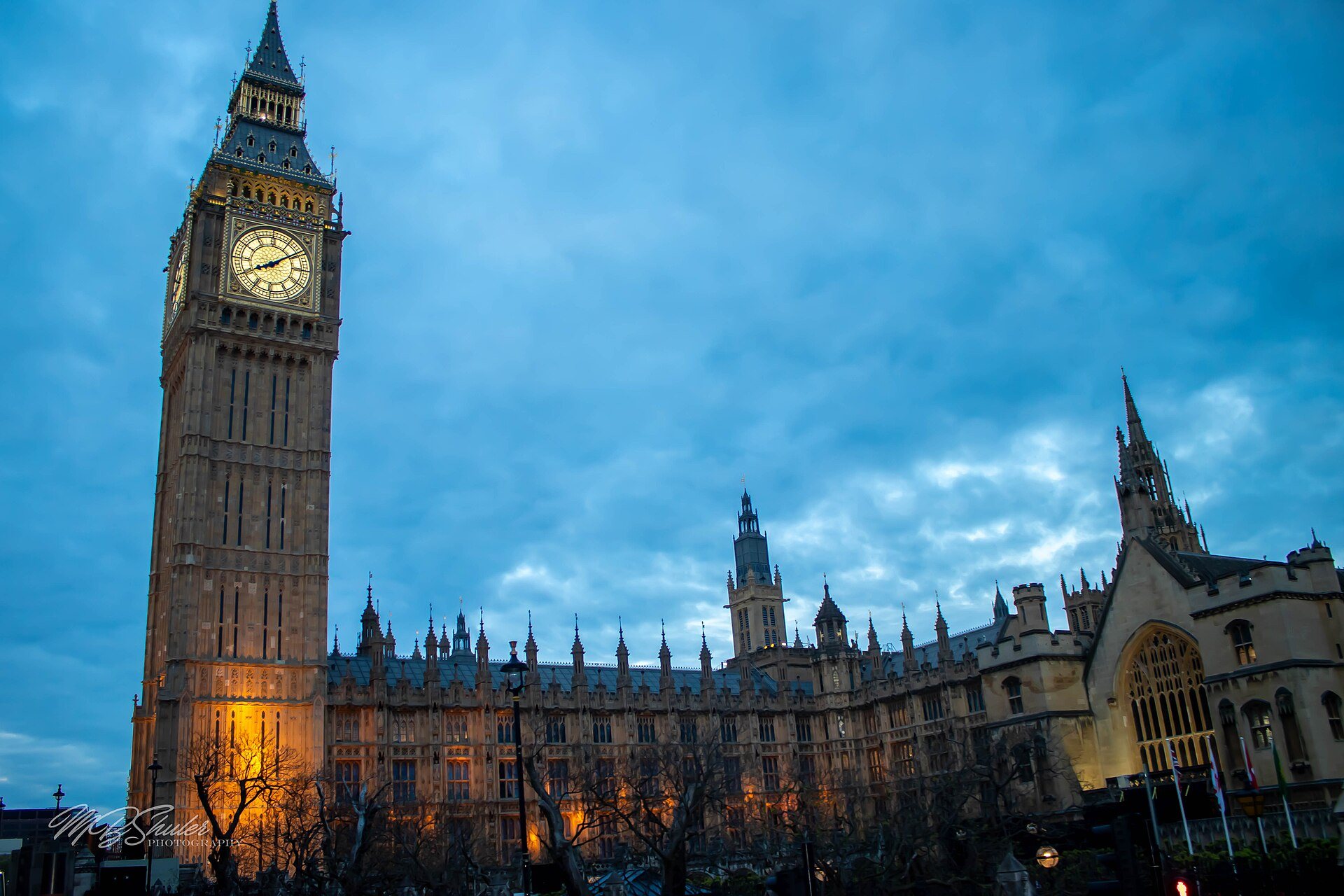
At the north end, beside Westminster Bridge, stands the tower now called the Elizabeth Tower, renamed in 2012 for the Diamond Jubilee. Pugin designed it, and it carries the Great Clock and the bell known as Big Ben. Westminster Hall, far older than any of them, sits at the base of this much younger Gothic skyline.
Seeing Westminster Hall
Casual visitors cannot simply walk into the Palace of Westminster, including Westminster Hall. Entry comes by guided tour, by a ticket arranged through a member of the House of Commons or Lords, or by queuing for a debate or committee session while the Houses are sitting. What needs to be arranged ahead of time is set out at Booking Ahead.
Because Westminster Hall sometimes hosts lyings in state and other ceremonial events, the usual routes of access can change without much notice. Anyone planning a visit that centers on this part of the building should confirm current arrangements with the official parliamentary visitor service before traveling across the city to see it.
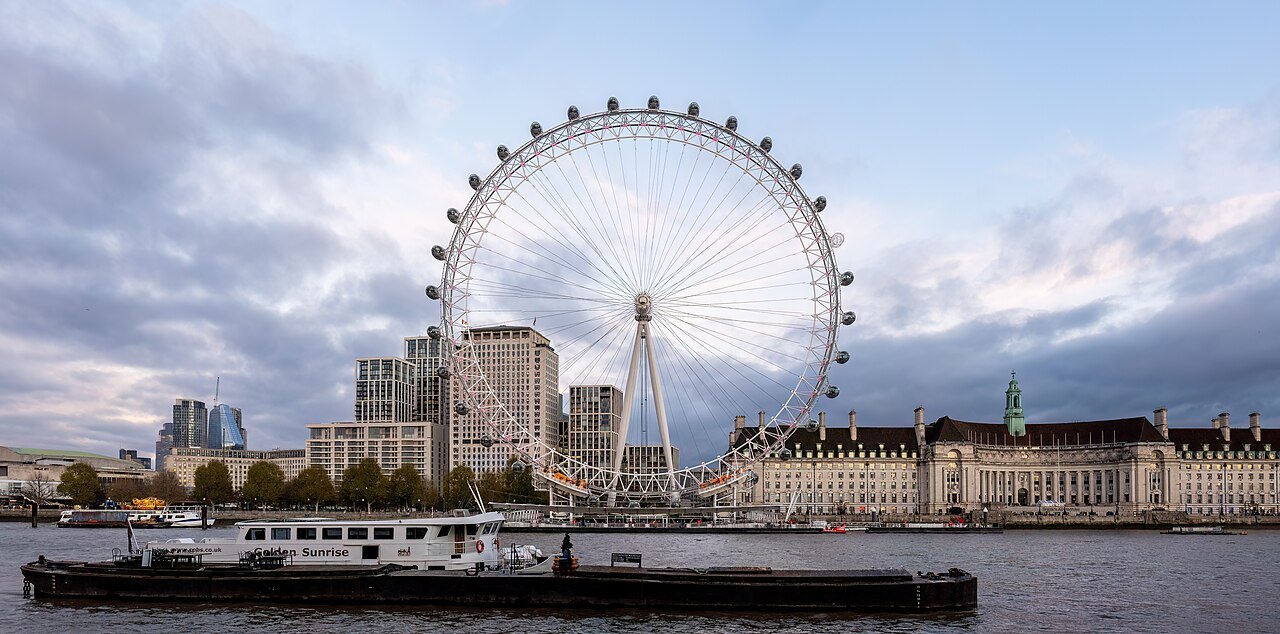
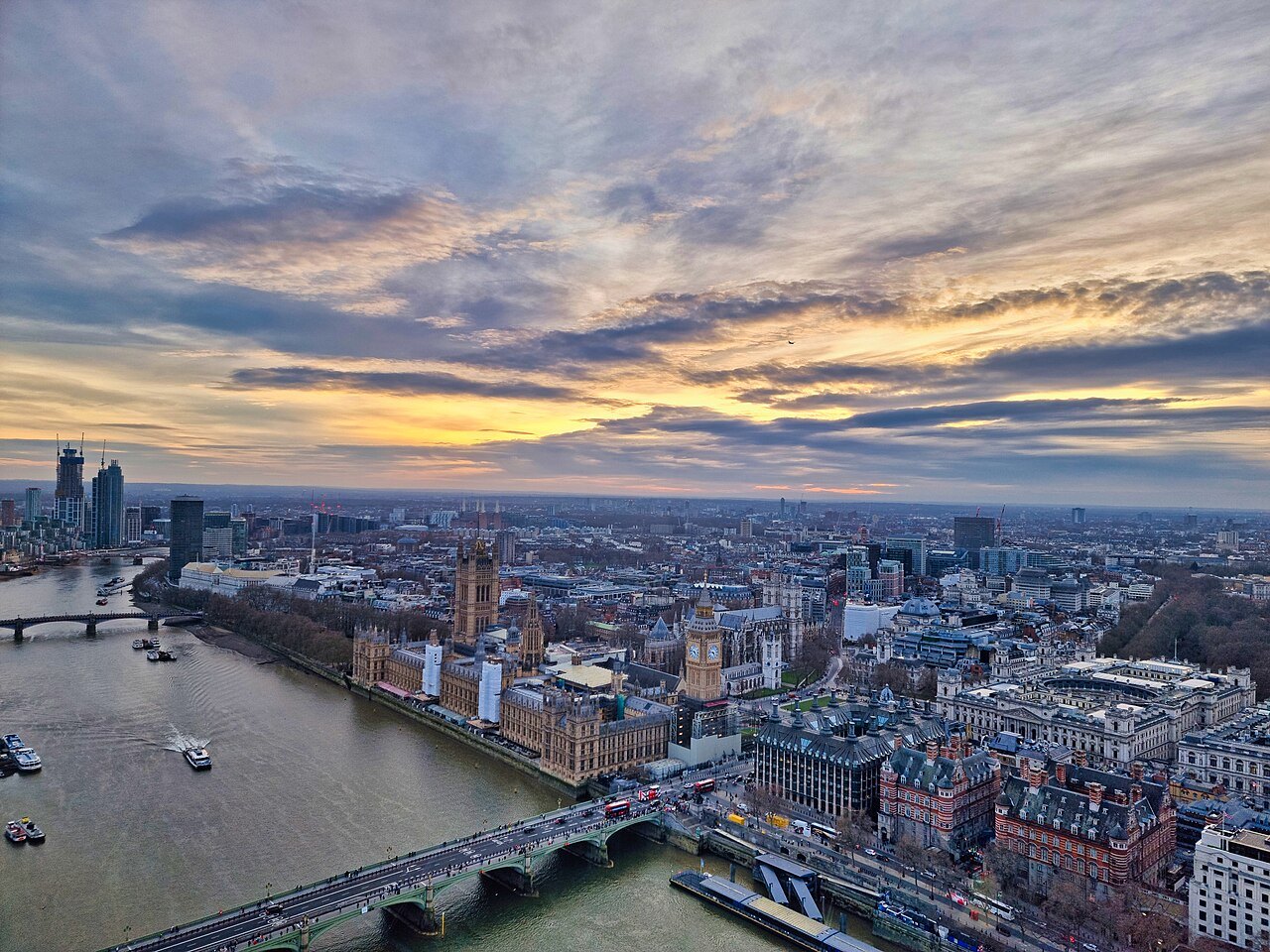
The exterior requires no arrangement at all and no ticket. The best view of the whole Gothic facade, with Westminster Hall tucked inside its long river front, comes from across the water toward the London Eye on the south bank, or from a stop in Parliament Square facing the Elizabeth Tower.
Nearby
Westminster Hall sits at the heart of a building that shares a World Heritage listing with its neighbor, Westminster Abbey, and with St Margaret's Church. The three sites are worth treating together, since an exterior walk between them covers only a short stretch of pavement around Parliament Square and the surrounding streets.
The river that the hall's windows once looked toward remains part of the experience; the walk downstream along the Thames begins here, and the Palace of Westminster is one of the fixed points by which visitors can orient a longer riverside route toward the city or the South Bank further along.
Getting to Westminster is straightforward by Tube, bus or riverboat, and the Houses of Parliament sit within walking distance of several other major sights nearby. Anyone planning a longer day combining several of them should check current routes and any seasonal changes to river services with Transport for London before setting out.
More from the journal
Read next
- The Palace of Westminster and Big BenIs Big Ben the bell or the tower?Big Ben is the nickname of the Great Bell, and by extension of the clock tower that holds it. What the tower is really called, how the clock and bells work, why the tower leans, and what the light at the top means.Read the piece →
- Getting HereHow do you get from Heathrow to central London?Heathrow is 14 miles west of central London and has three rail routes into the city, plus coaches, buses and taxis. What each one is, where it stops, which terminal station to use, and how to choose.Read the piece →
- The Palace of Westminster and Big BenHow did the fire of 1834 start?How an overheated stove and an old stockpile of tally sticks destroyed the medieval Palace of Westminster in 1834.Read the piece →